

I help founders understand their options clearly before they commit to any structure, provider, or direction.
For entrepreneurs, business owners, and property investors worldwide, the United Arab Emirates offers structured pathways to obtain long-term residency through its investor visa programs. This guide explains the available routes, eligibility criteria, application procedures, and practical considerations for securing a UAE investor visa, reflecting regulations in effect as of March 2026. Whether your goal is to establish a business, manage an investment, or secure a stable base for your family, understanding these options helps you make informed decisions about UAE residency.
Quick Summary: UAE Investor Visa in 2026
- Main routes: Partner/Investor visa via company ownership (2 or 3 years renewable) and Golden Visa for investors (10 years renewable, AED 2 million+ investment).
- Minimum investment thresholds: Standard investor visa typically AED 50,000+ in shares; Golden Visa via real estate from AED 2 million; Golden Visa via business from AED 2 million invested, with an entrepreneur route from AED 500,000 for approved projects and a separate pathway for qualifying SMEs with AED 1M+ annual revenue.
- Typical cost: AED 3,700–15,500 per applicant covering medical screening, Emirates ID, visa stamping and government fees.
- Family sponsorship: Visa holder can sponsor spouse and children under standard UAE dependent rules; Golden Visa extends this to include parents.
- Timeline: 5–15 working days for application to stamping with complete documentation. Status change inside the UAE adds 1–2 days.
- Where to apply: GDRFA (Dubai) or ICP (federal) portal. Most applications can be initiated remotely with stamping requiring a 1–2 day visit.
UAE Investor Visa Cost & Investment Thresholds (2026)
Government and processing fees, plus qualifying investment thresholds, for a UAE investor visa as stated on the page (regulations in effect March 2026).
| Item | Typical Cost (AED) | Notes |
|---|---|---|
| Standard 2- or 3-year investor visa (per applicant) | AED 3,700 – 15,000 | Total government + processing fees; varies by service package |
| Golden Residency (5- or 10-year, per applicant) | AED 9,700 – 15,500 | Covers government charges, medical test and Emirates ID |
| Typical all-in cost per applicant | AED 3,700 – 15,500 | Quick-summary range covering medical, Emirates ID, stamping and gov fees |
| Property threshold — standard 2-year residency (Dubai) | AED 750,000 | Minimum property purchase value; must be paid or 50%+ paid if mortgaged |
| Free zone minimum share capital | AED 50,000 | Set by each free zone authority; can range upwards, often tied to office lease |
| Recommended mainland LLC share capital | AED 72,000 | Common recommended starting capital; no universal federal minimum |
Understanding UAE Investor Visas
A UAE investor visa is a residency permit granted to individuals who make a qualifying financial investment in the country. This investment typically takes the form of business ownership—establishing or purchasing shares in a UAE company—or real estate acquisition. The visa provides holders with the legal right to live in the UAE and, depending on the specific program, may also grant the ability to work, study, and sponsor family members.
It's important to distinguish between standard renewable residence permits (typically valid for two or three years) and the long-term Golden Residency (valid for five or ten years). Both fall under the broader investor visa framework but serve different investment scales and renewal preferences.
Main Investor Visa Routes
The UAE offers several distinct pathways to investor residency, each governed by its own set of requirements and jurisdictions.
Business Ownership and Company Shareholder Route
This route applies to individuals who establish or invest in a UAE-based company. The residency permit is directly tied to ownership of the business. Forming or investing in a limited liability company on the UAE mainland can qualify an investor for a two-year renewable residence visa. While there is no federally mandated minimum share capital, the capital must be adequate for the licensed business activity, and practice varies between emirates. Learn more about establishing a business in Dubai to understand local requirements.
Alternatively, establishing a company within one of the UAE's free zones—such as DMCC, DIFC, or SHAMS—typically grants a renewable residence visa for up to three years. Minimum capital requirements are set by each free zone authority and can range from AED 50,000 upwards, often tied to specific office lease agreements. Understanding broader UAE business setup options helps in selecting the most suitable structure for your investment goals.
Property Investment Route
This pathway is designed for individuals who purchase residential or commercial real estate in the UAE. In Dubai, owning property with a purchase value of at least AED 750,000 may qualify the investor for a two-year renewable residence permit. The property must be fully paid or have at least 50% of its value paid if mortgaged, subject to specific documentation from the lender.
For larger investments, purchasing real estate valued at AED 2 million or more—in one or multiple properties—can make an investor eligible for the five-year or ten-year Golden Residency program. This federal initiative offers greater stability and reduced renewal frequency compared to standard residence permits.
Also read this UAE Partner Visa Guide
Mainland Versus Free Zone Considerations
From a residency perspective, the key difference lies in the sponsoring authority and procedural details. A mainland company visa is processed through the General Directorate of Residency and Foreigners Affairs (GDRFA) of the respective emirate, while a free zone visa is processed by the specific free zone authority in partnership with immigration officials. Both ultimately provide valid UAE residence visas. Your choice between mainland and free zone should be driven primarily by business needs—market access, licensing flexibility, and ownership structures—rather than visa advantages, as both effectively grant residency rights.
Minimum Investment and Eligibility Requirements
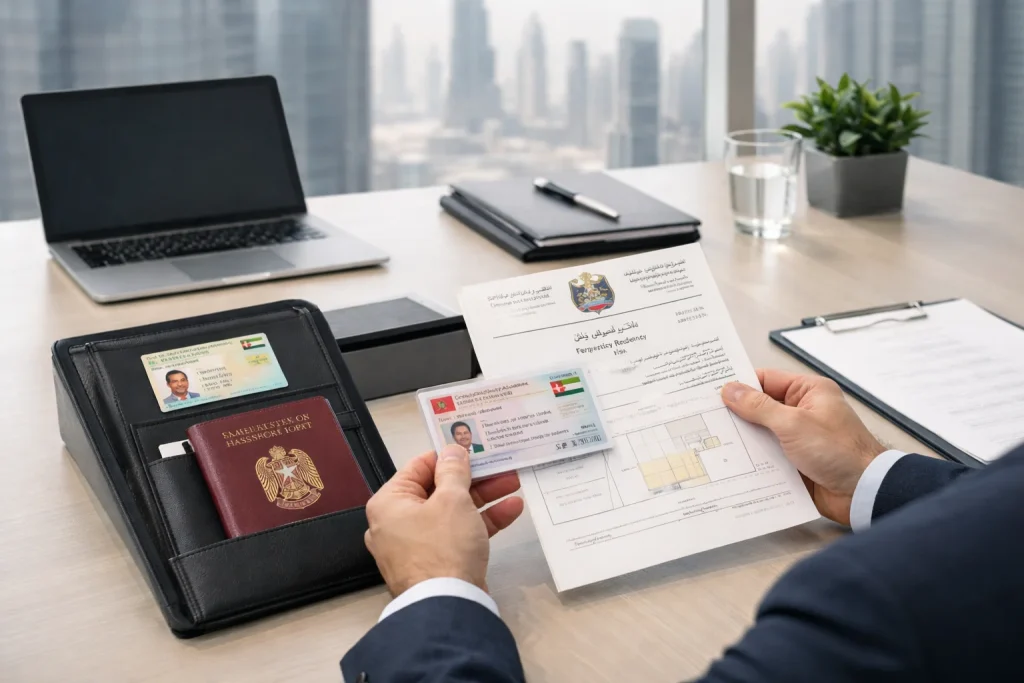
Eligibility depends on meeting specific investment thresholds and providing verifiable documentation.
Business Capital Considerations
For business investor visas, the investment is represented by your share capital in the company. While there is no universal federal minimum, immigration authorities require the capital to be sufficient for the licensed activity. In practice, mainland limited liability companies often work with recommended capital starting from around AED 72,000, while free zones publish their own minimums. The capital must be deposited in a company bank account, and a bank statement is a standard requirement for visa applications.
Shareholding Requirements
Investors typically need to own a significant or controlling stake in the company. For mainland companies, foreign investors can own 100% of the business in most sectors. For free zone companies, 100% foreign ownership is standard. You must provide the company's trade license and the Memorandum of Association or shareholder certificate listing you as an owner.
Property Value Thresholds
For standard property-based residency, the widely cited threshold in Dubai is AED 750,000. For property-based Golden Residency, the federal threshold is AED 2 million. Valuations are based on the purchase price or an official valuation letter from the relevant Land Department, not on perceived market value. Properties can be mortgaged, but the total value must meet the threshold, and a No-Objection Certificate from the financing bank is required.
Core Documentation Requirements
Your application fundamentally relies on proving your investment. For property investors, this means presenting the official title deed or, for off-plan properties, a sales contract and Oqood certificate. For business investors, it's the valid UAE trade license. These documents must be current, officially registered, and match the applicant's name exactly.
Step-by-Step Application Process
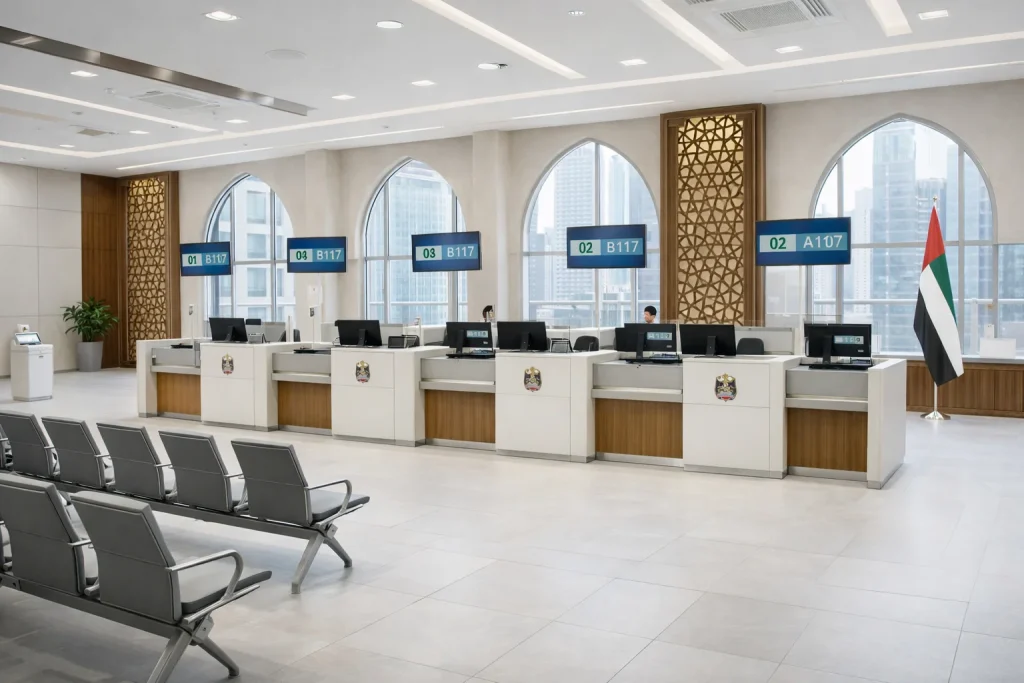
While details can vary slightly between emirates and free zones, the core process for securing an investor visa follows a consistent sequence.
Entry Permit or Status Change
For those who are outside the UAE, you first apply for an entry permit. If you're already in the UAE on another visa—such as a tourist visa—you apply for a change of status. This step is initiated online via the GDRFA, the Federal Authority for Identity, Citizenship, Customs and Port Security (ICP), or the relevant free zone portal.
Medical Fitness Test
Once the entry permit or status change receives approval, you must undergo a mandatory medical fitness test at an approved health centre. This includes screening for communicable diseases. The medical test is required for all applicants over 18 years of age.
Emirates ID Application
After passing the medical examination, you apply for the Emirates ID, a biometric identity card required for all UAE residents. This involves visiting a typing centre or authorized customer happiness centre for fingerprinting and photo capture. The Emirates ID serves as your primary identification document within the UAE.
Visa Stamping
The final step is having your residence visa stamped in your passport. For entry permit holders, this occurs upon entry to the UAE. For those changing status from within the country, it's completed at a designated immigration centre. The visa stamp, combined with your Emirates ID, formalizes your resident status and grants you legal residency rights.
Typical Costs and Processing Timelines
Have questions about this?
A 10-minute call with Mirza often saves weeks of research. No obligation — ask anything about your situation.
Costs for investor visas vary based on the emirate, service channels, and whether you engage professional assistance. Standard expenses typically include government fees for the entry permit, status change, visa stamping, medical test, Emirates ID, and mandatory health insurance.
For a standard two- or three-year investor visa, total government and processing fees generally range from approximately AED 3,700 to AED 15,000 for the main applicant, depending on the service package selected. For Golden Residency permits with five- or ten-year validity, costs for the main applicant typically range from approximately AED 9,700 to AED 15,500, covering all government charges, medical tests, and Emirates ID processing.
Processing timelines are generally efficient when documentation is complete. From application submission to visa stamping, the process often takes between 7 to 15 working days under normal circumstances. Complex cases or incomplete submissions can extend this timeframe.
Family Sponsorship Provisions

Holders of valid investor visas can typically sponsor immediate family members, subject to meeting specific requirements.
Spouse Sponsorship
You may sponsor your spouse by providing an attested marriage certificate (translated into Arabic or English if necessary), proof of adequate housing—typically a tenancy contract registered with the emirate's rental system, such as Ejari in Dubai—and proof of health insurance coverage for the dependent.
Children Sponsorship
Sons can generally be sponsored until they turn 18, with sponsorship often extendable until age 21 to 25 if they are pursuing higher education. Daughters can typically be sponsored until marriage. Attested birth certificates are required for all child dependents. While the investor visa itself does not carry a salary requirement, some emirates may request proof of financial capacity to support dependents.
Additional Dependent Conditions
Sponsoring parents is possible but subject to stricter conditions, including higher income thresholds and proof of suitable accommodation. All adult dependents over 18 must also pass the medical fitness test and have valid health insurance coverage as required by UAE regulations.
Speak to a UAE Relocation Advisor
Independent, advisory-first guidance for families relocating to the UAE — covering residency pathways, real estate, and business structuring.
Key Advantages of Investor Visas
UAE investor visas offer several compelling benefits for qualifying individuals. They provide residency stability in a prosperous country with world-class infrastructure and enable family unity by allowing you to sponsor your spouse and children, giving your family the opportunity to live, study, and potentially work in the UAE.
For business owners, these visas offer direct control over your enterprise without requiring a local sponsor in most sectors. They also provide travel convenience with multiple-entry privileges and serve as a pathway to qualifying for the five- or ten-year Golden Residency, which offers even greater long-term stability. For comprehensive guidance on UAE visa and immigration options, consider reviewing multiple residency pathways.
Important Limitations and Considerations
Understanding what an investor visa does and does not provide helps set realistic expectations.
Not a Path to Citizenship
The visa is a renewable residence permit. It does not lead to UAE citizenship or passport eligibility under current regulations.
Ongoing Compliance Requirements
Maintaining the visa requires keeping the qualifying investment active—your business must remain licensed and operational, or your property must be retained. You must also adhere to all UAE laws, including tax reporting and economic substance regulations where applicable.
Renewal Obligations
All visas, including long-term Golden Residencies, have expiry dates and require renewal. Renewal eligibility depends on continued compliance with investment and residency requirements.
Employment Considerations
While the visa allows you to manage your own business, if you wish to be employed by another company, you may need to obtain appropriate work authorization through that employer.
Common Application Mistakes to Avoid
Several frequent errors can delay or complicate your application. Inaccurate document attestation—failing to get marriage or birth certificates properly attested and translated by required authorities—is a common issue. Underestimating investment requirements, such as assuming a property valued below the official threshold will qualify or not having sufficient paid-up capital for a business, can result in rejection.
Overlooking mandatory health insurance coverage for yourself and each dependent before applying causes delays. For mortgaged properties, not obtaining the required bank No-Objection Certificate and valuation letter creates problems. Finally, waiting until your visa is about to expire to start the renewal process risks overstay penalties.
Who May Find Alternative Routes More Suitable
The investor visa may not be the optimal choice in certain circumstances. If your primary goal is short-term employment with a UAE company, a standard employment visa through that employer is more appropriate. If you're not prepared to actively manage or monitor a business investment, this route may present unnecessary obligations.
Those intending to purchase property solely for occasional holiday use without needing residency may find the visa requirements excessive. If your investment capital is limited and does not meet the minimum thresholds, alternative visa categories should be explored. Finally, if you're seeking a permanent citizenship solution, the investor visa does not fulfil that objective under current UAE nationality laws.
Choosing Your Path Forward
Selecting the right investor visa route depends on your personal circumstances, financial capacity, and long-term objectives. If your goal involves direct business ownership and active involvement in day-to-day operations, the business ownership route aligns naturally with those plans. If you prefer a more passive investment while securing residency rights, the property investment path may be more suitable.
Within each category, deciding between a standard two-year visa and the long-term Golden Residency depends on the scale of your investment and your preference for renewal frequency. The UAE's investor visa programs are designed to attract committed individuals who contribute meaningfully to the economy.
By thoroughly understanding the requirements, preparing your documentation carefully, and planning for ongoing compliance, you position yourself to successfully secure the residency status that supports your life and professional ambitions in the United Arab Emirates.
Sources & Official References
The information in this guide reflects current UAE federal and emirate-level regulations. For the most up-to-date figures and procedures, consult the official sources below:
- UAE Government — Investor Visas — Federal portal explaining long-term residency including investor and Golden Visas.
- GDRFA Dubai — Investor Visa Services — Dubai application portal for investor and partner visas.
- ICP — Federal Visa Services — Federal Authority for Identity, Citizenship, Customs and Port Security.
Frequently Asked Questions About UAE Investor Visas
What is a UAE investor visa?
A UAE investor visa is a residence permit issued to individuals who make a qualifying investment in the country, typically through business ownership or property acquisition. It allows the holder to legally reside in the UAE and, subject to regulations, sponsor eligible family members.
How long is an investor visa valid?
Standard investor residence visas are commonly issued for two or three years, depending on the sponsoring authority. Long-term Golden Residency permits may be issued for five or ten years, subject to meeting specific eligibility criteria.
Does an investor visa lead to UAE citizenship?
No. An investor visa is a renewable residence permit and does not automatically lead to citizenship or a UAE passport.
Can investor visa holders sponsor their family?
Yes, investor visa holders can typically sponsor their spouse and children, provided documentation and financial capacity requirements are met. Sponsorship of parents may also be possible under additional conditions.
Is a business required to remain active to keep the visa?
Yes. If the visa is based on business ownership, the company must remain licensed and operational. If based on property investment, the qualifying property must generally be retained during the visa period.
Can I work for another company on an investor visa?
An investor visa allows you to manage your own business. Working for another employer may require additional work authorization under UAE labour and immigration rules.
How long does the investor visa process usually take?
Processing periods are generally considered efficient when documentation is complete, but timelines vary depending on the emirate, authority, and individual case circumstances.
What happens if the investment no longer meets eligibility rules?
If the qualifying investment is sold, cancelled, or falls below regulatory thresholds, visa renewal eligibility may be affected, and authorities may require status adjustment or visa cancellation.
Freelancers and remote workers who do not meet the investor visa threshold may be eligible for the UAE Digital Nomad Visa 2026, which has a different eligibility profile and cost structure.
Have a question about this?
Leave your details and a UAE expert will get back to you within 1 business day — free, no obligation.
Ready to take action?
Whether you're ready to start or still comparing options — we'll give you a straight answer.
Chat on WhatsApp
Usually replies within 2h
Get a Free Quote
Personalised in 60 seconds
Call Directly
Open daily, 10am–6pm UAE
About the Author
Dubai-based independent advisor on UAE visa, immigration, and offshore structuring. Founder of Henry Club UAE with 90+ published guides. Advisory-first — clarity before commitment.