
I help founders understand their options clearly before they commit to any structure, provider, or direction.
Quick Summary: UAE Visa and Immigration
- Four main residency routes: Golden Residency (5 or 10 years, renewable), the Green Visa (5 years), residency through company formation (2-3 years, tied to license renewal), and standard employment visas (typically 2-3 years).
- Golden Residency thresholds: Investors qualify with public investment of at least AED 2 million in an accredited fund or property valued at a minimum of AED 2 million; entrepreneurs with projects of AED 500,000 and exceptional talent with salaries around AED 50,000 also qualify.
- Green Visa: A 5-year, self-sponsored visa for skilled employees (bachelor’s degree and at least AED 15,000 a month), freelancers and the self-employed (at least AED 360,000 a year), and partners or investors in a UAE company.
- No sponsor for Golden or Green: Both routes require no local sponsor; only mainland and free zone companies can sponsor visas, while offshore companies cannot.
- Timelines: Company formation typically takes 1-4 weeks and visa issuance 2-4 weeks, so plan for around 4 to 8 weeks end to end.
- Core requirements: Passport valid at least six months, government medical fitness testing, valid UAE-approved health insurance, and a clean criminal record.
Quick answer: The UAE offers four main residency routes for investors, entrepreneurs and professionals: Golden Residency (5 or 10 years), the Green Visa (5 years), residency through company formation (2–3 years, tied to your license) and standard employment visas. Golden Residency investors typically qualify with property or public-fund investment of AED 2 million or more, and the Golden and Green routes need no local sponsor. From company setup to a stamped visa, plan for around 4 to 8 weeks end to end.
As a global business hub, the United Arab Emirates offers structured visa pathways for investors, entrepreneurs, and skilled professionals. Understanding the available pathways is essential for establishing a stable, long-term presence for yourself, your family, and your enterprise. The sections below provide a clear, practical overview of the UAE's business and investor visa landscape, helping you make informed decisions about the appropriate pathway for your objectives.
The sections below cover the primary residency routes used by international entrepreneurs, investors, and business owners planning to establish a UAE presence. The information also applies to C-level executives and specialised talents recruited by UAE-based companies. For anyone assessing residency through investment, business ownership, or employment in the UAE, this overview provides the foundational knowledge to begin planning.
Understanding Your Visa Pathway Options
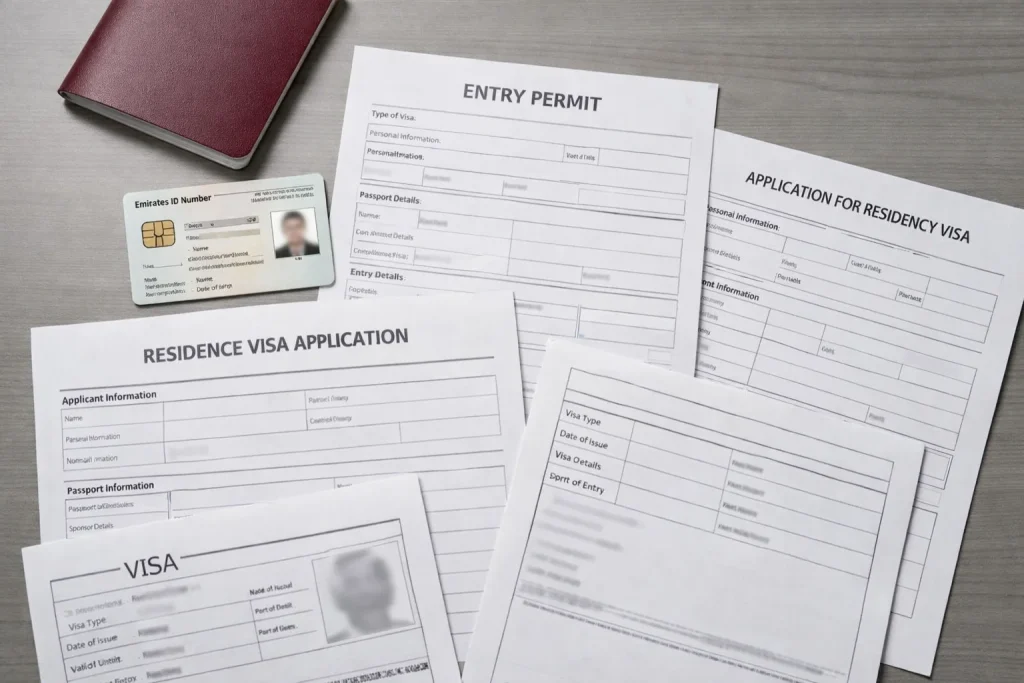
The UAE offers several distinct residency routes, each with unique eligibility criteria, benefits, and durations. Your choice depends primarily on your investment capacity, professional background, and long-term objectives.
Golden Residency
The Golden Residency is a long-term visa program aimed at attracting substantial investors and exceptional individuals. It offers renewable residency for 5 or 10 years without requiring a national sponsor, providing significant stability.
For investors: Qualification pathways include public investment of at least AED 2 million in an accredited fund, or property ownership valued at a minimum of AED 2 million. Ten-year visas are typically available for public investors, while real estate investors commonly receive 5-year visas.
For entrepreneurs: Owners of innovative, technically advanced projects with minimum value of AED 500,000 and approval from an accredited business incubator may qualify for 5-year visas.
For exceptional talent: This category includes specialized scientists, doctors, inventors, creative professionals, and executives with minimum salaries around AED 50,000. PhD holders and specialists in priority engineering and scientific fields are also eligible, often for 10-year visas.
For comprehensive information on eligibility criteria and application procedures, see our detailed Golden Visa guide for business owners.
Review our comprehensive Dubai real estate investment guide for 2026 to understand ROI strategy, key areas, and the Golden Visa pathway. Dubai Real-Estate Guide
Green Visa (5 Years)
The more accessible long-term option is the Green Visa: a 5-year, self-sponsored residence visa that stays valid if you change jobs or go freelance, and lets you sponsor your family.
It has three routes: skilled employees with a bachelor’s degree, a salary of at least AED 15,000 a month and MOHRE skill level 1–3; freelancers and self-employed professionals with a MOHRE permit and annual income of at least AED 360,000; and partners or investors holding a valid commercial license in a UAE company.
The key benefit is independence from an employer sponsor. Full requirements and costs are in our Green Visa guide.
Residency Through Company Formation
This represents one of the most direct routes for entrepreneurs. By establishing a mainland or free zone company, the owner becomes eligible to sponsor their own residency visa.
Mainland companies: Licensed through the Department of Economic Development, these allow business operations across the entire UAE market. They can sponsor visas for employees, with quotas often linked to office space size.
Free zone companies: Each of the UAE's free zones (like Dubai Multi Commodities Centre or Masdar City) is governed by its own authority, offering 100% foreign ownership, tax advantages, and streamlined processes. Visa quotas are typically tied to office size or license type.
It is important to note that only mainland and free zone companies can sponsor visas; offshore companies cannot provide visa sponsorship eligibility.
Standard Employment Visas
For professionals recruited by existing UAE companies, the employer acts as sponsor. The process involves the company securing a work permit, followed by the employee obtaining an entry permit, passing medical examinations, and receiving a residency visa stamp, typically valid for 2-3 years.
A comparison of the primary long-term options can help clarify initial decision points:
| Feature | Golden Residency | Green Visa | Residency via Company Formation |
|---|---|---|---|
| Typical Duration | 5 or 10 years, renewable | 5 years | 2-3 years, tied to license renewal |
| Sponsor Required? | No | No | Yes (your own company) |
| Primary Eligibility | High-value investment (AED 2M+), exceptional talent, entrepreneurship | Skilled employee (AED 15,000+/month), freelancer (AED 360,000+/year), partner or investor | Business owner/shareholder in registered UAE company |
| Ideal For | High-net-worth investors, globally recognized experts, innovative startup founders | Skilled professionals and freelancers who want residency not tied to an employer | Hands-on entrepreneurs planning to actively run local business |
The Step-by-Step Journey: From Application to Residency

While processes vary between visa types, most follow similar sequences. For clarity, we outline the common pathway for obtaining residency through company formation, as it encompasses elements relevant to other routes.
Stage One: Business Setup and Initial Approval
Define your business activity: Clearly identify your intended commercial activity, as this determines required license type and governing authority.
Choose a jurisdiction: Decide between mainland and a specific free zone based on your target market, office requirements, and visa needs.
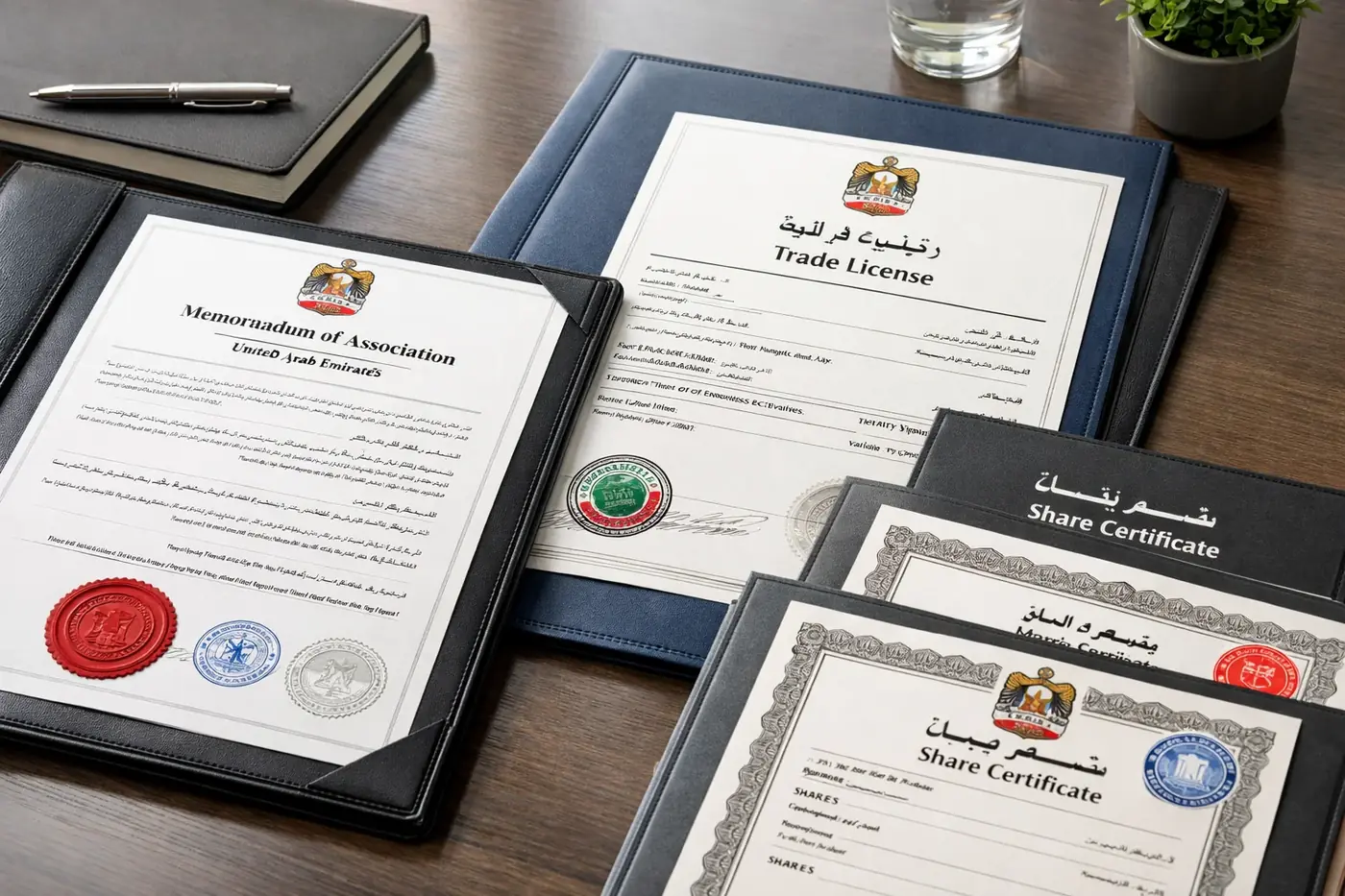
Register the company: Secure name approvals, submit documentation (passport copies, business plan, etc.), and obtain your trade license and certificate of incorporation.
Secure office space: Lease physical office space or flexi-desk arrangement. This is a legal requirement for licensing and directly determines your initial employee visa quota in free zones.
Stage Two: Visa Application Process
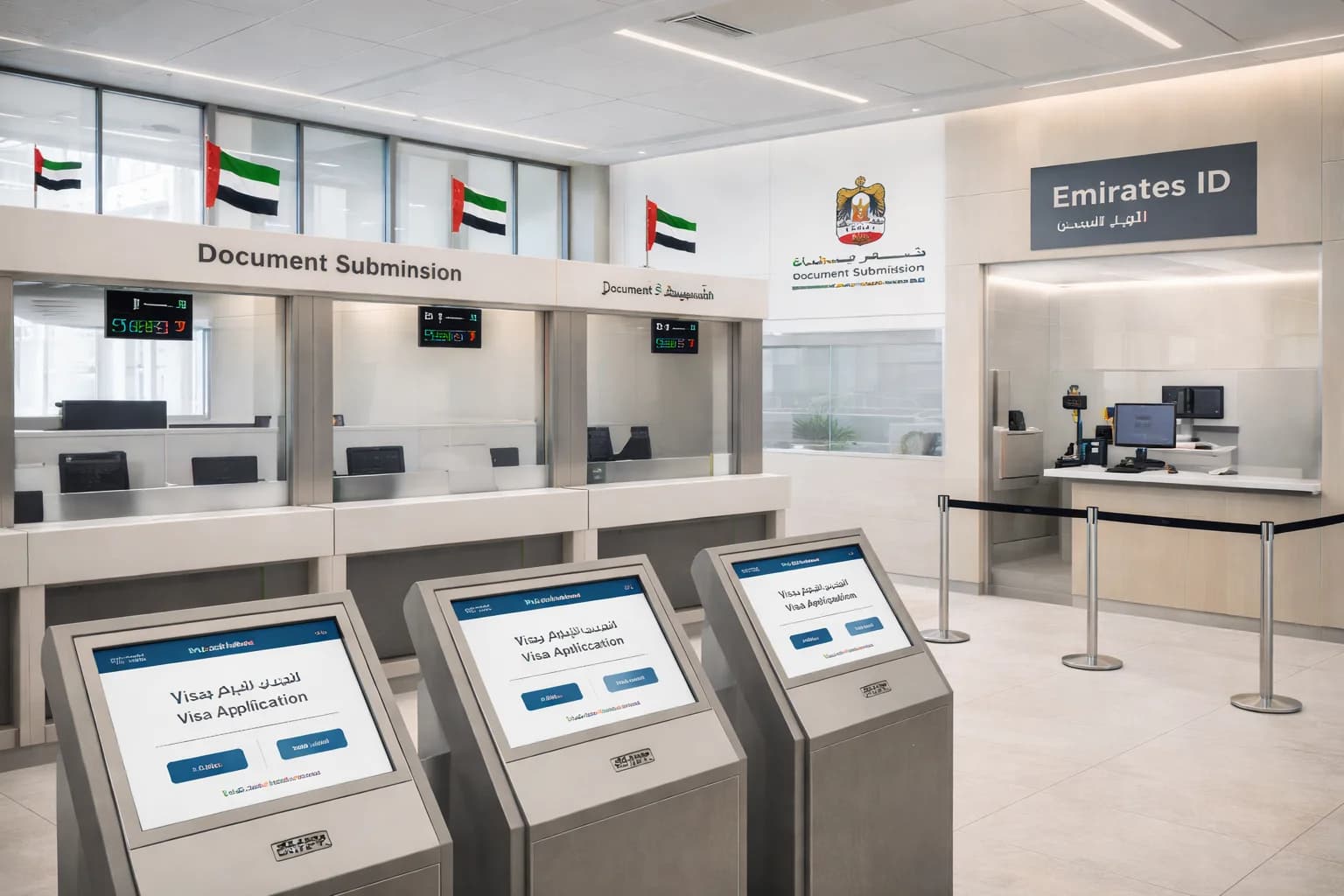
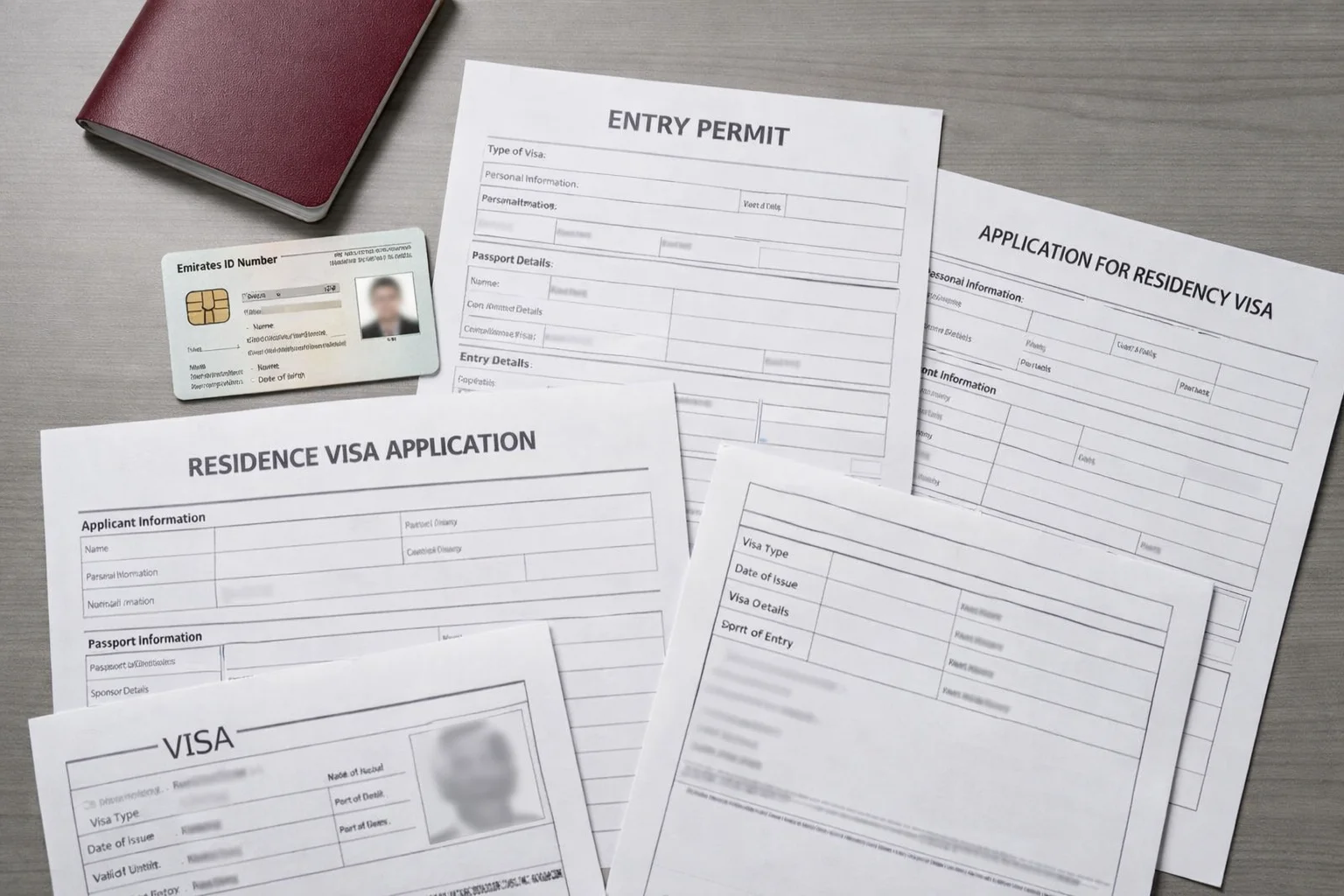
Apply for entry permit: Your company (or PRO service) submits an application for your entry permit, which allows legal entry to UAE for residency processing. These are typically valid for 60 days.
Undergo medical screening: Once in the UAE, complete mandatory medical fitness testing at an approved centre. This screens for communicable diseases, with results usually available within several days.
Apply for Emirates ID: Submit application for Emirates ID, the official identity card for all residents. This involves biometric data capture including fingerprinting.
Receive residence visa stamp: Upon passing medical examinations, your residence visa is processed. The physical passport stamp is now often replaced by digital linkage to your Emirates ID.
Sponsor dependents: After securing your visa, you may sponsor immediate family members (spouse and children), providing proof of relationship and adequate housing.
Costs, Timelines, and Key Requirements
Have questions about this?
A 10-minute call with Mirza often saves weeks of research. No obligation — ask anything about your situation.
Planning requires realistic budgeting and scheduling. Note that all fees are subject to change by authorities.
Typical Cost Ranges
Costs vary considerably based on jurisdiction and specific requirements. Company formation can range from approximately AED 15,000 to AED 50,000 or more, depending on jurisdiction and license type. Government fees for standard 2-3 year residency visas for one person typically fall between AED 3,000 and AED 5,000, excluding service agent fees. Additional costs include mandatory health insurance, Emirates ID fees, and medical testing.
For detailed cost modelling based on your specific requirements, use our business setup cost calculator to estimate comprehensive expenses.
Realistic Timelines
Planning requires realistic time expectations. Company formation typically takes 1 to 4 weeks depending on jurisdiction and document readiness. The visa issuance process itself, from entry permit to residency stamp, can take 2 to 4 weeks under optimal conditions, but should be planned for 4 to 8 weeks to account for documentation verification, medical result processing, and government workflow.
Core Eligibility Requirements
Regardless of pathway, all applicants must meet baseline criteria:
- Passport valid for at least six months
- Successful completion of government medical fitness testing
- Valid health insurance approved by UAE authorities
- Clean criminal record from home country and UAE
- For investor/entrepreneur routes, proof of financial solvency and investment capital
For individuals exploring residency via structured investment, see our advisory breakdown of the UAE Investor Residency pathway.
Advantages of Securing UAE Residency

Benefits extend beyond permission to reside in the country.
Economic and Business Advantages
The UAE's tax framework is significant for many residents. There is no personal income tax, and corporate tax is applied at competitive rates, with many free zones offering qualifying companies 0% rates on eligible income. As a resident, you gain ability to open local bank accounts, access financing, and execute contracts. For business owners, sponsorship authority allows team building, with ability to sponsor family members and domestic help providing comprehensive personal support.
Lifestyle and Logistical Benefits
Residency offers stability, particularly with long-term visas like Golden Residency or the Green Visa, reducing concerns about frequent renewals. The UAE provides high standards of living, with modern infrastructure, healthcare systems, and international schools. Logistically, UAE residence visa facilitates easier regional travel and offers more flexible rules regarding time spent outside the country compared to short-term visas.
Limitations and Points to Consider
Understanding constraints within the system is essential for realistic planning.
Processing and Regulatory Factors
Processing times and regulatory interpretation can vary between emirates and even between different free zone authorities. Visa quotas for companies represent fixed limitations; the number of employees you can sponsor is determined by office square footage and license type. Increasing this quota requires official approval and often physical office upgrades. The regulatory landscape evolves, requiring ongoing awareness or working with knowledgeable advisors.
Financial and Logistical Considerations
While there is no explicit "minimum investment" for company formation visas, authorities assess business plan credibility and capitalization. You must demonstrate sufficient funds to sustain business operations and residency. Residency is typically tied to your business license or employment contract; if the business closes or employment ends, visa status is affected.
Common Mistakes and How to Avoid Them
Underestimating visa quota planning: A common error is assuming unlimited employee sponsorship capability.
Solution: From the outset, discuss projected team size with your free zone or DED liaison and select an office package providing necessary visa allocation.
Incomplete or inaccurate documentation: Submitting un-attested educational certificates, expired passports, or documents with name mismatches causes rejections.
Solution: Create meticulous checklists. Ensure all academic and personal documents are attested as required and all details match passport information exactly.
Poor timing and sequencing: Initiating processes without valid prerequisite documents (like active trade license or tenancy contract) leads to immediate delays.
Solution: Do not apply for entry permits until company setup is complete and all personal documents are fully prepared and verified.
Neglecting Ejari registration: The Ejari (tenancy contract registration) is mandatory for processing or renewing residency visas.
Solution: Ensure rental agreements are officially registered with the Ejari system before beginning visa applications.
Who This Option May Not Suit
The UAE business visa pathway may not be optimal for:
- Individuals seeking passive residency without intention of genuine business activity or investment
- Those with capital below thresholds required to credibly establish and sustain UAE-based companies, covering both licensing and living expenses
- Professionals without secured job offers who are not prepared for the commitment and investment of starting their own businesses
- Anyone unable to meet standard health or character requirements set by UAE immigration authorities
Practical Use Cases and Scenarios
The Tech Entrepreneur
Sarah, a software developer from Europe, wants to launch a fintech startup targeting the MENA region. She incorporates in the Dubai International Financial Centre (DIFC) free zone, obtains her investor visa, and uses her office space quota to sponsor her first two engineers. Her business-focused activity makes company formation the logical choice.
The Real Estate Investor
Ahmed has purchased two apartments in Dubai Marina for AED 2.5 million. He applies for 5-year Golden Residency as a real estate investor, providing property deeds from Dubai Land Department. This gives him and his family long-term stability without needing to manage a separate business.
The Senior Executive
Maria is recruited as CFO for a large multinational's regional headquarters in Abu Dhabi. Her employer sponsors her standard employment visa. As her salary exceeds AED 50,000, she later qualifies to apply for 10-year Golden Residency under the "Executive Directors" category, securing status independently of her specific employment.
Your Next Steps
Your journey begins with honest self-assessment. Start by evaluating your primary objective: investment, business ownership, or employment. Critically review your financial resources for both initial investment and ongoing sustainability. Research specific free zones or mainland activities that align with your business model.
For many, the most efficient next step is seeking preliminary professional advice. A reputable consultant can provide tailored guidance, clarify exact document requirements for your situation, and provide realistic cost and timeline overviews. This preparatory work is valuable in transforming the UAE's opportunities into successful and compliant reality for you and your business.
Investor visa eligibility may vary depending on jurisdiction selection and company structure. These considerations are analysed across the jurisdictions included in our Advisory Ecosystem.
Frequently Asked Questions About UAE Investor & Business Residency
1. What are the main UAE residency visa options for investors and entrepreneurs?
The UAE offers Golden Residency (5–10 years), the Green Visa (5 years), residency through company formation (typically 2–3 years per renewal), and standard employment visas. The right option depends on investment level, professional background, and long-term objectives.
2. What is the minimum investment required for a UAE Golden Visa?
Investors commonly qualify through property ownership valued at AED 2 million or more, or through public investment of at least AED 2 million in approved funds. Entrepreneurs and exceptional talents have separate qualification criteria.
3. Can I get UAE residency by starting a company?
Yes. By forming a mainland or free zone company, business owners can sponsor their own residency visa. This is one of the most direct pathways for entrepreneurs planning to actively operate in the UAE.
4. How long does the UAE residency visa process take?
Company setup typically takes 1–4 weeks. The visa processing phase (entry permit, medical test, Emirates ID, and visa issuance) generally takes 2–4 weeks, though planning for 4–8 weeks is advisable.
5. Can UAE residents sponsor their family members?
Yes. Once your residency visa is issued, you can sponsor your spouse and children, provided you meet income and housing requirements and submit official proof of relationship.
6. Do UAE residency visas require a local sponsor?
Golden Residency and the Green Visa do not require a local sponsor. Business owners act as sponsors through their own companies, while employees are sponsored by their employer.
7. What medical and documentation requirements apply?
Applicants must complete government medical fitness testing, hold valid health insurance, have a passport valid for at least six months, and provide a clean criminal record. Investment or employment proof is also required depending on the visa type.
8. What are the main benefits of UAE residency?
Key advantages include no personal income tax, access to banking and financing, ability to sponsor family members, business ownership opportunities, modern infrastructure, and long-term residency stability.
9. Are there limitations to UAE residency visas?
Visa status is tied to your qualifying basis — business license, investment, or employment. If the underlying activity ends, residency may be affected. Visa quotas and regulatory updates must also be considered.
10. Who may not be suitable for UAE investor or business residency?
Individuals seeking passive residency without genuine business activity, those with insufficient capital to sustain operations, or those unable to meet health or background requirements may find this pathway unsuitable.
Remote workers and location-independent professionals may qualify for the UAE Digital Nomad Visa 2026, which provides a residency pathway without requiring UAE company formation or a local employer sponsor.
Sources and official references
Have a question about this?
Leave your details and a UAE expert will get back to you within 1 business day — free, no obligation.
Ready to take action?
Whether you're ready to start or still comparing options — we'll give you a straight answer.
Chat on WhatsApp
Usually replies within 2h
Get a Free Quote
Personalised in 60 seconds
Call Directly
Open daily, 10am–6pm UAE
About the Author
Dubai-based independent advisor on UAE visa, immigration, and offshore structuring. Founder of Henry Club UAE with 90+ published guides. Advisory-first — clarity before commitment.