

I help founders understand their options clearly before they commit to any structure, provider, or direction.
Quick Summary: Dubai Business License Types
- The three types: Dubai mainland licenses issued by the Department of Economy and Tourism (DET/DED) are Commercial (trading physical goods), Professional (services and expertise), and Industrial (manufacturing and processing), determined by your core revenue activity.
- License fees: Commercial and Professional licenses typically start at AED 10,000–20,000, while Industrial licenses start higher, from AED 15,000–25,000+, due to more complex approvals.
- First-year cost: A functional mainland business with an office and a couple of visas often runs AED 65,000–120,000+ all-in, including license, office Ejari, visas, and required insurance.
- Ownership note: Mainland Professional licenses often require a Local Service Agent (a UAE national with no ownership stake or liability), while Commercial and Industrial can be 100% foreign-owned for most activities.
- Activity codes matter: Your application has one primary activity code plus related secondary codes; a mismatch between your invoicing and licensed activities can cause banking delays, compliance fines, and blocked approvals.
- Timeline: A straightforward license can be issued within days to a couple of weeks, but activities needing external approvals (Dubai Municipality, DHA, SIRA, RTA) can extend this by weeks to months.
Dubai Mainland Business License Cost Ranges (2026)
Realistic 2026 cost ranges for Dubai mainland (DET/DED) business licenses, from the license fee alone to a functional first-year setup.
| Item | Typical Cost (AED) | Notes |
|---|---|---|
| Commercial License fee | AED 10,000 – 20,000 | Basic setup; trading of physical goods |
| Professional License fee | AED 10,000 – 20,000 | Basic setup; service-based activities |
| Industrial License fee | AED 15,000 – 25,000+ | Starts higher due to complex approvals |
| Total first-year cost (all-in) | AED 65,000 – 120,000+ | Functional mainland business with office Ejari, a couple of visas and required insurance; varies by scale and location |
Quick answer: Dubai mainland businesses choose from three license types issued by the Department of Economy and Tourism (DET/DED) – Commercial (trading physical goods), Professional (services and expertise) and Industrial (manufacturing and processing) – with your core revenue activity determining the right one. License fees typically start at AED 10,000–20,000 (Industrial from AED 15,000–25,000+), while a functional first-year setup with office, visas and insurance often runs AED 65,000–120,000+. Picking the correct license and activity codes matters because mismatches with your invoicing can stall banking, approvals and compliance.
Introduction
The sections below cover options for entrepreneurs, investors, and business owners actively planning to establish a company in Dubai. Selecting the correct business license type is not an administrative formality; it is a foundational strategic decision. Your choice dictates your legal scope of operations, defines your compliance obligations, and directly impacts your access to banking facilities, visa allocations, and market opportunities. A mismatch between your business model and your license type can lead to rejections, delays, and operational restrictions. This resource provides a clear comparison of the three core Dubai mainland license types to help you make an informed, compliant choice from the start.
What is a Dubai Business License?

A Dubai business license, issued by Dubai’s Department of Economy and Tourism (DET) (commonly referred to as DED for licensing), is the official government authorization that permits a company to conduct specific economic activities within the Emirate of Dubai. It is a mandatory legal document that legitimizes your business, defines its operational boundaries, and is a prerequisite for corporate banking, entering into legal contracts, and sponsoring employee visas. The license must be renewed annually, and operating outside its specified scope can result in compliance issues.
The 3 Main Dubai Business License Types
The Dubai mainland licensing system categorizes businesses primarily by the nature of their economic activity. The three principal types are Commercial, Professional, and Industrial licenses. Your core revenue-generating activity will determine your primary license category.
Commercial License (Definition + Best For)
A Commercial License is required for any business involved in the buying and selling of tangible goods and certain trading-related services. This includes import, export, wholesale, retail, and general trading activities.
This license is best for:
- Retail shops and showrooms
- Import/export and distribution companies
- E-commerce businesses selling physical products
- Trading specific commodities like electronics, building materials, or auto parts
- Logistics and freight forwarding services
Key Distinction: A General Trading License is a subset of the commercial category. It allows a company to trade in a wide, unrestricted range of goods but typically comes with higher capital requirements and additional scrutiny compared to a license for a specific trading activity.
Professional License (Definition + Best For)
A Professional License is designed for individuals, craftsmen, and companies that provide specialized services, expertise, or intellectual labour. The “product” is knowledge, skill, or artistic effort, not a physical commodity.
This license is best for:
- Consultants (management, marketing, IT, financial)
- Legal, accounting, and auditing firms
- Creative and media agencies (design, advertising, content creation)
- Healthcare practitioners and clinics (subject to external approvals)
- Engineering, architectural, and technical consultancy services
- Freelancers and sole proprietors offering professional services
Ownership Note: For mainland professional licenses, a foreign investor typically requires a Local Service Agent (LSA), who is a UAE national. The LSA has no ownership stake, managerial role, or financial liability in the business but is a formal requirement for the license issuance.
Industrial License (Definition + Best For)
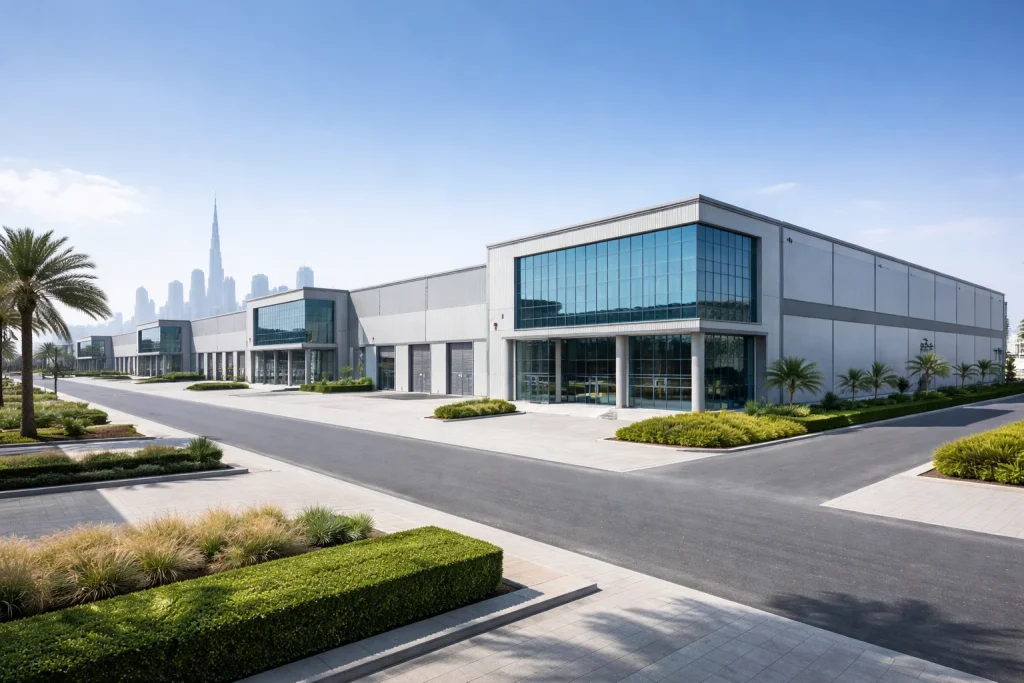
An Industrial License is required for businesses involved in transforming raw materials or components into new products through manufacturing, processing, or assembly. This includes both light and heavy industrial activities.
This license is best for:
- Food and beverage manufacturing and packaging
- Furniture, metal, or plastic product fabrication
- Pharmaceutical or chemical product manufacturing
- Printing, publishing, and large-scale packaging operations
- Apparel and textile manufacturing
Dubai Business License Types Comparison
The following comparison provides a side-by-side overview of the key characteristics of each license type.
Core Activity
- Commercial License: Trading of physical goods; certain services like logistics
- Professional License: Provision of specialized services, expertise, or artistic skills
- Industrial License: Manufacturing, processing, or assembly of goods
Typical Examples
- Commercial License: General trading, retail, e-commerce, auto parts, building materials
- Professional License: Management consultancy, IT services, legal advice, engineering design
- Industrial License: Food production, furniture making, metal fabrication, printing
Ownership Structure
- Commercial License: Can be 100% foreign-owned for most activities
- Professional License: Often requires a Local Service Agent (LSA) for mainland setup
- Industrial License: Can be 100% foreign-owned for most activities
Key Approvals
- Commercial License: Sector-specific bodies for regulated goods (for example, medical or pharmaceutical categories)
- Professional License: Dubai Municipality for engineering; DHA for medical; other professional bodies depending on activity
- Industrial License: Dubai Municipality, Civil Defence, and environmental approvals (where applicable)
Physical Space Requirements
- Commercial License: Commercial office or showroom is required; warehouse may be needed
- Professional License: Commercial office is required; size is often linked to visa quotas
- Industrial License: Industrial land or facility in a designated zone is required
Primary Regulatory Focus
- Commercial License: Supply chain, invoicing for goods, product standards
- Professional License: Professional qualifications, service contracts, intellectual property
- Industrial License: Worker safety, machinery compliance, production processes, environmental standards
How to Choose the Right License Type (Decision Framework)
Follow this decision framework to navigate to the correct license category:
Define Your Core Revenue Activity: Be specific. Ask: “What is the primary service or product for which clients pay me?” If the answer involves selling a physical item you sourced, lean toward Commercial. If it involves selling your time, knowledge, or creative work, lean toward Professional. If it involves creating a new product from raw materials, you need an Industrial license.
Check for Activity-Specific Regulations: Search the official activity list for your specific service or product. If your activity requires external approval from a body such as Dubai Municipality, DHA, or other regulators, it can impact both cost and timelines.
Consider Your Business Structure: Are you a sole practitioner? A Professional license or a specific freelance permit may be suitable. Do you plan to have multiple partners and hire staff? A Commercial or Industrial LLC might be the correct vehicle.
Plan for Your Operational Needs: Where will you work? A Professional license typically requires a commercial office. An Industrial license requires industrial land or a suitable facility. A Commercial license may require both an office and warehouse space depending on the activity. Your space selection influences visa allocations.
Think About Future Expansion: If you plan to offer both products and related services (for example, selling software and providing IT consultancy), you may need to select a primary license type and add secondary, compatible activities, or in some cases, consider separate licensing structures or alternative jurisdictions.
Activity Codes in Dubai (DED): How Selection Works
Have questions about this?
A 10-minute call with Mirza often saves weeks of research. No obligation — ask anything about your situation.

The licensing authority maintains a large list of approved economic activities, each with a unique numerical code. Your license application typically includes one primary activity code and can include several related secondary codes.
Primary Activity Code: This should represent your main source of revenue. It defines your company’s core legal purpose for authorities and banks.
Secondary Activity Codes: You can add related activities to cover adjacent services or product lines. For example, a marketing consultancy might add “Event Organizing” as a secondary activity, where permitted.
Why Precise Selection is Critical:
- Banking: Banks cross-check your business model and transactions against your licensed activities. Misalignment can lead to delays, additional compliance checks, or rejection
- Compliance: Issuing invoices for unlicensed activities can result in fines and regulatory issues
- Approvals: Selecting a code that requires an external approval (NOC) triggers a parallel process with another authority. Missing required approvals can delay or block license issuance
Get Activity Shortlist
Tell us your business model and target market — we’ll suggest the most suitable license type + activity codes to avoid approval or banking issues.
Costs, Approvals, Office Requirements and Timeline
Costs (Realistic Ranges)
License Fees: Commercial and Professional licenses typically start in the range of AED 10,000 to AED 20,000 for basic setup. Industrial licenses can start higher, from AED 15,000 to AED 25,000 or more, due to complex approvals.
Total First-Year Cost: Entrepreneurs should budget beyond the license fee. For a functional mainland business with an office and a couple of visas, first-year all-in costs (including license, office Ejari, visas, and required insurance) often range from AED 65,000 to AED 120,000 or more depending on scale and location.
Additional Considerations: Account for bank requirements (which may include minimum balances in certain cases), corporate tax registration and ongoing accounting, audit requirements (where applicable), and renewal costs which can vary depending on office, visas, and approvals.
Approvals
Many activities require a No Objection Certificate (NOC) or approval from an external authority before the final license is issued. Common examples include:
- Dubai Municipality: For certain food-related, engineering, and construction activities
- Dubai Health Authority (DHA): For medical, clinic, and pharmaceutical activities
- Security Industry Regulatory Agency (SIRA): For security services and equipment
- Roads and Transport Authority (RTA): For transportation and rental car services
Office Requirements
Mainland: A physical office space with a registered tenancy contract (Ejari) is required for many license types. The office size can influence the number of employee visas you can sponsor.
Professional and Commercial: Often require a commercial office in a business-friendly building or area.
Industrial: Must be located in an appropriate industrial facility or designated zone.
Timeline
A straightforward license without external approvals can be issued within days to a couple of weeks. However, if external approvals are required, the process can extend by several weeks to months, depending on the authority involved and the complexity of the application.
Common Mistakes to Avoid
Choosing a Jurisdiction Based Solely on Price: Selecting a setup option because it appears cheaper, when your target market requires mainland access, can later restrict your operations and force you to obtain additional licensing or restructure.
Activity-License Mismatch: Attempting to conduct professional consulting under a commercial trading license, or vice versa. This misalignment can create problems with banking and contracts.
Ignoring External Approvals: Proceeding with a business plan for a restaurant, clinic, or security company without budgeting for or initiating the approval process from the relevant authority (Municipality, DHA, SIRA).
Invoice-License Misalignment: Issuing invoices for services or goods not listed on your license can create compliance issues and may trigger penalties or additional regulatory attention.
Unrealistic Visa Expectations: Assuming a license automatically grants a large number of visas. Visa allocations are commonly tied to office space and activity type.
Under-Budgeting: Focusing only on the advertised license fee and not planning for full first-year operational, compliance, and banking costs can create cash flow challenges.
Who Should Seek Specialist Advice Before Applying?
You should strongly consider consulting a licensed business setup advisor or legal professional if:
- Your intended activity is regulated and requires external approval (for example, healthcare, finance, education, aviation)
- You plan to combine activities that span different license categories (such as manufacturing products and providing related training services)
- Your business model is complex, involves multiple partners, or includes holding structures
- You are targeting sectors with foreign ownership restrictions or additional regulatory layers (for example, select legal activities or security-related services)
- You are unsure about long-term jurisdiction implications for growth and market access
Practical Use Cases
Freelancer/Consultant (Graphic Designer): Would obtain a Professional License with a primary activity like “Graphic Design Services.” They typically require a commercial office solution (which may be via a business centre depending on the setup) and may need an LSA.
Trading Company (Electronics Wholesaler): Would obtain a Commercial License with a specific activity like “Electronics and Mobile Devices Trading.” They typically require a commercial office and may also need warehouse space depending on volumes and approvals.
E-commerce (Online Fashion Retail): Would typically obtain a Commercial License with an e-commerce or online retail activity code. They require a registered office address for licensing and may fulfil orders via third-party logistics or a separate warehouse.
Manufacturing (Custom Furniture): Would obtain an Industrial License with an activity like “Furniture Manufacturing.” Must operate from an appropriate industrial facility and may require Civil Defence and other approvals depending on machinery and processes.
Services Agency (Digital Marketing): Would obtain a Professional License with activities like “Marketing Consultancy” and related media services (where permitted). Operates from a commercial office and typically bills for strategy and services.
Next Steps
With a clearer understanding of the licensing landscape, the next step is to move from general knowledge to a specific application plan. Begin by clearly defining your business model and checking the official activity list to identify precise activity codes and any external approvals. Use the decision framework in this guide to confirm your license type. For complex scenarios or to reduce compliance risk from day one, engaging a reputable consultant can provide tailored guidance and help you avoid common mistakes that delay new businesses.
Sources and official references
Frequently Asked Questions (FAQ) — Dubai Business License Types 2026
What are the main Dubai business license types?
The three main Dubai mainland business license types are Commercial, Professional, and Industrial. Your license type is primarily determined by your core economic activity (trading goods, providing services, or manufacturing/production).
What is the difference between a Commercial and Professional license in Dubai?
A Commercial license typically covers businesses that buy and sell goods (trading, retail, import/export, e-commerce of products). A Professional license is typically for service-based work where the value comes from expertise or skill (consulting, technical services, design, marketing, accounting, and similar activities).
When do I need an Industrial license in Dubai?
You generally need an Industrial license if your business involves manufacturing, processing, assembling, or transforming raw materials into finished products. Industrial licensing often involves additional approvals and facility requirements.
Can one company have multiple activities under one Dubai license?
Yes, most businesses can include a primary activity and add secondary activities, provided they are compatible and approved under the licensing authority rules. Activity selection should match how you plan to invoice clients and how banks will review your transactions.
What are Dubai activity codes and why do they matter?
Dubai activity codes define what your business is legally permitted to do. Choosing the correct codes is critical because your license approvals, compliance obligations, and banking assessment often depend on whether your business activity codes match your real operations.
Can choosing the wrong license type affect business bank account approval?
Yes. If your invoicing and transactions do not align with your licensed activities and license type, banks may request clarification, ask for additional documentation, or delay approval. Choosing the correct license type and activity codes reduces avoidable banking friction.
Do Professional licenses always require a Local Service Agent (LSA)?
In many mainland scenarios, professional license structures may involve a Local Service Agent (LSA). Requirements can vary depending on the activity, legal form, and current rules. For decision-making, it’s best to confirm the structure applicable to your specific activity before applying.
How long does it take to get a Dubai mainland business license?
Timelines vary by activity complexity and whether external approvals are needed. In straightforward cases, licenses may be issued within days to a couple of weeks. Regulated activities that require approvals from other authorities can take longer.
How much does a Dubai business license cost in 2026?
Costs vary by license type, activity, office setup, and visa requirements. Many businesses budget not only for license fees but also for office/Ejari, visa costs, insurance, approvals (if applicable), and ongoing compliance expenses.
Which license type is best for e-commerce businesses?
E-commerce businesses selling physical products typically fall under a Commercial license. The exact activity code selection matters (for example, online retail categories), especially for payments, logistics arrangements, and banking alignment.
Which license type is best for consultants and agencies?
Consultants, agencies, and service providers typically apply under a Professional license, with activity codes reflecting the exact service scope (for example, management consultancy, marketing services, IT services, design services, or technical consultancy).
What is the safest way to choose the correct Dubai business license type?
The safest method is to clearly define your primary revenue activity, shortlist the matching activity code(s), identify whether external approvals are required, and confirm that your planned invoicing and operational model match what the license permits.
Once you have confirmed your license type, review the detailed cost breakdown in our Dubai mainland license cost 2026 guide to build an accurate budget before committing to the setup process.
Have a question about this?
Leave your details and a UAE expert will get back to you within 1 business day — free, no obligation.
Ready to take action?
Whether you're ready to start or still comparing options — we'll give you a straight answer.
Chat on WhatsApp
Usually replies within 2h
Get a Free Quote
Personalised in 60 seconds
Call Directly
Open daily, 10am–6pm UAE
About the Author
Dubai-based independent advisor on UAE visa, immigration, and offshore structuring. Founder of Henry Club UAE with 90+ published guides. Advisory-first — clarity before commitment.