

I help founders understand their options clearly before they commit to any structure, provider, or direction.
Establishing a formal e-commerce business in Dubai involves more than launching a website—it's about building a credible, scalable, and compliant enterprise in a well-connected commercial hub. An e-commerce license provides legal authorization to operate online, enabling you to open corporate bank accounts, process payments, hire staff, and secure residency. For entrepreneurs looking to access regional and global markets, this represents a foundational step in establishing a legitimate business structure.
The sections below cover options for online sellers, digital service providers, brand creators, and entrepreneurs ready to formalize their operations. For sellers engaged in dropshipping, selling digital products, managing a multi-vendor marketplace, or building a direct-to-consumer brand, obtaining appropriate e-commerce licensing is an important consideration. If you seek the structure to partner with major platforms, attract investment, and obtain UAE residency, understanding this process is essential.
Quick Summary: Dubai E-commerce License in 2026
- License options: Free zone e-commerce license (IFZA, Meydan, Dubai CommerCity, DMCC, SHAMS) for international trade, or DED mainland e-trader/e-commerce license for UAE market access.
- Cost range: Free zone e-commerce packages AED 6,000–35,000 first year depending on visa quota and office. DET e-trader (for Dubai-resident UAE and GCC nationals) AED 1,070 plus AED 300 Dubai Chamber membership; full mainland e-commerce license AED 15,000–25,000.
- Best free zones for e-commerce: IFZA (cost-effective), Meydan (Dubai address), Dubai CommerCity (specialised e-commerce ecosystem), SHAMS (creative + e-commerce).
- Payment gateway access: Mainland licenses integrate cleanly with UAE payment gateways (Telr, Network International, Stripe UAE); free zones can also integrate but bank account opening must come first.
- VAT and tax: 5% VAT applies on goods/services sold in UAE; 9% Corporate Tax on profits above AED 375,000. Free zone may qualify for 0% on qualifying income.
- Setup time: 3–10 working days for free zone e-commerce; 5–15 days for DED mainland license depending on activity.
Understanding Your Licensing Options: Mainland vs. Free Zone

A crucial first decision is choosing between a mainland Dubai license and a free zone e-commerce license. This choice affects your market access, cost structure, and operational flexibility.
Mainland Ecommerce License (Department of Economic Development - DED)
A mainland license, issued by the Dubai DED, allows you to conduct business across the UAE local market. You can sell directly to consumers and businesses in Dubai, Abu Dhabi, and other emirates. This option is typically preferred if your primary target audience is within the UAE. For comprehensive information on Dubai mainland company formation, traditional structures involved local partnership requirements, though recent regulations have expanded foreign ownership opportunities in specific sectors and activities. Consulting current DED regulations is advisable for your specific business activity.
Free Zone Ecommerce License
Free zones offer 100% foreign ownership and full profit repatriation. However, a key legal restriction exists: a free zone company cannot directly conduct business within the UAE mainland market. It is designed for businesses targeting customers outside the UAE or within other free zones. This makes free zones suitable for export-focused e-commerce, international dropshipping, digital services for global clients, and businesses that may later establish separate mainland distribution arrangements for local sales.
When evaluating UAE free zone options for e-commerce, several zones have developed ecosystems supporting digital businesses:
- Dubai CommerCity: A dedicated e-commerce free zone in the region, offering specialized licenses, integrated logistics, and warehouse facilities.
- Dubai Multi Commodities Centre (DMCC): A large, established zone with specific e-commerce licensing categories, suitable for cross-border trade operations.
- Sharjah Media City (SHAMS): Known for cost-effective licensing for digital and media businesses, including e-commerce. For budget-conscious entrepreneurs, reviewing affordable free zone alternatives can provide additional context.
- Dubai Silicon Oasis (DSO): A technology-focused zone that suits tech-driven e-commerce and app-based business models.
A comprehensive comparison of free zone features can help evaluate which jurisdiction best aligns with your specific e-commerce model and target markets.
The Step-by-Step Setup Process
The journey from concept to a licensed e-commerce business follows a structured path.
Planning and Application
Define Your Business Model: Clearly articulate what you are selling (physical goods, digital products, services), your target geography (UAE, GCC, global), and your fulfilment method (dropshipping, own inventory, print-on-demand).
Choose Your Jurisdiction: Decide between mainland and free zone based on your target market analysis.
Select Your License Activity: Be specific about your activities. Common classifications include "E-commerce," "Online Retail," "Digital Marketing," or "Digital Content Production."
Submit Documentation: Prepare passport copies, a business plan or description, and any relevant professional documentation. Apply through a registered agent or directly to the relevant authority.
Licensing and Incorporation
Secure Trade Name: Reserve your company name with the relevant authority (DED or Free Zone).
Obtain Initial Approvals: Receive preliminary clearance for your chosen activity.
Sign License Agreement and MOA: Finalize your legal documents. For mainland structures, this includes the Memorandum of Association and any applicable partnership arrangements.
Pay Fees and Receive License: Upon payment of government and service fees, your official e-commerce trade license and company registration certificate are issued.
Post-License Operational Setup
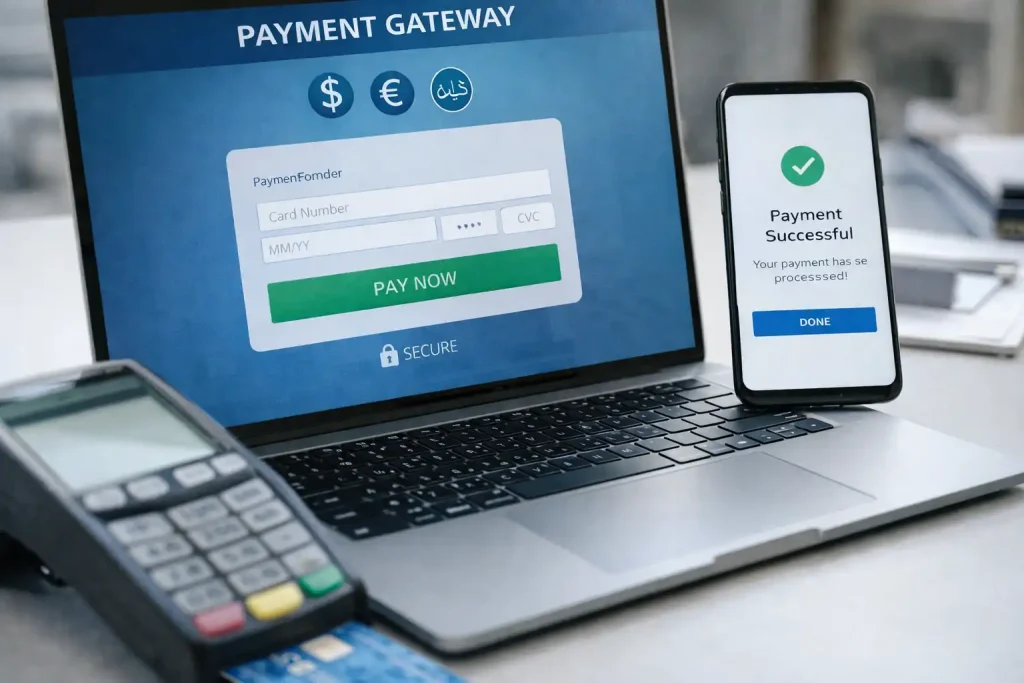
Open a Corporate Bank Account: This is an important step. Present your license, business plan, and financial documentation to banks. Understanding UAE business banking requirements in advance can facilitate this process. Consider both traditional UAE banks and digital banking platforms.
Establish Your Digital Infrastructure: Register your domain, set up your website (on platforms like Shopify, WooCommerce, or custom development), and integrate payment gateways. UAE-approved payment service providers include Telr, PayTabs, and Checkout.com.
Apply for Residency Visas: Sponsor visas for yourself and employees through your company, following standard UAE visa and immigration procedures.
Implement Logistics: Arrange shipping partnerships (such as Aramex, Fetchr, or Emirates Post) and determine your warehousing strategy—using third-party logistics providers or warehouse facilities in zones like CommerCity.
Costs, Timelines, and Eligibility
Realistic Cost Breakdown
Total investment varies significantly based on business model and jurisdiction. Below is a comparison of typical first-year setup estimates. These figures are approximate and can vary based on specific requirements and service providers.
| Cost Component | Mainland Dubai (DED) | Free Zone (e.g., Dubai CommerCity) | Free Zone (e.g., SHAMS) |
|---|---|---|---|
| License & Registration Fees | AED 15,000 - AED 25,000 | AED 15,000 - AED 20,000 | AED 12,000 - AED 15,000 |
| Local Service Arrangements (if applicable) | AED 15,000 - AED 30,000 (variable) | Not Applicable | Not Applicable |
| Office/Address Solution | Physical office often required (AED 20,000+ yearly) | Flexi-desk/Virtual Office often included | Virtual Office typically included |
| Government Visa Fees (for owner) | Approximately AED 3,500 | Approximately AED 3,500 | Approximately AED 3,500 |
| Professional Service Fees | AED 7,000 - AED 12,000 | AED 5,000 - AED 8,000 | AED 4,000 - AED 6,000 |
| Estimated Year 1 Total | AED 60,000+ | AED 25,000 - AED 35,000 | AED 20,000 - AED 27,000 |
For detailed cost planning specific to your situation, utilizing a business setup cost calculator can help estimate total investment requirements.
Additional Operational Costs to Consider:
- Payment Gateway Setup: One-time and transaction fees
- Website & Platform Costs: Subscription fees for e-commerce platforms, web development, and hosting
- Marketing & Advertising: Budget for social media advertising and digital marketing
- Shipping & Logistics: Courier accounts and third-party logistics storage fees if maintaining inventory
Project Timeline
A free zone e-commerce license can often be secured within 7 to 10 working days after document submission, though timelines vary. The mainland process may take 2 to 4 weeks. Subsequent steps including bank account opening, visa processing, and website launch can add an additional 1 to 3 months before becoming fully operational.
Basic Eligibility
- Shareholders and managers must be at least 18 years old
- Clean personal and professional background required for licensing and banking approval
- Some jurisdictions may request a business plan or description of your e-commerce model
Advantages and Strategic Limitations
Have questions about this?
A 10-minute call with Mirza often saves weeks of research. No obligation — ask anything about your situation.
Key Advantages of a Dubai Ecommerce License
- Business Credibility: A Dubai-based company can enhance credibility with suppliers and customers internationally.
- Strategic Logistics Location: Access to established airports and ports can facilitate import/export operations and potentially reduce shipping costs and timelines.
- Tax Environment: Operate in an environment with zero percent personal income tax. Corporate tax regulations should be reviewed for your specific structure. For comprehensive information, reviewing UAE corporate tax requirements is advisable.
- Full Ownership in Free Zones: Maintain 100% control and ownership of your business in free zone structures.
- Residency Access: The license enables you and eligible family members to obtain UAE residency.
Important Limitations to Consider
- Market Access Rules: Free zone companies cannot sell directly to the UAE mainland market without establishing local distribution arrangements or a separate mainland entity.
- Banking Considerations: E-commerce is sometimes perceived as higher risk by banking institutions. Demonstrating a clear business model and providing comprehensive documentation is important for account approval.
- VAT Compliance: If annual turnover exceeds the mandatory VAT registration threshold (currently AED 375,000), you must register for VAT. You then charge 5% on taxable supplies to UAE customers, which adds compliance work.
- Consumer Protection Regulations: You must comply with UAE's electronic commerce and consumer rights regulations, including clear return and refund policies.
Common Mistakes and How to Avoid Them
Misaligned Jurisdiction Choice: Selecting a free zone primarily for cost savings while your main customers are within the UAE mainland. Evaluate your primary target market realistically for your first 12-24 months. If it's predominantly UAE-based, mainland licensing may be more appropriate.
Payment Gateway Assumptions: Assuming international payment processors like Stripe or PayPal are readily available for UAE businesses. Research UAE-approved payment service providers early in planning. Incorporate their setup requirements and documentation needs into your timeline.
Inadequate Logistics Planning: Lacking clear plans for product delivery and returns handling. Establish courier service agreements before launch and define your return policy and process clearly on your website and in terms of service.
Data Protection Oversight: Insufficient attention to UAE's data protection regulations when collecting customer information. Ensure your website has a compliant privacy policy and secure data handling practices from the outset.
Who Might Need a Different Solution?
A dedicated e-commerce license may not be optimal if:
- You are a solopreneur or freelancer selling services (such as graphic design or copywriting) rather than products. A simpler freelancer permit from a free zone may be more appropriate and cost-effective.
- Your business is a side project with minimal revenue expectations and no immediate need for business banking or residency. Operating as an individual seller on established platforms may initially suffice.
- You plan to sell exclusively through third-party marketplaces like Amazon.ae or Noon.com, which have their own seller requirements. Even then, holding your own license can still help with growth and credibility.
Practical Examples and Use Cases

The Global Dropshipper: An entrepreneur sources niche products from Europe and sells to customers in North America and Asia. They choose a cost-effective free zone license. This provides a legal corporate entity for supplier contracts, a UAE bank account for multi-currency transactions, and a residency visa, while legally serving an international customer base.
The Local Specialty Food Brand: An entrepreneur wants to create and sell specialty food products to consumers across the UAE. They opt for a mainland DED license because their core market is domestic. This allows direct sales through their website, supply to local retailers, and participation in local markets and events.
The Digital Education Platform: A team develops professional certification courses and incorporates in Dubai CommerCity with an e-learning license. The zone's digital business focus aligns with their model, and they can sell subscriptions globally without mainland market access restrictions.
Your Clear Next Steps
Launching your e-commerce venture from Dubai requires methodical planning. To move forward effectively, start by clarifying your business plan. Document what you will sell, who your target customers are, and where they are located. This analysis will guide you toward the appropriate jurisdiction.
Next, research the free zones or mainland options that align with your target market. Contact reputable business setup consultants for detailed, itemized quotes based on your specific model. Ask specifically about payment gateway integration experiences and banking success rates for e-commerce clients in your sector.
Prepare for the banking process while preparing your license application. Gather personal financial documentation and draft a concise business plan. By addressing these foundational elements systematically, you position yourself to secure not just a license, but a functional operational platform for your e-commerce business.
Also See: For a strategic comparison of UAE free zone options based on business activity, check out our decision guide: Best UAE Free Zone by Business Activity (2026 Guide) .
E-Trader License vs a Full E-commerce License
Dubai runs two very different permits for selling online, and mixing them up is the most common licensing mistake we see. The eTrader license from Dubai's Department of Economy and Tourism is a home-based permit for selling through social media and online platforms.
The eTrader has hard limits. It is registered to a single owner, and for trading in goods it is aimed at UAE and GCC nationals resident in Dubai. It cannot open a shop, it does not come with residence visas, and the licensee is personally liable in any dispute. E-trading activities also need an approval from the telecoms regulator, the TDRA.
A full e-commerce license is a company. It gives you a legal entity with limited liability, residence visa eligibility, access to payment gateways and corporate banking, and room to hire. If you are an expat resident building an actual online business, the full license is almost always the correct instrument. The eTrader is a side-hustle permit, not a business structure.
Sources & Official References
The information in this guide reflects current UAE federal and emirate-level regulations. For the most up-to-date figures and procedures, consult the official sources below:
- Dubai Department of Economy and Tourism — E-trader — Official DED/DET e-trader and e-commerce license portal.
- Dubai CommerCity — Specialised E-commerce Free Zone — Specialised e-commerce free zone in Dubai.
- Federal Tax Authority — VAT — UAE VAT registration and filing for e-commerce businesses.
- UAE Government - DED Trader license from Dubai - the official scope, eligibility and limits of the eTrader permit.
Frequently Asked Questions
What is the difference between an eTrader license and an e-commerce license in Dubai?
The eTrader license is a home-based, single-owner permit for selling through social media, aimed at UAE and GCC nationals resident in Dubai for goods trading. It cannot open a shop or sponsor visas, and the owner carries personal liability. A full e-commerce license creates a company with limited liability, visa eligibility, payment gateway access and corporate banking.
Can an expat get a Dubai eTrader license?
For trading in goods, DET's eTrader license is aimed at UAE and GCC nationals resident in Dubai. As an expat resident, the practical routes are a full e-commerce license on the mainland or in a free zone. A freelance permit works if you sell services rather than products.
Do I need a license to run an online business in Dubai?
Yes. For those who are operating a structured e-commerce business — meaning you process payments, advertise commercially, hold inventory, or operate as a brand. In that case you are expected to hold a valid trade license. This allows you to open a business bank account, work with payment gateways, sign supplier contracts, and operate legally within the UAE framework.
Can a free zone e-commerce company sell directly to customers in Dubai?
No, not directly. A free zone company is designed for international trade or business within free zones. To sell physical goods in the UAE mainland market, you typically need a local distributor or a separate mainland company structure.
Which is cheaper — mainland or free zone e-commerce license?
Free zone setups are often lower in initial cost because they may include flexi-desk or virtual office options. Mainland setups can involve higher costs due to office requirements and local service arrangements, but they provide direct UAE market access.
How long does it take to get an e-commerce license in Dubai?
Free zone licenses can often be issued within 7–10 working days after documentation is submitted. Mainland licensing may take 2–4 weeks depending on activity approvals and documentation readiness. Banking and visa processes add additional time.
Can I get a UAE residence visa through an e-commerce company?
Yes. Once your company license is issued, you can apply for an investor or partner visa, and sponsor employee visas based on your office package and visa quota.
What documents are required to start an e-commerce company?
Typically passport copies, application forms, business activity details, and in some cases a brief business plan. Regulated products or activities may require additional approvals.
Do I have to pay VAT as an online seller in the UAE?
If your annual taxable turnover exceeds the mandatory registration threshold (currently AED 375,000), you must register for VAT and charge 5% on applicable UAE sales.
Can I use international payment gateways like Stripe or PayPal?
Availability depends on your company structure, banking setup, and business model. Many UAE businesses use locally supported providers such as Telr, PayTabs, or Checkout.com alongside international options.
Is dropshipping allowed under a Dubai e-commerce license?
Yes, provided your licensed activity covers online trading or e-commerce. You must still comply with consumer protection, refund policies, and payment regulations.
What happens if I operate without a license?
Operating a commercial online business without licensing can lead to account closures, payment gateway rejection, banking issues, fines, or restrictions when formalizing the business later.
Have a question about this?
Leave your details and a UAE expert will get back to you within 1 business day — free, no obligation.
Ready to take action?
Whether you're ready to start or still comparing options — we'll give you a straight answer.
Chat on WhatsApp
Usually replies within 2h
Get a Free Quote
Personalised in 60 seconds
Call Directly
Open daily, 10am–6pm UAE
About the Author
Dubai-based independent advisor on UAE visa, immigration, and offshore structuring. Founder of Henry Club UAE with 90+ published guides. Advisory-first — clarity before commitment.