
I help founders understand their options clearly before they commit to any structure, provider, or direction.
Establishing a medical practice in Dubai represents a significant professional and entrepreneurial undertaking. The process is governed by regulatory standards designed to ensure high levels of patient care and safety. The journey involves two parallel tracks: obtaining an institutional healthcare facility license and securing individual professional licenses for all medical staff. Success depends on understanding and carefully navigating the requirements of the Dubai Health Authority (DHA), the primary regulator for the emirate's health sector.
The sections below cover options for qualified doctors, dentists, specialists, and healthcare investors who are committed to launching a compliant medical, dental, or aesthetic clinic in Dubai. If you possess the required credentials and experience, and are prepared for a detailed, investment-intensive process to build a practice that meets Dubai's healthcare standards, this information will provide an essential roadmap.
Quick Summary: Dubai Medical License in 2026
- Regulatory body: Dubai Health Authority (DHA) regulates all medical facilities and practitioners in Dubai mainland. DHCC (Dubai Healthcare City) operates its own regulatory framework.
- Two-track process: Facility license (clinic, polyclinic, hospital, day-care) AND personnel license (DHA Eligibility, exam, then license) — both required before operating.
- Setup cost: Facility setup typically AED 150,000+ first year (fit-out, equipment, DHA fees, licensing). Personnel licensing fees AED 2,500–10,000 per practitioner depending on speciality.
- Timeline: 4–9 months from initial submission to operating license — driven by DHA inspections, eligibility verification, and facility fit-out approval.
- Speciality categories: GP, dental, dermatology, day surgery, specialist clinics each have distinct staffing, equipment and inspection requirements.
- Manpower requirements: Each facility type has minimum DHA-licensed staffing: GP minimum 1 doctor + 1 nurse; specialty clinics require qualified specialist consultants in the registered speciality.
Dubai Medical License — Government & Licensing Fees (2026)
Estimated government, verification, and consultant fees for licensing a medical facility and its practitioners in Dubai, as stated on the page.
| Item | Typical Cost (AED) | Notes |
|---|---|---|
| DHA Facility License (application & issuance) | AED 10,000 – 20,000 | Varies by facility size and type |
| Professional License (per practitioner) | AED 2,000 – 4,000 | Excludes third-party costs |
| Dataflow Verification | AED 2,000 – 3,500 | Per professional |
| Prometric Exam Fee | AED 1,500 – 2,500 | Per attempt |
| Consultant / Professional Service Fees | AED 50,000 – 150,000 | For guiding the entire process; or more, by complexity |
The Regulatory Framework: DHA and Beyond
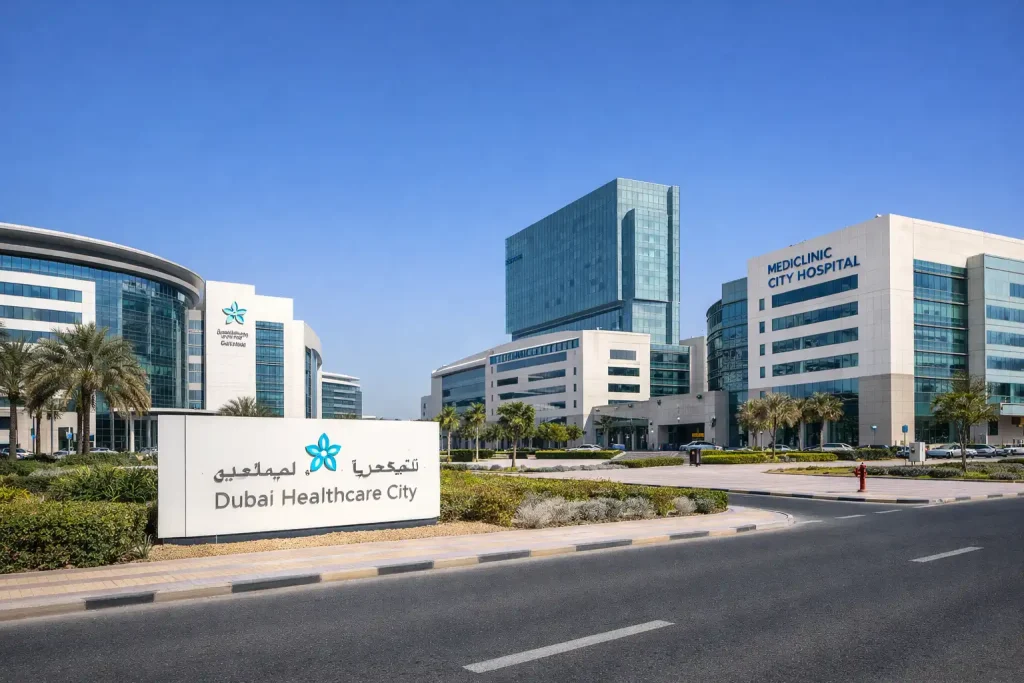
All healthcare facilities and professionals operating within the Emirate of Dubai require licensing by the Dubai Health Authority (DHA). The DHA's mandate is to regulate, permit, and continuously monitor health services. It is important to distinguish between the two core license types:
Healthcare Facility License: This is the operational license for your clinic, medical centre, or day surgery centre. It is issued to the legal entity (the company) and certifies that the physical facility, equipment, and operational protocols comply with DHA regulations.
Professional License (Dataflow & Prometric): Every physician, dentist, nurse, and allied health professional must hold an individual DHA license to practice. This process validates educational and professional credentials, and often requires passing a competency assessment.
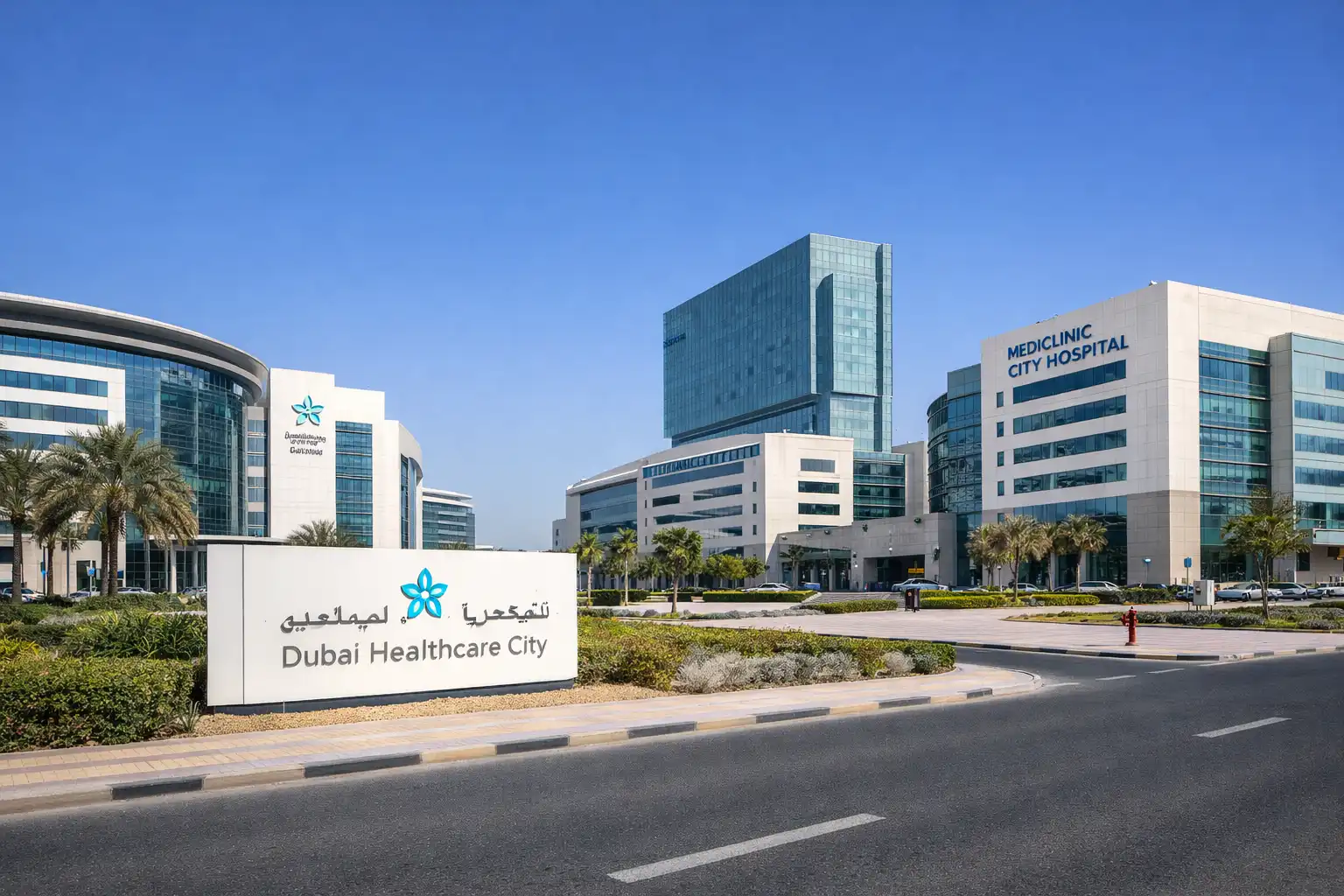
For entities operating in specific free zones like Dubai Healthcare City (DHCC), the regulatory authority is the Dubai Healthcare City Authority - Regulatory (DHCR). While similar in rigor, DHCR operates its own independent licensing system. Understanding the differences between healthcare-focused free zones and mainland options is important for structuring your medical business appropriately. This guide focuses on the broader DHA process, which applies to mainland Dubai and several other jurisdictions.
The Two-Track Process: Facility and Personnel
Setting up a medical practice requires progressing on multiple fronts simultaneously. The facility license and the professional licenses for key staff are interdependent processes.
Track 1: Healthcare Facility Licensing
This process begins with the business entity and its proposed premises.
Initial Business Setup: First, you must establish a legal business entity. For mainland clinics, this typically involves forming a company through the Dubai mainland business setup process, which may involve local arrangements depending on current regulations. In designated healthcare free zones like DHCC, you can form a company with 100% foreign ownership.
Location and Premises Approval: The proposed location must receive pre-approval from the DHA's Health Regulation Department before signing a tenancy contract. The DHA assesses the area's need for the service and the suitability of the building.
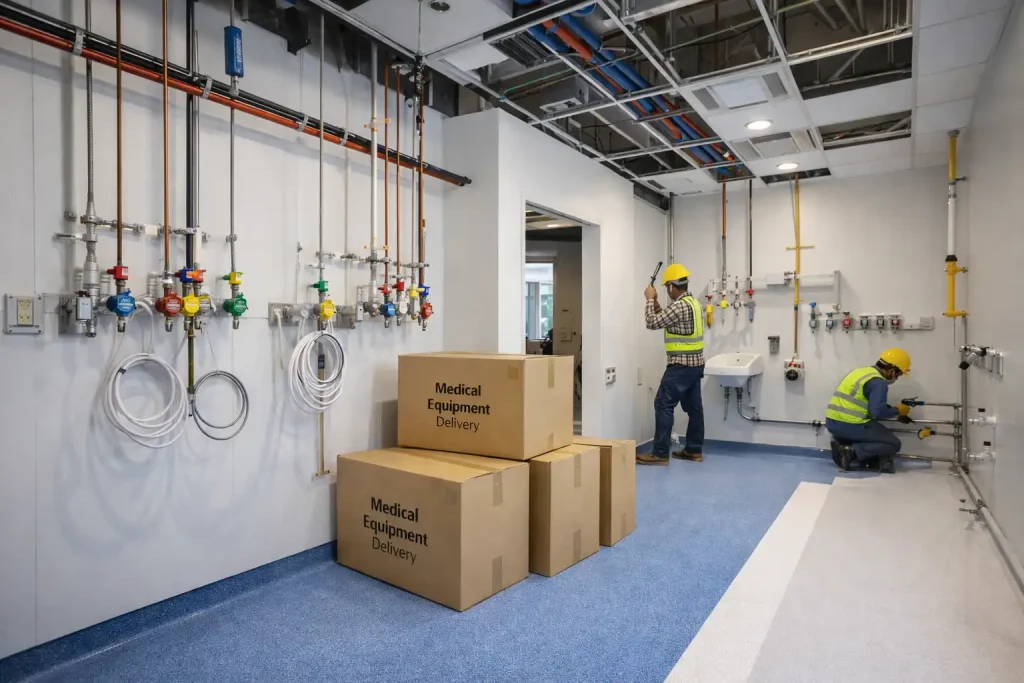
Facility Design and Compliance: Once premises are secured, you must submit detailed architectural and engineering plans (MEP, medical gases, etc.) to the DHA for approval. Your clinic's design must adhere to space, hygiene, workflow, and safety guidelines.
Equipment and Policy Submission: A detailed list of all medical equipment (with proof of calibration and safety) and comprehensive operational policies (infection control, emergency procedures, patient rights) must be submitted for review.
Final Inspection and Licensing: After the build-out is complete, a DHA inspection team visits the facility. Upon passing this inspection, the initial healthcare facility license is issued, typically valid for one year.
Track 2: Professional Licensing for Practitioners
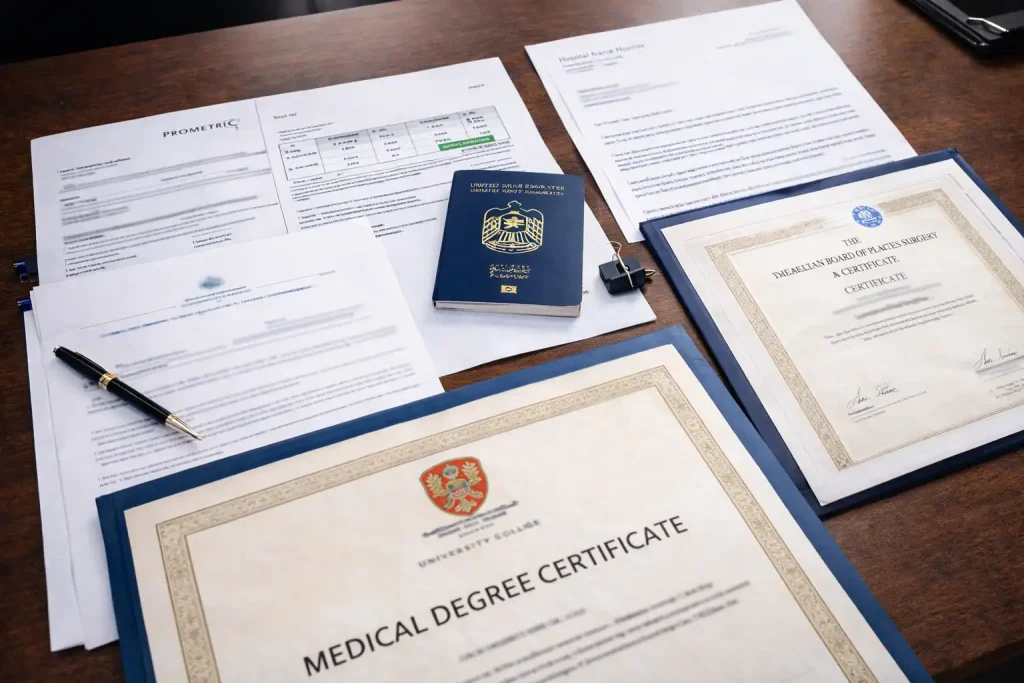
For the medical director and all treating staff, this personal qualification process runs in parallel.
Primary Source Verification (Dataflow): You must initiate a credential verification report through a platform like Dataflow. Your university, licensing boards, and past employers are contacted directly to verify your degrees, certificates, and experience letters.
DHA Eligibility Letter: Once Dataflow is cleared, you apply for a DHA Eligibility Letter. This step assesses your qualifications and experience against DHA standards for your desired specialty. If your background is deemed sufficient, you receive the Eligibility Letter, which allows you to proceed to the examination.
Competency Exam (Prometric): Most applicants must pass a computer-based exam at a Prometric testing centre. The exam is specialty-specific and assesses clinical knowledge. Some senior professionals with extensive, verifiable experience may apply for an exam exemption, though this is not routinely granted.
License Application and Issuance: After passing the exam, you submit a full application, including your Eligibility Letter, passport, photos, and a job offer from the licensed healthcare facility. Understanding UAE visa and immigration procedures is also important as professional licensing connects to residency requirements. The DHA then issues your individual professional license to practice.
Costs, Timelines, and Eligibility
Understanding the Financial Investment
A medical clinic represents a capital-intensive venture. Costs are substantially higher than for standard business setup. The figures below are estimates and can vary significantly based on specific requirements and facility complexity.
Government & Licensing Fees:
- DHA Facility License Application & Issuance: Approximately AED 10,000 - AED 20,000+ (varies by facility size and type)
- Professional License (per practitioner): Approximately AED 2,000 - AED 4,000, excluding third-party costs
- Dataflow Verification: Approximately AED 2,000 - AED 3,500 per professional
- Prometric Exam Fee: Approximately AED 1,500 - AED 2,500 per attempt
Professional Service Fees: Engaging a specialized healthcare setup consultant is strongly advisable. Fees for guiding the entire process typically range from AED 50,000 to AED 150,000 or more, depending on complexity.
Facility Costs (The Largest Investment):
- Premises: Rent for a DHA-approved commercial space in a suitable area represents a major annual cost
- Fit-Out & Construction: Clinical-grade renovation, plumbing, electrical, medical gas lines, and cabinetry can range from approximately AED 300,000 to over AED 1 million
- Medical Equipment: The cost for devices, instruments, furniture, and IT systems varies considerably by specialty
A realistic total initial investment for a small-to-medium specialty clinic can range from approximately AED 700,000 to AED 2.5 million or more. Using a business setup cost calculator can help estimate specific scenarios, though medical practices typically require substantially higher investment than standard commercial setups.
Realistic Project Timeline
From concept to opening, patience is essential. The entire process typically takes 9 to 18 months, though timelines can vary based on complexity and documentation completeness.
- Business Setup & Location Pre-Approval: 2-3 months
- Professional Licensing (for lead doctor): 4-6 months
- Facility Design, Approval, and Construction: 6-10 months
- Final Inspections and Licensing: 1-2 months
Core Eligibility Criteria
For the Business: A clear business plan, adequate financing, and a suitable, pre-approved location.
For Practitioners: Recognized medical degrees, typically 2-5 years of post-graduate experience (specifics vary by specialty and title), a clean professional record, and passage of required competency assessments.
Advantages and Key Challenges
Have questions about this?
A 10-minute call with Mirza often saves weeks of research. No obligation — ask anything about your situation.
Strategic Advantages
- Growing Healthcare Market: Dubai's reputation for quality healthcare attracts local and international patients with high expectations.
- Clear Regulatory Framework: The DHA provides detailed, published standards, creating a transparent regulatory environment.
- Advanced Medical Infrastructure: Access to modern medical infrastructure, conferences, and a diverse talent pool of healthcare professionals.
- Ownership Structures: Options exist for full foreign ownership in designated zones like DHCC.
Significant Challenges and Considerations
- High Barrier to Entry: Substantial upfront capital and time investment are required before generating revenue.
- Operational Complexity: Ongoing compliance with clinical, administrative, and billing regulations requires dedicated staff and systems.
- Competitive Market: The market attracts many practitioners, making a strong business plan and differentiation essential.
- Talent Acquisition and Licensing: Recruiting and licensing clinical staff can be a prolonged process.
Common Mistakes and How to Avoid Them
Signing a Lease Without DHA Pre-Approval: Committing to a property that the DHA later rejects is a costly error. Always obtain written pre-approval for your specific location and intended medical activity from the DHA before signing any rental agreement.
Underestimating Fit-Out Cost and Timeline: Using standard contractors instead of those experienced in medical fit-outs. Engage a consultant or contractor with demonstrated experience in DHA-compliant clinic construction and budget a significant contingency.
Incomplete Credential Verification: Submitting documents that are unclear or cannot be verified. Begin the Dataflow process early. Ensure all experience letters are on official letterhead, state your exact tenure and clinical duties, and come from verifiable institutional sources.
Neglecting the Business Plan: Assuming clinical excellence alone ensures business success. Develop a comprehensive financial model that accounts for high fixed costs, longer break-even periods, and detailed patient acquisition strategies. Understanding UAE business banking requirements early is also important for managing operational cash flow.
Who Should Consider Alternative Paths?
The full clinic setup route may not be suitable for everyone. Consider these alternatives:
- Healthcare Professionals seeking employment: The most straightforward path is to seek a position with an existing DHA-licensed hospital or clinic, where the employer sponsors your professional license. For large-scale medical facilities, reviewing hospital setup requirements can provide context on institutional healthcare operations.
- Telemedicine Providers: For virtual consultation models, licensing and setup requirements can differ from physical clinics, though still regulated.
- Allied Health Professionals: Starting as a freelancer under a licensed facility or within a wellness centre can be a lower-risk entry path.
- Those with Limited Capital: If the investment range is prohibitive, partnerships or joining a multi-specialty medical centre as a practicing partner may be more feasible.
Practical Use Cases
The Specialist Dentist: An orthodontist with 10 years' experience wants to open a boutique practice. She forms a company in Dubai Healthcare City (DHCC) for 100% ownership. After securing DHCR approval for a space in a medical building, she navigates the DHCR professional licensing process (similar to DHA). Her investment focuses on dental chairs, a 3D scanner, and a digital laboratory.
The Investor-Led Medical Centre: A business investor partners with a group of cardiologists to establish an outpatient cardiac centre. They form a mainland LLC, and the process is led by a healthcare consultant who manages the DHA facility application, oversees the complex cardiac lab fit-out, and coordinates the licensing of the specialist doctors and nursing team.
The Aesthetic Doctor: A dermatologist aims to open an aesthetic clinic. She leases a villa in a high-traffic residential area, but her first step is to confirm with DHA that the villa's location and zoning can be approved for a medical aesthetic facility before proceeding with design and credentialing.
Your Strategic Next Steps
Establishing a medical practice in Dubai requires substantial planning and preparation. Your first step should be honest assessment of your financial capacity and tolerance for a lengthy setup phase. Simultaneously, conduct market research for your specialty in Dubai to validate demand.
Next, engage with specialized expertise. Schedule consultations with both a healthcare-focused business setup consultant and a clinical fit-out contractor. Their initial feedback on feasibility, cost, and timeline will be valuable. Begin gathering your professional documents—degrees, transcripts, experience letters—for the credential verification process immediately, as this is often a lengthy personal requirement. For broader context on regulatory compliance, reviewing UAE accounting and tax requirements for healthcare businesses can also be beneficial.
Finally, approach the process with realistic expectations. The rigor of the DHA system ensures that when you open your doors, you do so with the credibility, infrastructure, and regulatory standing to provide quality care and build a sustainable business. Begin with a plan, proceed with patience, and partner with the right experts to navigate this journey.
Also See: For a strategic comparison of UAE free zone options based on business activity, check out our decision guide: Best UAE Free Zone by Business Activity (2026 Guide) .
Sources & Official References
The information in this guide reflects current UAE federal and emirate-level regulations. For the most up-to-date figures and procedures, consult the official sources below:
- Dubai Health Authority (DHA) — Official DHA portal — facility licensing, eligibility and practitioner registration.
- Dubai Healthcare City Authority (DHCC) — DHCC regulator for healthcare businesses inside Dubai Healthcare City free zone.
- Ministry of Health and Prevention (MoHAP) — Federal health regulator for UAE-wide healthcare licensing.
Frequently Asked Questions — Medical Clinic License in Dubai
1. Do doctors need a DHA license to practice in Dubai?
Yes. All physicians, dentists, nurses, and allied health professionals must hold an active Dubai Health Authority (DHA) professional license to legally practice in Dubai, regardless of whether the clinic is mainland or in a healthcare free zone.
2. What is the difference between a facility license and a professional license?
A healthcare facility license is issued to the company and allows the clinic or medical centre to operate. A professional license is issued to each individual healthcare practitioner and permits them to provide medical services within a licensed facility.
3. Can a foreign doctor open a clinic in Dubai with 100% ownership?
Yes, full foreign ownership is possible in certain healthcare free zones such as Dubai Healthcare City (DHCC). On the mainland, ownership structures depend on current business regulations and the chosen legal setup.
4. How long does it take to open a medical clinic in Dubai?
The full process—from business formation and professional licensing to facility construction and inspection—typically takes between 9 and 18 months, depending on specialty, documentation, and construction scope.
5. Is passing the Prometric exam mandatory for DHA licensing?
Most healthcare professionals are required to pass a DHA-recognized Prometric exam after credential verification. In limited cases, highly experienced professionals may apply for exemption, but approval is not guaranteed.
6. What is Dataflow verification and why is it required?
Dataflow is a primary source verification process where your education, licenses, and employment history are checked directly with issuing institutions. It is mandatory to ensure authenticity of medical qualifications.
7. Can I rent a clinic space before DHA approval?
It is strongly recommended to obtain DHA location pre-approval before signing a lease. Leasing a property that does not meet healthcare zoning or facility criteria can result in costly delays or rejections.
8. How much investment is required to start a clinic in Dubai?
Medical clinics require substantial capital. Costs include licensing fees, professional licensing, premises lease, medical fit-out, and equipment. Total investment can vary widely depending on specialty and facility size.
9. Do all clinic staff need individual DHA licenses?
Yes. Every treating professional—including doctors, dentists, nurses, and technicians—must hold an individual DHA license linked to the healthcare facility where they practice.
10. Are aesthetic clinics regulated by DHA?
Yes. Medical aesthetic services such as dermatology procedures, cosmetic treatments, and laser services fall under DHA healthcare regulation and require appropriate facility classification and licensed practitioners.
11. What happens after the clinic license is issued?
After licensing, the clinic must maintain ongoing compliance with DHA standards, including infection control, patient safety protocols, equipment maintenance, and periodic inspections.
12. Can I open a clinic while my DHA license is still in process?
No. A healthcare facility cannot legally operate until both the facility license is issued and the treating professionals hold active DHA licenses.
Have a question about this?
Leave your details and a UAE expert will get back to you within 1 business day — free, no obligation.
Ready to take action?
Whether you're ready to start or still comparing options — we'll give you a straight answer.
Chat on WhatsApp
Usually replies within 2h
Get a Free Quote
Personalised in 60 seconds
Call Directly
Open daily, 10am–6pm UAE
About the Author
Dubai-based independent advisor on UAE visa, immigration, and offshore structuring. Founder of Henry Club UAE with 90+ published guides. Advisory-first — clarity before commitment.