

I help founders understand their options clearly before they commit to any structure, provider, or direction.
Quick Summary: FinTech License Dubai
- Two financial free zones: A regulated UAE FinTech license is issued through the DIFC (Dubai), regulated by the Dubai Financial Services Authority (DFSA), or the ADGM (Abu Dhabi), regulated by the Financial Services Regulatory Authority (FSRA).
- Sandbox first: Each zone offers a regulatory sandbox - DIFC's Innovation Testing License (ITL) and ADGM's Regulatory Laboratory (RegLab) - typically running 3-6 months to test innovations before full market licensing.
- Sector strengths differ: DIFC leans to WealthTech, PayTech, InsurTech and enterprise solutions; ADGM focuses on digital assets/Web3, virtual assets, and AI-driven finance.
- DIFC costs: Sandbox application from about USD 2,000, annual license fees USD 15,000-50,000+, and a mandatory physical office from roughly USD 25,000-50,000+ per year.
- ADGM costs: RegLab application from around USD 1,500, full licenses from USD 15,000 annually, with flexi-desk options from approximately USD 10,000 per year.
- Realistic first-year budget: A startup pursuing a sandbox license should plan approximately USD 100,000 to USD 200,000 covering government fees, office costs, and professional services.
Quick answer: A regulated UAE FinTech license is issued through one of two financial free zones – the DIFC (Dubai) or ADGM (Abu Dhabi) – each with a regulatory sandbox to test innovations before full market licensing. The right choice depends on your technology, target market and whether you will handle client funds, issue digital assets or give licensed financial advice.
Establishing a regulated FinTech company in the UAE represents a commitment to operating with high standards of security, transparency, and consumer protection. For innovators in payments, blockchain, lending, or wealth technology, the UAE offers two established financial jurisdictions: the Dubai International Financial Centre (DIFC) and the Abu Dhabi Global Market (ADGM). Choosing between them involves evaluating which better aligns with your technology, target market, and strategic vision.
The sections below cover options for founders, C-level executives, and strategic investors in technology-driven financial services. For those who are building a company that requires regulatory approval to handle client funds, issue digital assets, or provide licensed financial advice, this roadmap provides comparative analysis. We examine the DIFC and ADGM pathways, focusing on process, costs, and strategic considerations.
The Regulatory Landscape: DIFC vs. ADGM at a Glance

Both DIFC and ADGM are independent financial free zones with their own legal systems, courts, and regulatory bodies. When evaluating UAE free zone options for financial services, these two jurisdictions stand out for their specialized regulatory frameworks designed for FinTech innovation, including regulatory sandboxes. However, their approaches and ecosystems have distinct characteristics.
DIFC (Dubai International Financial Centre)
Regulated by the Dubai Financial Services Authority (DFSA), DIFC is an established financial hub in the region. Its FinTech strategy centres on the DIFC Innovation Hub, which offers a structured Innovation Testing License (ITL). The environment features connectivity to traditional banks, asset managers, and an extensive network of professional services firms. The DFSA's approach is rigorous and principles-based, typically appealing to firms that value proximity to a concentrated financial ecosystem and the brand recognition associated with Dubai.
ADGM (Abu Dhabi Global Market)
Regulated by the Financial Services Regulatory Authority (FSRA), ADGM is recognized for its progressive regulatory approach. Its Regulatory Laboratory (RegLab) operates as a sandbox program. The FSRA has demonstrated particular focus on areas including digital assets, virtual banking, and decentralized finance. ADGM's regulatory environment is characterized as collaborative, with active engagement in developing new frameworks. It often appeals to firms focused on emerging technologies, particularly digital assets, or those seeking connections to capital and institutions in Abu Dhabi.
The table below provides a foundational comparison:
| Feature | DIFC (Dubai) | ADGM (Abu Dhabi) |
|---|---|---|
| Regulatory Authority | Dubai Financial Services Authority (DFSA) | Financial Services Regulatory Authority (FSRA) |
| Core Legal Framework | Common Law (based on English law) | Common Law (directly based on English law) |
| Flagship Sandbox/Program | Innovation Testing License (ITL) | Regulatory Laboratory (RegLab) |
| Typical Sandbox Timeline | 3-6 months | 3-6 months |
| Market Perception | Established, concentrated financial ecosystem | Agile, innovation-focused, digitally-forward |
| Key Sector Strengths | WealthTech, PayTech, InsurTech, Enterprise solutions | Digital Assets/Web3, Virtual Assets, AI-driven finance, Sustainable Finance |
For comprehensive context on how these financial free zones compare to other UAE jurisdictions, reviewing a detailed comparison of UAE free zones can provide broader perspective.
The Licensing Journey: From Concept to Approval
The pathway to a FinTech license typically involves a staged approach, often starting with a sandbox or innovation license before progressing to full market authorization. The process is detailed and requires thorough preparation.
Pre-Application and Strategy
Define Your Regulatory Perimeter: Precisely identify which regulated financial activity your technology performs (such as "Arranging Credit," "Providing Custody," or "Dealing in Investments"). This determines the specific license category you require.
Develop a Comprehensive Business Plan: This is a critical document that must detail your product, technology, risk management, compliance framework, financial projections, and governance structure. It should present a compelling case for your innovation's value and commercial viability.
Engage Specialist Advisors: Given the regulatory complexity, engaging a consultancy or law firm with demonstrated experience in DFSA or FSRA applications is strongly recommended for successful navigation of these processes.
Prepare for "Fit & Proper" Assessments: All shareholders, directors, and senior managers undergo comprehensive background checks. Prepare detailed CVs, professional references, and clean criminal record certificates.
Sandbox Application (Recommended First Step)
Submit Sandbox Application: Through the DIFC Innovation Hub or ADGM RegLab portal, submit your business plan, financial projections, and a detailed testing proposal outlining your objectives, customer safeguards, and exit strategy.
Engage in Regulatory Dialogue: Expect multiple rounds of questions and meetings with regulators. They will evaluate your model for soundness, compliance, and innovation merit.
Secure Sandbox License: Upon approval, you receive a time-bound license (typically 1-2 years) to test your product with defined limitations on customer numbers or transaction volumes.
Graduation to Full Market License
Execute Your Sandbox Testing: Collect data, demonstrate compliance, and validate your business model.
Apply for Full License: Submit a graduation report and apply for full operating authorization. This involves meeting all capital, personnel, and systems requirements.
Final Authorization: Following final review, you receive your full Financial Services Permission (FSP) from the DFSA or FSRA, enabling you to scale your business operations.
Cost Analysis: A Realistic Financial Commitment
Have questions about this?
A 10-minute call with Mirza often saves weeks of research. No obligation — ask anything about your situation.
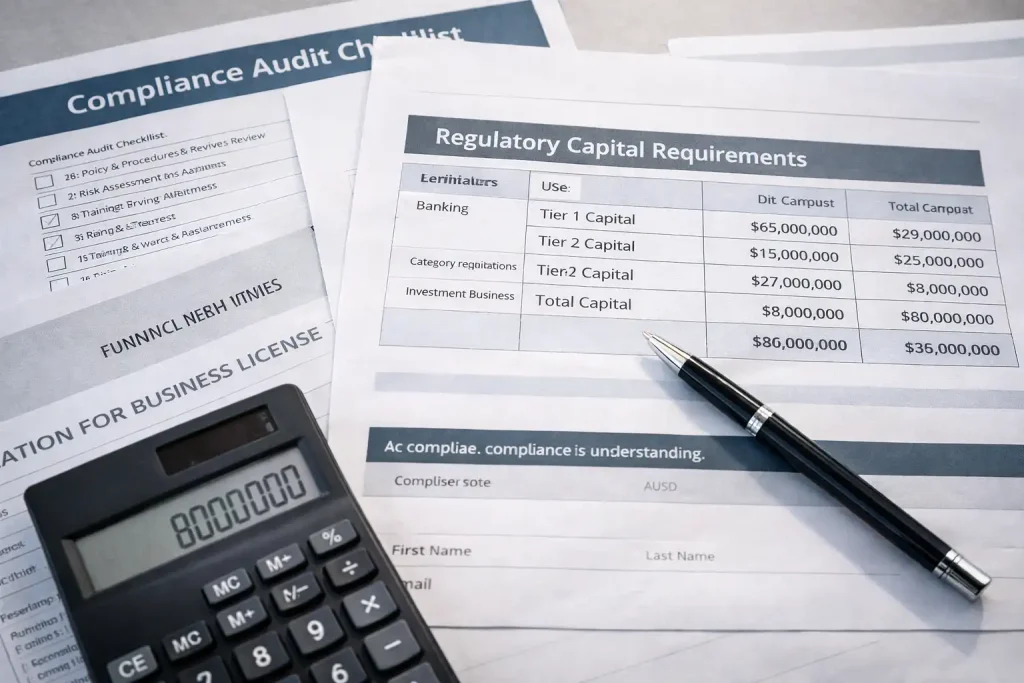
Obtaining a FinTech license represents a substantial investment. Costs are comparable between DIFC and ADGM, though structures differ. The figures below represent typical starting points for basic sandbox applications. Actual costs can vary significantly based on business complexity and specific requirements.
DIFC (DFSA) Cost Overview
- Application & License Fees: Sandbox application fees typically start from approximately USD 2,000. Annual license fees for a full entity generally range from USD 15,000 to USD 50,000 or more, depending on activity scope.
- Mandatory Physical Office: DIFC requires physical office space. Small offices in DIFC typically cost from approximately USD 25,000 to USD 50,000 or more per year.
- Professional Fees: Legal, consultancy, and compliance advisory fees for application preparation and support typically start from USD 40,000 and can exceed USD 100,000 for complex business models.
- Capital Requirements: Minimum capital requirements vary by activity but can start from USD 50,000 for certain restricted categories and extend into millions for full-scale operations.
ADGM (FSRA) Cost Overview
- Application & License Fees: RegLab application fees are competitive, often starting around USD 1,500. Full commercial license fees are comparable to DIFC, typically starting from USD 15,000 annually.
- Office Requirements: ADGM offers more flexibility, including quality flexi-desk options starting from approximately USD 10,000 per year, though physical office space may be required for full licensing.
- Professional Fees: Similar range to DIFC, typically starting from USD 35,000 for advisory and application support.
- Capital Requirements: The FSRA also imposes risk-based capital requirements, which can be comparable in scale to DIFC's for equivalent activities.
Realistic Total Budget: For a startup pursuing a sandbox license, a total first-year budget of approximately USD 100,000 to USD 200,000 is a prudent planning figure, encompassing government fees, office costs, and essential professional services. Using a business setup cost calculator can help estimate specific scenarios.
Strategic Advantages and Considerations
Why Choose DIFC?
- Ecosystem Concentration: Significant access to global financial institutions, investors, and potential clients.
- Brand Recognition: The DIFC brand carries substantial weight across the Middle East, Africa, and South Asia region.
- Established Track Record: A substantial history of licensing and supporting financial institutions.
- Capital Markets Access: Direct access to Nasdaq Dubai exchange for potential future public listings.
Considerations for DIFC
- Higher Fixed Costs: Office rental requirements represent substantial, ongoing overhead.
- Process Formality: The regulatory process can be more traditional and structured in approach.
Why Choose ADGM?
- Regulatory Approach: The FSRA is recognized for collaborative and technology-forward approaches, particularly in digital assets.
- Capital Proximity: Connections to Abu Dhabi's sovereign wealth capital and family offices.
- Cost Flexibility: More adaptable office solutions can potentially reduce initial operational costs.
- Specialist Frameworks: Developing regulations for digital securities, stablecoins, and emerging financial technologies.
Considerations for ADGM
- Developing Ecosystem: While growing, the ecosystem is younger and less concentrated than DIFC's.
- Abu Dhabi Location: Requires strategic alignment with operating from the capital rather than Dubai.
Common Mistakes and How to Avoid Them
Insufficient Business Plan Depth: Submitting a technology-focused plan without comprehensive financial and regulatory substance. Your plan should be investment-grade, with a clear path to profitability and demonstrable understanding of regulatory obligations specific to your activity.
Inadequate "Fit & Proper" Preparation: Underestimating the documentation required for key personnel. Prepare professional narratives for each key person. Employment gaps or complex shareholding structures require clear, transparent explanation from the outset.
Misaligned Jurisdiction Selection: Selecting a jurisdiction based solely on location prestige or perceived cost savings rather than strategic fit. Base your decision on where your target clients, partners, and investors are strategically concentrated and which regulatory approach better suits your business model.
Attempting Independent Navigation: Underestimating the value of specialized regulatory advisors. Regulators expect comprehensive understanding of applicable rules. Experienced advisors bridge the gap between your innovation and compliant, approvable applications.
Who Should Consider Alternative Paths?
A full DFSA/FSRA FinTech license may not be necessary for all technology businesses. Consider these alternatives:
- B2B SaaS tools for financial institutions: You may not require a financial license. A standard technology license in a free zone might be more appropriate.
- Early-stage concept development: Utilize innovation hub resources for workshops and networking before committing to formal sandbox applications.
- UAE domestic market focus: A mainland financial license from the UAE Central Bank (for payment services) or Securities and Commodities Authority may be required, which involves different regulatory processes.
Practical Use Cases

A Blockchain-Based Payments Platform: A company building a cross-border settlement system using stablecoins might consider ADGM. The FSRA's digital assets framework provides established regulatory guidance, and proximity to capital providers in Abu Dhabi can be beneficial.
A Robo-Advisor for Expatriates: A firm creating a digital wealth management application for international professionals in the GCC might choose DIFC. Its ecosystem includes potential partners such as custodians and brokers, along with direct access to a financially sophisticated target market.
An InsurTech Startup: A company using IoT and AI to develop commercial insurance pricing might find advantages in DIFC, given its concentration of global insurance and reinsurance firms seeking innovation partnerships.
Your Strategic Next Steps
The decision between DIFC and ADGM is foundational. Begin by documenting a clear summary answering: What is the core regulated activity? Who is the first target customer segment? Where do potential partners and investors operate?
Next, engage in preliminary consultations. Speak with a specialized advisor with experience in both jurisdictions. Present your business summary and request candid assessment on jurisdictional fit, key regulatory hurdles, and resource requirements. Understanding UAE banking requirements early in the process is also advisable, as corporate banking access will be essential post-licensing.
Finally, plan for a multi-stage journey. Budget and timeline should account for the sandbox phase as a necessary validation period. For visa and residency planning as you establish operations, reviewing UAE visa and immigration procedures will be important. The goal extends beyond obtaining a license—it's building a credible, scalable, and compliant financial technology business. Your choice of regulatory jurisdiction is the first strategic step in that journey.
For a detailed step-by-step breakdown of the DIFC licensing process, regulated activities, and associated costs, see our dedicated guide to DIFC company setup 2026.
Sources and official references
Related guides
Have a question about this?
Leave your details and a UAE expert will get back to you within 1 business day — free, no obligation.
Ready to take action?
Whether you're ready to start or still comparing options — we'll give you a straight answer.
Chat on WhatsApp
Usually replies within 2h
Get a Free Quote
Personalised in 60 seconds
Call Directly
Open daily, 10am–6pm UAE
About the Author
Dubai-based independent advisor on UAE visa, immigration, and offshore structuring. Founder of Henry Club UAE with 90+ published guides. Advisory-first — clarity before commitment.