
I help founders understand their options clearly before they commit to any structure, provider, or direction.
Quick Summary: DMCC Company Setup Process
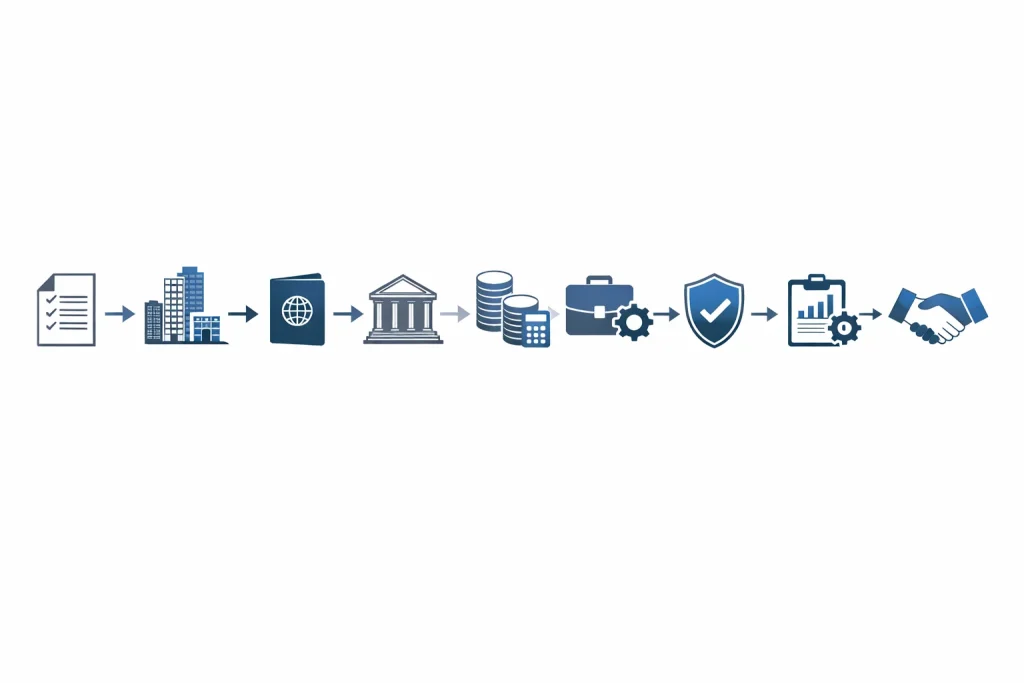
- How it works: DMCC company formation runs through nine sequential stages, from business activity selection and KYC review to license issuance, Establishment Card and visa processing.
- Timeline: In straightforward cases with complete documentation and standard activities, the core licensing can be completed in around a couple of weeks.
- Key benefits: 100% foreign ownership, full repatriation of capital and profits, and potential eligibility for 0% corporate tax on qualifying income.
- Office requirement: A physical workspace within the free zone (Jumeirah Lakes Towers) is mandatory, ranging from flexi-desks to private offices.
- Visas: The number of residency visas you can sponsor is directly linked to your office space classification, activated via the Establishment Card.
- Structure options: Choose a Free Zone LLC (FZ-LLC), Free Zone Establishment (FZE) for single shareholders, or a Branch of a foreign entity.
Quick answer: Setting up a company in the Dubai Multi Commodities Centre (DMCC) free zone runs through nine sequential stages – from business activity selection and KYC review to license issuance, the Establishment Card and visa processing – and in straightforward cases the core licensing can be completed in around a couple of weeks. DMCC offers 100% foreign ownership, full repatriation of capital and profits, and potential eligibility for 0% corporate tax on qualifying income, though a physical workspace within the free zone is mandatory and visa quotas depend on the office leased.
The sections below provide a detailed breakdown of establishing a company within the Dubai Multi Commodities Centre (DMCC) free zone. Based on current regulations and standard procedures as of early 2026, it is written for founders, investors, and business leaders who are evaluating DMCC or preparing to begin the setup process. The goal is to clarify the mechanics, timeline, and documentation requirements you'll encounter, helping you navigate each stage efficiently and avoid common delays.
Who Should Consider This
You are likely an entrepreneur, an executive managing a market expansion, or a startup founder seeking an international business base with regulatory clarity. You value structured processes, full ownership control, and a clear path to residency. This guide focuses on the procedural realities and practical requirements of DMCC company formation, not on persuading you to choose this free zone.
What DMCC Offers
DMCC is a large, established free zone located in the Jumeirah Lakes Towers (JLT) area of Dubai. It hosts thousands of registered companies from a wide range of countries. Businesses typically select DMCC for several structural features, including 100% foreign ownership, full repatriation of capital and profits, and potential eligibility for 0% corporate tax on qualifying income, subject to UAE free zone corporate tax rules.
The free zone provides a digital company formation process and functions as an integrated business district with office towers, retail facilities, and residential options. For founders, DMCC offers a recognized regulatory environment and a physical commercial address in an active business community. Within the wider UAE free zone landscape, it is generally positioned as a well-established option for trading, services, and internationally oriented businesses.
The DMCC Company Setup Process: Stage-by-Stage Breakdown
While DMCC presents a streamlined application journey, the underlying process involves multiple review stages. Understanding what happens at each stage, who reviews your application, and where delays typically occur helps you prepare more effectively.
Stage 1: Business Activity Selection and Corporate Structure
This is the foundational decision point. You must select specific business activities from DMCC's approved activity list, which covers trading, service, industrial, and specialized sectors including technology and digital assets. You also choose your legal structure: a Free Zone Limited Liability Company (FZ-LLC) for multi-shareholder arrangements, a Free Zone Establishment (FZE) for single shareholders, or a Branch of an existing foreign entity.
Who is involved: The applicant and DMCC's licensing department.
Typical timeline: Initial feedback is often provided within a few working days.
Common issues: Selecting overly broad or misaligned activity codes can result in revision requests. Be specific rather than generic. Founders often review the Dubai business activity code list to better understand how activities are categorized. Activities that fall under UAE regulatory oversight—such as certain financial services, virtual asset service provider (VASP) operations, or healthcare—may require external approvals, which can add significant time to your timeline.
Stage 2: Company Name Reservation and Initial Application
You propose your company name through the DMCC online portal. The name must be unique within the free zone, cannot suggest government affiliation, and should align with your selected business activities. After name approval, you submit the initial application with basic shareholder details and chosen activities.
Who is involved: DMCC's naming committee and initial licensing review team.
Typical timeline: Name reservation is often approved within a short period, while the initial application review may take a few additional working days.
Common issues: Names that are too generic, conflict with existing trademarks, or contain restricted terms (such as "Bank," "Insurance," or "Trust" without proper authorization) may be rejected. It's advisable to prepare alternative names in advance.
Stage 3: Shareholder Documentation and KYC Review
You compile and submit due diligence documentation for all shareholders, directors, and ultimate beneficial owners (UBOs). This is a mandatory compliance check aligned with UAE anti-money laundering (AML) regulations. DMCC requires clear proof of identity and residential address for every individual with ownership or control.
Who is involved: All shareholders, directors, and UBOs. Corporate shareholders must provide certified entity documents.
Required documents typically include:
- For individuals: Passport copy with sufficient validity, recent proof of residential address, and sometimes a bank reference letter.
- For corporate shareholders: Certificate of Incorporation, Memorandum and Articles of Association, Register of Directors and Shareholders, proof of registered address, and good standing documentation. The individuals behind the corporate entity must also provide personal KYC documentation.
Common issues: Incomplete, unclear, or untranslated documents are a frequent cause of delays across the setup process. Ensure documents are recent, properly attested where required, and clearly legible.
Stage 4: Pre-Approval from DMCC Authority
DMCC's compliance team conducts a background verification using your submitted documentation. They assess the legitimacy, financial background, and professional history of the principals. For certain activities or complex ownership structures, they may request a business plan or additional source-of-funds information. Once the review is satisfactory, DMCC issues an Initial Approval or pre-approval notice.
Who is involved: DMCC's internal compliance and due diligence departments.
Typical timeline: This stage may take several working days after complete documentation is submitted, though more complex cases can require additional time.
Common issues: Vague explanations of capital sources or undisclosed prior business relationships can trigger deeper inquiries. Transparency and consistency across documents are important.
Stage 5: Office Solution Selection
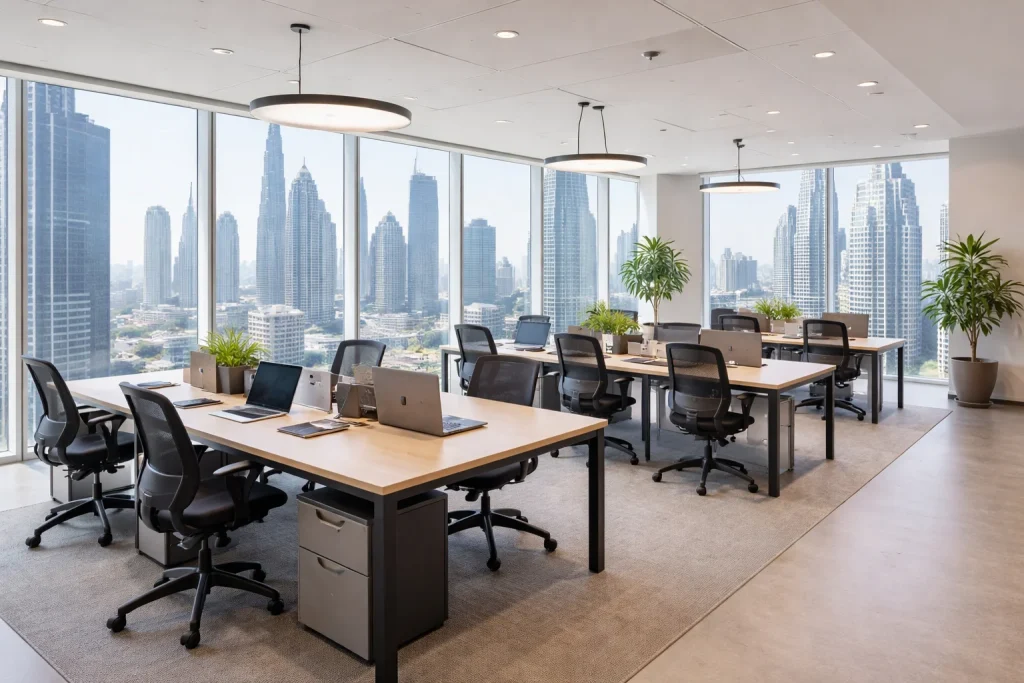
Securing a physical workspace within DMCC's jurisdiction is mandatory for all companies. You select and contract for your office solution. Options range from flexi-desks and co-working memberships to private offices and larger spaces in commercial towers. The type and size of your office directly influences how many employment and investor visas your company can sponsor.
Who is involved: The applicant and DMCC's real estate or authorized leasing agents.
Typical timeline: Office selection can often be completed quickly, though finalizing lease agreements may take additional time depending on availability.
Common issues: A flexi-desk may not be suitable for all operational needs. If you plan to apply for multiple visas or your activity requires a clear physical presence, a private office may be necessary. Visa planning is closely linked to your overall UAE visa and immigration framework, so workspace and residency strategy should be aligned early.
Stage 6: Legal Document Drafting and Signing
DMCC prepares your company's constitutional documents, primarily the Memorandum of Association (MOA) and Articles of Association (AOA). These documents formalize shareholding structure, authorized capital, management authority, and governance procedures. You review and execute these documents, typically via electronic signature.
Who is involved: The shareholders and authorized signatories.
Typical timeline: Document preparation usually follows office confirmation, with digital signing completed promptly once documents are issued.
Common issues: Review all shareholder names, ownership percentages, and director appointments carefully. Amendments after issuance are possible but involve additional fees and processing time.
Stage 7: License Issuance and Company Registration
Upon receipt of signed legal documents and payment of applicable fees, DMCC issues your trade license and Certificate of Incorporation. This formally establishes your company as a legal entity authorized to operate within the DMCC free zone.
Who is involved: DMCC's licensing department.
Typical timeline: With prior stages completed, license issuance often occurs within a short administrative timeframe.
Common issues: Outstanding payments or pending documentation can delay issuance. Ensure all invoices and required confirmations are addressed promptly.
Stage 8: Establishment Card and Immigration File Opening
After your license is issued, you apply for an Establishment Card from DMCC. This card is required for visa processing, as it registers your company with the UAE immigration system and enables you to sponsor employee and investor residencies.
Who is involved: The company (through its authorized representative) and DMCC's immigration services unit.
Typical timeline: Often completed within a few working days once the license is active.
Common issues: Ensure the company's legal representative is properly designated in your records to avoid administrative queries.
Stage 9: Visa Eligibility Activation and Processing
With your Establishment Card in place, you can begin the residency visa application process for shareholders, directors, and employees. This involves medical fitness examinations, Emirates ID registration, biometric data capture, and visa stamping. The number of visas you can sponsor is directly linked to your office space classification.
Who is involved: Visa applicants, the company as sponsor, DMCC as the free zone authority, and UAE government service centres.
Typical timeline: The full visa process can take several weeks per individual, depending on scheduling and documentation readiness.
Common issues: Delays may arise from incomplete medical steps or missing documents. Many companies prioritize the visa of the primary signatory first, as this supports subsequent steps such as opening a UAE business bank account.
Realistic Timeline Expectations
Have questions about this?
A 10-minute call with Mirza often saves weeks of research. No obligation — ask anything about your situation.
DMCC often references a company formation timeline of around a couple of weeks in straightforward cases. This is generally achievable where documentation is complete, business activities are standard, and no external approvals are required. More complex cases can take longer.
Factors that affect processing time include:
- Document readiness: Incomplete or unclear KYC documentation is a common cause of delays.
- Activity type: Regulated activities may require approvals from external UAE regulatory bodies, extending the timeline.
- Shareholder complexity: Multi-layer corporate structures require more detailed due diligence.
- Office customization: Fit-out timelines for private offices are separate from licensing timelines.
Cost Components
Understanding the fee structure is essential for budgeting. The total setup cost is not a single license fee but a combination of one-time charges, annual fees, and workspace costs.
Official DMCC Authority Fees
These are regulatory fees payable to DMCC. Typical components may include application fees, registration fees, annual license fees, document issuance charges, and establishment card fees. The exact amounts vary depending on license type, activity category, and any special approvals required. These figures should be treated as indicative and confirmed with DMCC during the application process.
Office and Workspace Costs
Workspace is a significant variable expense. Costs differ based on whether you choose a flexi-desk, co-working space, or private office, as well as the building and size of the premises.
Visa-Related Costs
Visa costs typically include government processing fees, medical fitness tests, Emirates ID issuance, and mandatory health insurance. These are paid per person and vary depending on visa category and validity period.
Package Options
DMCC may offer bundled packages that combine license, registration, workspace, and limited visa allocations. These packages can simplify budgeting, but it remains important to compare overall costs and inclusions with your specific operational needs and long-term plans.
Post-License Requirements: Banking and Compliance

Receiving your DMCC license is an important milestone, but several steps follow to make your company fully operational.
Corporate Bank Account Opening
Opening a UAE corporate bank account is a key post-license step. Banks conduct their own due diligence on new companies. Commonly requested documents include the DMCC trade license, Certificate of Incorporation, MOA/AOA, board resolutions, and identification documents for shareholders and signatories. A clear business model description and expected transaction profile are also typically reviewed.
Tax Registration Requirements
DMCC companies are required to register under the UAE corporate tax framework. Even where income may qualify for a 0% rate under free zone rules, registration and reporting obligations still apply. Many businesses review detailed guidance on UAE corporate tax registration to understand timelines and documentation requirements. VAT registration may also become mandatory if turnover thresholds are met.
Ongoing Compliance Obligations
Annual renewals of the trade license, office lease, and visas must be tracked carefully. Companies are also required to maintain updated UBO records and meet ongoing tax filing obligations in line with UAE regulations.
When DMCC May Not Be the Optimal Choice
DMCC offers substantial advantages for certain business types, but it may not align with every company's priorities:
- Highly cost-sensitive startups: Other UAE free zones may offer lower entry-level costs.
- Businesses focused primarily on the UAE local market: Mainland licensing structures can be more direct for certain local trading models.
- Large-scale industrial or logistics operations: Purpose-built industrial free zones may be more suitable for heavy infrastructure needs.
Business Examples
A commodity trading company may use DMCC due to its established ecosystem for precious metals and other traded goods, combined with recognized free zone structures and office infrastructure.
A technology consultancy or software business may operate under a service license, using DMCC as a regional base while sponsoring an international team.
A virtual assets or blockchain startup may operate within specialized frameworks while aligning with evolving regulatory requirements in the UAE.
Preparing for Your Setup
Establishing a company in any jurisdiction requires procedural discipline. The DMCC setup process is structured, but your experience will depend on preparation quality. Successful applicants typically prepare documentation carefully, select business activities precisely, and consider banking and tax requirements before beginning the application.
Your practical next steps include gathering preliminary documentation, confirming your activity alignment, and budgeting for both setup and first-year operating costs. For complex cases, founders often seek structured guidance through a broader Dubai business setup advisory process to ensure documentation, licensing, and compliance elements are aligned from the outset.
Planning Your DMCC Setup Structure?
Before starting your DMCC application, it helps to align your business activity selection, shareholder documentation, visa planning, and banking readiness in one structured review. Early clarity on these elements reduces the risk of revisions, approval delays, and structural changes later in the process.
Frequently Asked Questions About DMCC Company Setup
How long does the DMCC company setup process usually take?
In straightforward cases with complete documentation and standard business activities, the core licensing process can often be completed within a few weeks. Timelines may extend if external regulatory approvals are required or if documentation needs revision.
Do I need a physical office to open a DMCC company?
Yes. All DMCC companies must lease a physical workspace within the free zone. Options include flexi-desks, co-working spaces, and private offices. The office type also influences how many residency visas the company can sponsor.
Can a DMCC company do business in mainland UAE?
DMCC companies can trade internationally and with other free zone entities. For direct commercial activities within mainland UAE, additional structuring such as a local distributor or mainland setup may be required, depending on the business model.
What documents are required for shareholders?
Individual shareholders typically provide passport copies, proof of residential address, and other KYC documents. Corporate shareholders must provide incorporation documents, ownership records, and details of ultimate beneficial owners.
Is corporate tax applicable to DMCC companies?
DMCC companies fall under the UAE corporate tax framework. Qualifying Free Zone Persons may benefit from a 0% rate on qualifying income, subject to meeting regulatory conditions. Registration and reporting obligations still apply.
Can I open a bank account immediately after license issuance?
Bank account opening becomes possible once the company is licensed and documentation is complete. However, UAE banks conduct independent due diligence, so preparation of business plans and transaction details is important.
Does DMCC company setup include visa eligibility?
Yes. After license issuance and establishment card approval, companies can sponsor investor and employee residency visas. Visa quotas depend on the office space leased.
Sources and official references
Have a question about this?
Leave your details and a UAE expert will get back to you within 1 business day — free, no obligation.
Ready to take action?
Whether you're ready to start or still comparing options — we'll give you a straight answer.
Chat on WhatsApp
Usually replies within 2h
Get a Free Quote
Personalised in 60 seconds
Call Directly
Open daily, 10am–6pm UAE
About the Author
Dubai-based independent advisor on UAE visa, immigration, and offshore structuring. Founder of Henry Club UAE with 90+ published guides. Advisory-first — clarity before commitment.