
I help founders understand their options clearly before they commit to any structure, provider, or direction.
Quick Summary: Investing in Palm Jumeirah
- Best for: Patient, long-term luxury buyers and high-net-worth individuals; the ultra-prime market rewards capital preservation over yield-chasing or short-term flipping.
- Two asset classes: Frond villas offer privacy and private beach access but lower liquidity, while trunk and crescent apartments are the more accessible entry point where sea-view quality drives value.
- Value fundamental: Finite, non-replicable waterfront supply across the trunk, crescent and seventeen fronds, backed by global brand recognition and a genuinely international buyer pool.
- Golden Visa: Most Palm properties comfortably exceed the 2 million AED minimum for the 10-year Golden Visa. Approval is never automatic, and mortgaged equity is assessed net of the outstanding loan.
- Market behaviour: Lower transaction volumes than the mainstream market. Prices lag on the way up and hold up better on the way down, with villa sales seen above 80 million AED.
- Key risks: High service charges, underestimated waterfront villa maintenance in a corrosive marine environment, a limited buyer pool during downturns, and sensitivity to global macro events.
Quick answer: Palm Jumeirah is Dubai's ultra-prime, mature luxury market. It does not behave like the mainstream market. Transaction volumes are lower, the buyer pool is global, and value rests on finite waterfront supply. Frond villas and trunk apartments are distinct asset classes. Villas offer privacy and beach access but lower liquidity. Apartments give a more accessible entry point, where sea-view quality drives value. Most properties comfortably exceed the 2 million AED Golden Visa threshold, though approval is never automatic. It suits patient, long-term buyers rather than yield-chasers or short-term flippers, and service charges and maintenance costs must be factored into holding plans.
Introduction
These pages are for a specific type of buyer. It is intended for luxury investors assessing capital preservation, and for high-net-worth individuals considering a primary or secondary residence. Also for international purchasers weighing exposure to Dubai's waterfront, and buyers seeking property that meets UAE Golden Visa criteria.
One point matters from the outset. Palm Jumeirah is not representative of the wider Dubai real estate market. It does not behave like Dubai Marina, Downtown, or Emirates Living. It operates within its own sphere—the luxury and ultra-prime segment. Transaction volumes are lower, buyer profiles are more international, and price behaviour answers to different factors.
What follows is an analysis based on fifteen years of transacting on the Palm, observing how the island has matured, and advising clients through multiple market cycles. The goal is to provide clarity on whether this address aligns with your specific objectives.
What Makes Palm Jumeirah Unique
Palm Jumeirah is often described as an icon, but for the purposes of this analysis, its uniqueness is better understood through structural and practical lenses.
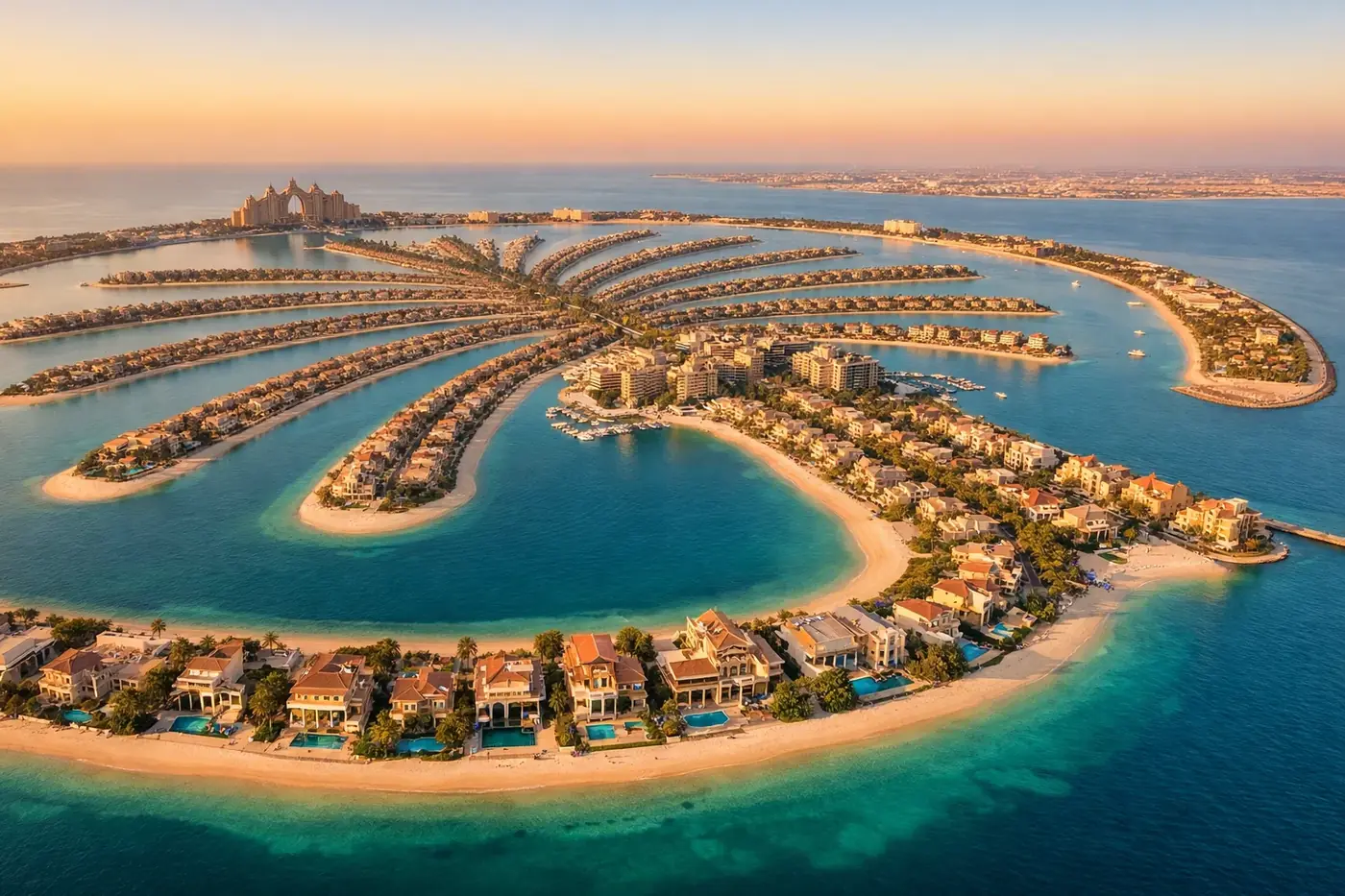
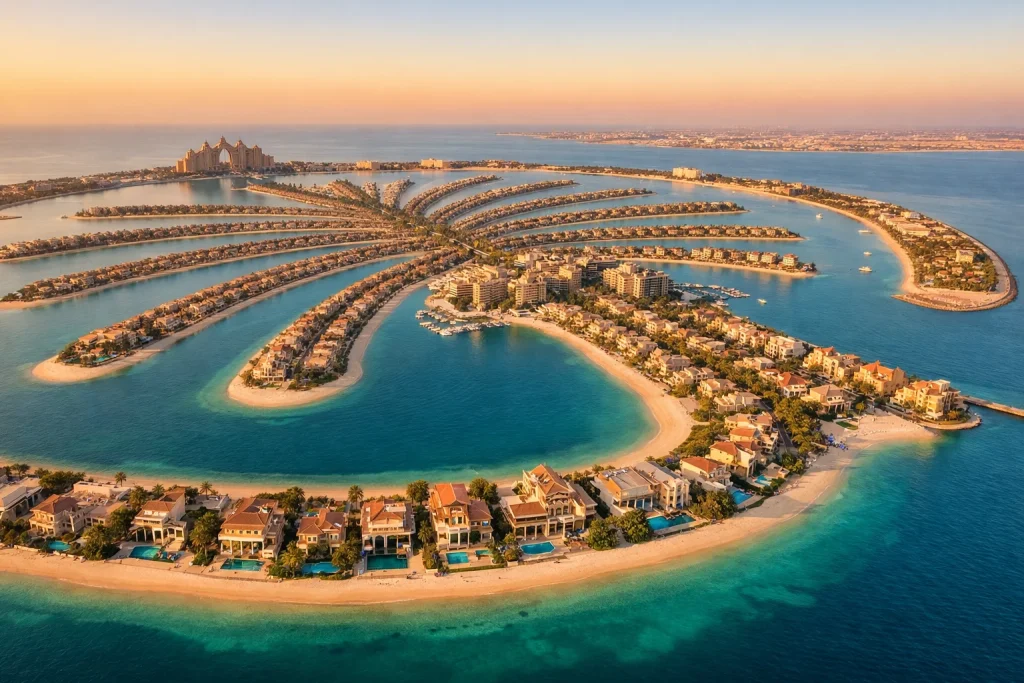
The man-made island structure creates an artificial scarcity of waterfront frontage that simply does not exist on the mainland. The island consists of a trunk, a crescent, and seventeen fronds. This configuration means that genuine beachfront or direct sea-view plots are finite. Once developed, they cannot be replicated.
Frond villas versus trunk apartments represent two entirely different asset classes sharing the same postal address. The fronds offer private, gated communities with beach access. The trunk contains apartment buildings, many of which are high-rise, with varying degrees of sea or skyline views. They attract different buyer profiles and exhibit different liquidity characteristics.
Limited waterfront supply is the single most important fundamental supporting long-term value. While Dubai continues to launch new waterfront projects, the Palm remains the only fully mature, fully developed island of its kind in the city. New supply on the island itself is negligible. What you see is what exists.
Brand recognition factor matters in the luxury space. Palm Jumeirah is one of the few addresses in Dubai that requires no further explanation to international buyers, wealth managers, or family offices. This recognisability supports global demand.
Lifestyle positioning is about privacy, marine access, and resort-style living. In practice, residents value the ability to step from their villa onto a beach or to be minutes from five-star hotel amenities. It is a low-density environment compared to the city centre.
Market Dynamics
The Palm Jumeirah market exhibits characteristics consistent with a mature luxury market rather than a nascent growth story. Recent transaction activity has included villa sales at price points exceeding 80 million AED, reflecting continued demand in the ultra-prime segment.
Luxury cycle behaviour on the Palm tends to lag the mainstream market on the way up and demonstrate more resilience on the way down. During periods of strong global liquidity, ultra-high-net-worth buyers allocate capital to trophy assets, and the Palm is a direct beneficiary. During cooling phases, sellers of prime Palm assets often hold rather than transact at distressed levels, which supports price stability but reduces transaction volume.
International demand sensitivity remains high. The Palm buyer pool is genuinely global. Fluctuations in currencies, geopolitical shifts, and the performance of other global luxury markets all influence enquiry levels. When London or New York prime markets face headwinds, Dubai and the Palm often see increased attention as capital seeks alternative destinations.
Global capital flow influence is perhaps the most significant external factor. The Palm functions as a store of value for internationally mobile wealth. This means its performance is not solely tied to Dubai's local economy but to the health of global financial markets and the perception of the UAE as a safe harbour.
How Palm performs in rising versus cooling markets varies by segment. In rising markets, villa prices on the fronds can appreciate significantly as buyers compete for limited stock. In cooling markets, the apartment segment, particularly in buildings with less desirable views or higher service charges, may experience price adjustments. The ultra-prime villa segment tends to trade infrequently but at relatively stable pricing when it does.
Villas vs Apartments: Strategic Differences
Choosing between a villa and an apartment on Palm Jumeirah is not merely a lifestyle choice. It is a strategic decision affecting liquidity, holding horizon and buyer profile.
Frond Villas
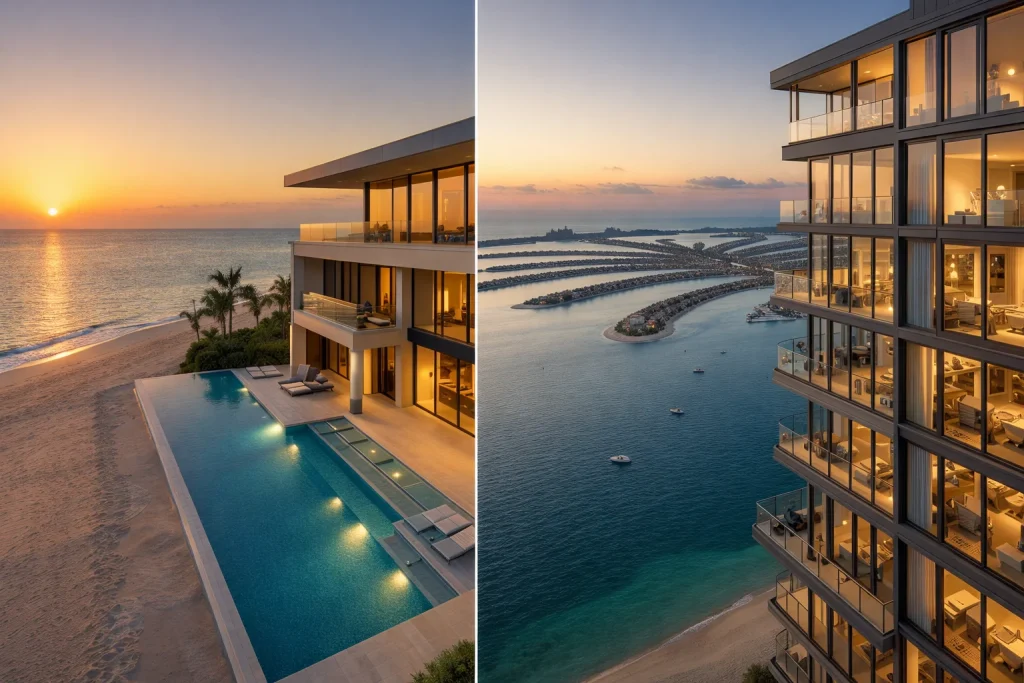
These are the most exclusive assets on the island. They offer private beach access, standalone structures, and a level of privacy unattainable in apartment buildings. The buyer for a frond villa is almost always an end-user or a very long-term holder. Liquidity is lower simply because the pool of buyers who can transact at this level is smaller. Renovation status is critical. A villa that has been well-maintained or recently upgraded will attract more interest than one requiring significant capital expenditure, as high-net-worth buyers often prefer move-in ready condition.
Signature Villas
The Signature villas—the original models on the fronds—offer a different proposition. They sit on larger plots than some of the newer villa products elsewhere. For investors, the land value often represents a significant portion of the overall asset value. There is also a niche market for buyers who acquire Signature villas with the intention of demolishing and rebuilding, although this is subject to strict community regulations and approval processes.
Branded Residences
The Palm hosts several branded residence concepts attached to five-star hotels. These appeal to buyers seeking full-service living, hotel amenities, and professional rental management. They sit in a hybrid space between standard apartments and villas. Liquidity for branded residences can be strong, but buyers should carefully analyse the service charge structures and usage rights, as these vary between projects.
High-Rise Trunk Apartments
Apartments on the trunk and crescent offer the most accessible entry point to Palm ownership. They range from one-bedroom units to sprawling penthouse configurations. View quality is the single biggest driver of value differentials within the same building. Sea-facing units facing the Atlantis or the open Gulf command significant premiums over those facing the Dubai skyline. End-user demand for apartments is driven by lifestyle buyers who want the Palm address without the villa commitment. Investor demand is driven by rental potential, particularly for short-term holiday lets, although this is increasingly regulated.
Liquidity differences are pronounced. A well-priced two-bedroom apartment in a reputable building will typically transact faster than a frond villa, simply because there are more potential buyers in that bracket. The ultra-prime villa segment is a thinner market requiring patience and precise positioning.
End-User Demand vs Investor Demand
The balance between end-users and investors on Palm Jumeirah has shifted over the years.
Palm is lifestyle-driven. The majority of serious buyers looking at villas, and a significant portion of apartment buyers, intend to use the property themselves for at least part of the year. This end-user demand provides a stable base for the market. These buyers are less likely to sell during temporary downturns, which supports price stability.
Short-term rental considerations have grown in importance. The Palm is one of Dubai's most desirable locations for holiday homes. Apartments, in particular, can generate rental income during the peak tourism season. However, investors should be aware of the regulatory framework, including licensing requirements, building restrictions on holiday lets, and the operational complexities of managing a short-term rental remotely. It is not passive income without active management.
Holiday home behaviour means that some apartments on the Palm change hands multiple times as investors rotate in and out of the short-term rental space. This creates a sub-market within the broader apartment segment that is more sensitive to tourism arrival numbers and global travel trends.
Long holding period logic applies strongly to the Palm. Limited supply, global brand recognition and mature infrastructure point one way. For most buyers, wealth has historically come from capital appreciation over long periods, not short-term flipping. Investors who entered the market in the early years have seen value growth, but that reflects a hold period measured in decades, not months.
Resale Outlook & Liquidity Considerations
Have questions about this?
A 10-minute call with Mirza often saves weeks of research. No obligation — ask anything about your situation.
When assessing a potential resale of a Palm Jumeirah property, several factors will determine how easily it moves and at what price level.
Renovation status is often the first filter for buyers. In the villa segment, dated finishes, old air conditioning or a ten-year-old kitchen narrow the buyer pool. What is left are buyers willing to take on renovation work. Apartments that have been well-maintained and feature modern interiors typically command a premium and sell faster.
Orientation on the fronds determines sunlight exposure, privacy from neighbours, and views. Some frond locations offer wider sea views; others are more enclosed. Buyers develop preferences, and certain orientations become more sought-after than others.
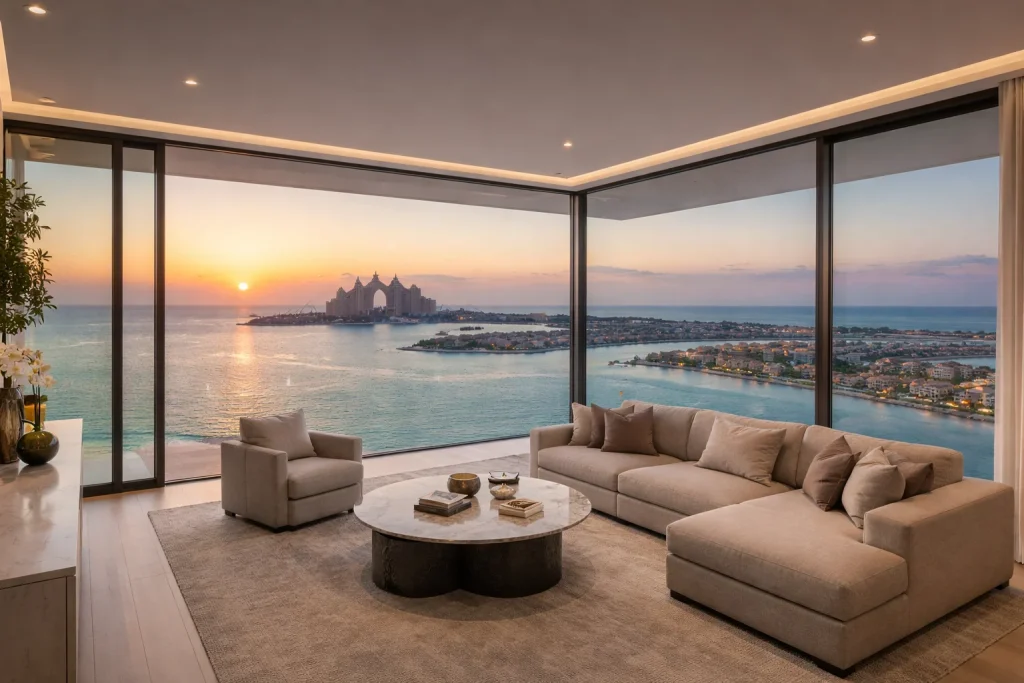
Sea view quality in apartment buildings is the primary determinant of value. Units with unobstructed, panoramic sea views are in a different category from those with partial or side views. This differential persists through market cycles.
Developer reputation matters for apartment buildings. Buildings developed by tier-one developers with high construction standards, quality finishes, and professional facilities management tend to hold their value better and attract more buyer interest on the resale market. Buildings with a history of service charge disputes or maintenance issues face more resistance.
Ultra-prime transaction volume patterns show that the highest-value villa sales occur sporadically. A frond villa may sit on the market for a long time before the right buyer appears. That is truer still when the price demands a very specific purchaser. This is not a reflection of the asset's quality but of the natural liquidity constraints in the ultra-prime bracket.
Risks & Considerations
Any balanced assessment of Palm Jumeirah property must address the risks. These are not reasons to avoid the market but factors that require careful consideration.
Price volatility in luxury cycles is a reality. While the Palm has shown long-term appreciation historically, it has not been immune to broader market corrections. Prices can and do fluctuate in response to global economic conditions, regional events, and changes in investor sentiment. Buyers entering the market should have a holding horizon sufficient to ride out potential downturns.
High service charges are an unavoidable cost of ownership, particularly in apartment buildings. For luxury towers on the Palm, service charges can range significantly higher than mid-market communities, reflecting the cost of maintaining pools, gyms, concierge services, and the building fabric. These charges are regulated and audited, but they represent a substantial annual outflow that must be factored into holding cost calculations.
Maintenance costs for waterfront villas are often underestimated by first-time buyers. The marine environment is corrosive. Air conditioning units work harder. Pools, landscaping, and beach maintenance require ongoing expenditure. A villa is not a passive asset; it demands attention and capital to preserve its value.
Limited buyer pool during downturns is a structural feature of the ultra-prime market. When global liquidity tightens or risk appetite diminishes, the number of buyers capable of transacting at the highest levels contracts. Sellers who need to exit quickly during such periods may need to adjust price expectations materially.
Sensitivity to global macro events means that the Palm market can be affected by events far beyond Dubai's borders. Changes in tax regimes in other countries, interest rate movements in major economies, and geopolitical developments all influence the behaviour of international capital. Diversification of buyer nationalities provides some resilience, but it does not create immunity.
Golden Visa Relevance
Palm Jumeirah property often features prominently in discussions around the UAE Golden Visa scheme, and for good reason.
Many Palm properties meet higher value categories. The minimum investment threshold for the 10-year Golden Visa is 2 million AED. Given the price points on the Palm, most properties comfortably exceed this requirement.
Eligibility depends on current regulations and is subject to change. While owning a qualifying property is the primary condition, applicants must also meet other criteria set by the authorities, including proof of funds and compliance with due diligence processes. The regulations are subject to interpretation and can evolve.
Mortgage status affects qualification. If the property is mortgaged, the calculation of net equity can influence eligibility. Generally, the unpaid loan amount is deducted from the property value to determine whether the investor's equity meets the required threshold. This makes fully owned or minimally leveraged properties simpler for visa purposes.
Not automatic. Ownership of a Palm property does not guarantee visa approval. Each application is assessed on its merits. Working with specialists who handle Golden Visa processing is advisable rather than assuming automatic qualification.
Who This Area Is Not Suitable For
Clarity about who should not buy on the Palm is as important as understanding its appeal.
Yield-focused investors looking for double-digit rental returns will likely find better prospects elsewhere. The purchase price on Palm Jumeirah is premium, and while rental income can be attractive, the yield percentage is typically lower than in emerging communities or mid-market locations.
Short-term flippers seeking quick profits in a matter of months may find the transaction costs and price sensitivity of the luxury market work against them. The Palm is not a high-turnover trading environment.
Budget-sensitive buyers for whom service charges, maintenance, and holding costs represent a significant financial stretch should consider whether the address is worth the ongoing burden. Unexpected special assessments for building repairs or community upgrades can create pressure.
Highly leveraged investors are exposed to interest rate movements and potential valuation declines. If a significant portion of the purchase price is borrowed, a market correction could erode equity quickly and potentially create financing challenges.
Practical Next Steps
For those who are considering Palm Jumeirah property, the path forward involves structured thinking.
Assess objectives honestly. Is this a home, a holiday base, a long-term capital hold, or a combination? The answer determines which part of the Palm to focus on.
Compare villa versus apartment through the lens of your objectives, holding horizon, and capacity for ongoing costs. There is no universally correct choice; only what fits your circumstances.
Understand holding horizon. The Palm rewards patience. Buyers who have held through cycles have generally been well served. Those with short timeframes or uncertain plans should factor that into their decision.
For a structured assessment of how Palm Jumeirah property aligns with your broader portfolio, the Dubai Real Estate Investment Guide provides deeper context on market positioning and comparative analysis.
If you would like to discuss your specific requirements with advisors who know the island intimately, you can explore real estate services tailored to ultra-prime transactions.
For a preliminary discussion on your specific requirements, you can reach out via WhatsApp using the keyword PALM.
FAQ Section
Is Palm Jumeirah a good investment?
The answer depends on your definition of investment. For long-term capital preservation and ownership of a globally recognised luxury asset, Palm Jumeirah has shown resilience through market cycles. For buyers seeking short-term trading profits or maximising rental yield, other locations may offer better alignment with those goals. The Palm is best suited to investors with a multi-year holding perspective who value scarcity and brand equity.
Are Palm villas better than apartments?
Better is subjective and depends on purpose. Villas offer privacy, land ownership, and direct beach access, but require significant capital and ongoing maintenance. Apartments offer lower entry points, higher liquidity, and lock-and-leave convenience, but come with service charges and shared amenities. Serious buyers should evaluate which structure better serves their lifestyle and financial objectives.
Is Palm suitable for rental income?
Yes, particularly for apartments and villas in locations popular with tourists and short-term tenants. The Palm benefits from strong demand for holiday accommodation. Investors should still account for management costs and the regulatory requirements for short-term rentals. Rental yields as a percentage of purchase price are typically lower than in mid-market communities. Rental income is best viewed as a contribution to holding costs rather than the primary investment thesis.
What are service charges like in Palm Jumeirah?
Service charges on Palm Jumeirah vary significantly by property type and building. Luxury apartments in high-rise towers typically incur charges at the higher end of the spectrum, reflecting extensive amenities and building maintenance requirements. Villa communities have lower per-square-foot charges but cover landscaping, security, and common areas. All service charges are regulated by the Dubai Land Department and must be justified in audited budgets. Prospective buyers should always obtain the latest service charge schedule for any property under consideration.
Does Palm property qualify for Golden Visa?
Properties on Palm Jumeirah typically meet the minimum value threshold for the 10-year Golden Visa. However, qualification is not automatic and is subject to current regulations which may change. Factors such as mortgage status, proof of funds, and compliance with application procedures all influence the outcome. Buyers should verify current regulations and seek specialist advice rather than assuming purchase guarantees residency.
How liquid is the Palm resale market?
Liquidity varies by price point and property type. Apartments in popular buildings with desirable views can transact relatively quickly if priced appropriately. Villas at the upper end of the market trade less frequently and may require longer marketing periods to connect with the right buyer. The ultra-prime segment is inherently less liquid than mainstream markets, which is a characteristic buyers should understand before committing.
Who should not buy property on Palm Jumeirah?
Several profiles are a poor fit. Yield-focused investors seeking double-digit returns will generally do better in emerging or mid-market communities. Short-term flippers face transaction costs and price sensitivity that work against quick gains, as this is not a high-turnover market. Budget-sensitive buyers may struggle with service charges, maintenance and possible special assessments. Highly leveraged investors are exposed to interest rate moves and valuation declines that can erode equity fast during a correction.
At Palm price points the finance structure matters as much as the property. Start with the repayment estimator. Then arrange a call to see how a purchase at this level is usually structured.
Sources and official references
For ownership rules, regulated service charges and residency eligibility behind the points on this page, consult the official UAE bodies below.
- Dubai Land Department (DLD) - official transaction records, RERA oversight and the regulated, audited service charges referenced for Palm Jumeirah properties
- UAE Government Portal - overview of property ownership for foreign buyers and the Golden Visa scheme discussed on this page
- Federal Authority for Identity & Citizenship (ICP) - eligibility, proof-of-funds and due-diligence requirements for the 10-year property Golden Visa
Not sure Palm Jumeirah is the right area for you?
Send us what you want to spend and what you want the property to do — rental income, a Golden Visa, somewhere to live. You get back a shortlist of the areas, buildings and unit types that fit, the approved service charge on each, and the ones we would avoid. Within one business day, free.
Get my property shortlistWe hold no listings and take no commission on a sale. That is why we can tell you when a deal does not stack up. When you are ready to transact, we introduce you to a RERA-licensed partner.
About the Author
Dubai-based independent advisor on UAE visa, immigration, and offshore structuring. Founder of Henry Club UAE with 90+ published guides. Advisory-first — clarity before commitment.