

I help founders understand their options clearly before they commit to any structure, provider, or direction.
Quick Summary: Investing in JLT
- Best for: Yield-focused investors after steady rental income in a high-liquidity, rental-driven community, not a waterfront or ultra-prime enclave.
- Best-performing units: Studios and one- and two-bedroom apartments see the strongest demand; larger three-bedroom-plus units have a smaller tenant pool and lower liquidity.
- Demand drivers: Professionals working in DMCC, Media City and Marina, supported by the DMCC Red Line metro station, walkable lakeside layout and Marina spillover as priced-out tenants move across.
- Structure: 80 residential and commercial towers arranged in clusters around artificial lakes, so cluster and tower selection materially affects performance.
- Resale: Deep, mortgage-friendly market with a wide local buyer pool, but prices can adjust faster in downturns given many comparable units.
- Key risks: Inconsistent building quality, service charge variance and disputes in older towers, oversupply in the smaller-unit segment, and investor crowding.
Quick answer: Jumeirah Lakes Towers (JLT) is a high-liquidity, rental-driven community built for yield rather than trophy assets – not a waterfront or ultra-prime enclave. Demand is strongest for studios and one- & two-bedroom units, driven by professionals working in DMCC, Media City and Marina. The DMCC Red Line metro station and walkable lakeside layout support steady occupancy. Returns are dependable rather than outsized, so the real work is choosing the right cluster, tower and unit type. Service charges and building quality vary materially between towers and feed straight into net yield.
Introduction
These pages are for a specific profile of buyer. It is intended for individual investors building a Dubai portfolio with rental income as a primary objective, and for first-time purchasers entering the market. It also suits professionals working in the DMCC free zone or the nearby Marina district who are considering owner-occupation. Finally, hybrid buyers who want a property that can serve as both a home and an investment asset.
For those who are evaluating JLT property, it is important to understand what this area represents within Dubai's real estate landscape. Jumeirah Lakes Towers is not a luxury waterfront enclave. It is not competing with Palm Jumeirah or Emirates Hills. It is a high-liquidity, rental-driven community that functions as a practical address for a large segment of Dubai's professional workforce.
The towers around the lakes have matured significantly since the early development years. What exists now is a fully established neighbourhood with its own rhythm, its own tenant base, and its own investment logic. Understanding that logic requires looking beyond generalisations and examining the specific factors that drive demand and returns here.
What Makes JLT Different

JLT's physical structure sets it apart from most other Dubai communities. The development consists of 80 residential and commercial towers arranged in clusters around a series of artificial lakes. This configuration creates a distinct urban environment.
Cluster structure means that each group of towers functions almost as a mini-neighbourhood. Some clusters have better proximity to the metro, others are closer to the lake walkways, and some sit nearer to the main thoroughfares. Investors who understand cluster-level differences can make more informed choices than those who treat JLT as a single homogeneous area.
Lake environment provides a sense of openness that is relatively rare in high-density developments. The water features and pedestrian bridges create walkable connections between towers. In practice, residents value being able to step out of their building and be on a lakeside path within minutes.
Mixed-use zoning is fundamental to JLT's appeal. The towers combine residential apartments with commercial office space and retail podiums. This means residents can live, work, and access daily necessities without getting in a car. For the professional tenant base, this convenience is a significant draw.
DMCC free zone proximity cannot be overstated. The Dubai Multi Commodities Centre authority is headquartered in JLT, and thousands of professionals work in the offices scattered throughout the towers. Many of them prefer to live within walking distance of their workplace.
Walkability is a genuine feature. Unlike many parts of Dubai where car dependency is near-total, JLT functions at a pedestrian scale. The lakeside promenades, bridges, and ground-floor retail create an environment where walking is not just possible but pleasant for much of the year.
Metro connectivity gives JLT a structural advantage over communities that rely solely on road access. The DMCC metro station on the Red Line puts the rest of the city within reach without dealing with Sheikh Zayed Road traffic. For tenants working in Marina, Media City, or even Downtown, the metro makes JLT a practical choice.
Rental Demand Outlook
Rental demand in JLT has remained relatively consistent, though it exhibits specific characteristics that investors should understand.
Studio and one-bedroom demand strength continues to drive the market. The professional demographic that JLT attracts—young professionals, singles, couples without children—overwhelmingly seeks smaller units. These tenants prioritise location, convenience, and value for money over square footage.
Professional tenant base is relatively stable compared to other demographics. JLT tenants tend to be employed in white-collar roles across media, finance, tech, and professional services. Many hold DMCC free zone visas. This employment profile supports consistent rental demand, though it also means demand is sensitive to broader economic conditions and corporate hiring trends.
Marina spillover effect remains relevant. As rental prices in Dubai Marina have increased over successive cycles, some tenants have shifted to JLT as a more affordable alternative. They keep proximity to the same employment hubs and lifestyle amenities. This spillover dynamic has historically supported JLT rents during periods of Marina price growth.
Long-term rental versus short-term considerations: JLT has traditionally been a long-term rental market, and that remains the dominant dynamic. Short-term holiday lets exist but are less prevalent than in Marina or Downtown. Some buildings have restrictions on short-term rentals, and investors considering this strategy must verify building rules before purchasing.
Employment-linked demand means that the JLT rental market is tied to the health of Dubai's professional services and knowledge sectors. When companies expand headcount and relocate talent to Dubai, JLT is often on the shortlist of recommended residential areas. Conversely, corporate downsizing or slower hiring would affect demand.
Work-Life & Commute Advantage
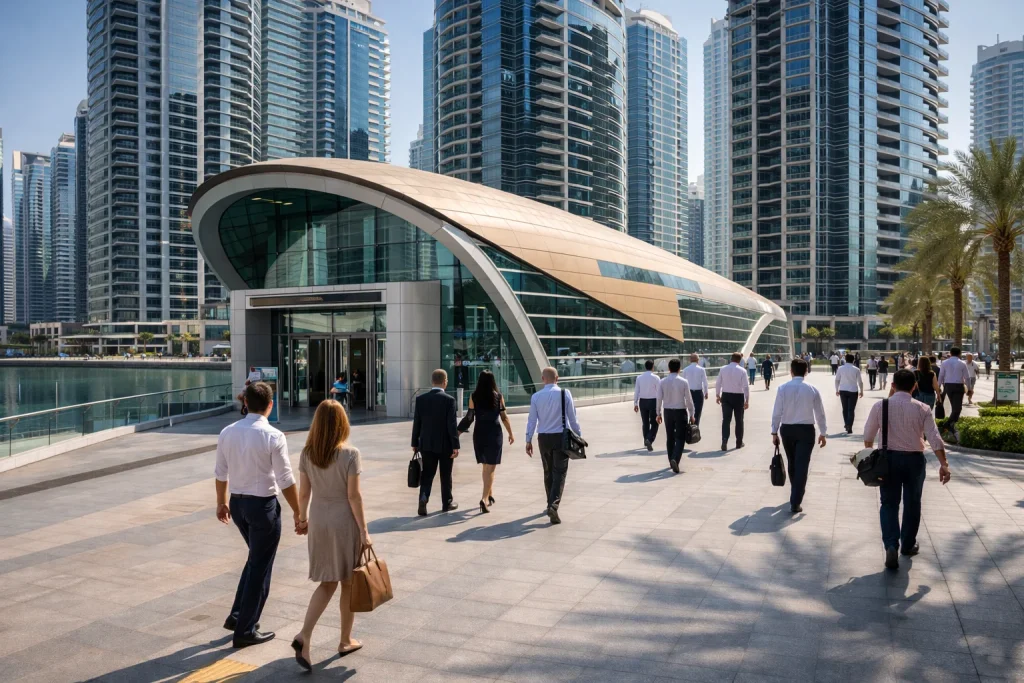
The work-life proposition in JLT is clearer than in most Dubai communities, which contributes directly to its investment appeal.
DMCC business district places thousands of jobs within the same development. For tenants working in DMCC towers, the commute is a matter of minutes on foot. This is a genuine quality-of-life advantage that tenants are willing to pay for.
Walking to office is not a fringe benefit in JLT; it is a core feature for a significant portion of the tenant pool. Investors who understand which towers are closest to the main commercial clusters can target units that appeal to this specific demographic.
Metro access extends the catchment area beyond JLT itself. Tenants working in Media City, Internet City, and other free zones along Sheikh Zayed Road find the metro convenient. The station is also well-used for access to Dubai Marina and JBR on the other side of the road.
Access to Sheikh Zayed Road by car remains straightforward, though peak-hour traffic on the bridge over to the main highway can be congested. For tenants who drive, the trade-off is living close to the city spine without being directly on it.
Appeal to young professionals is the unifying theme. JLT offers a lifestyle that aligns with what this demographic seeks. That means an urban environment, moderate rent relative to neighbouring areas, amenities within walking distance and a manageable commute to major employment zones.
Building Type Strategy
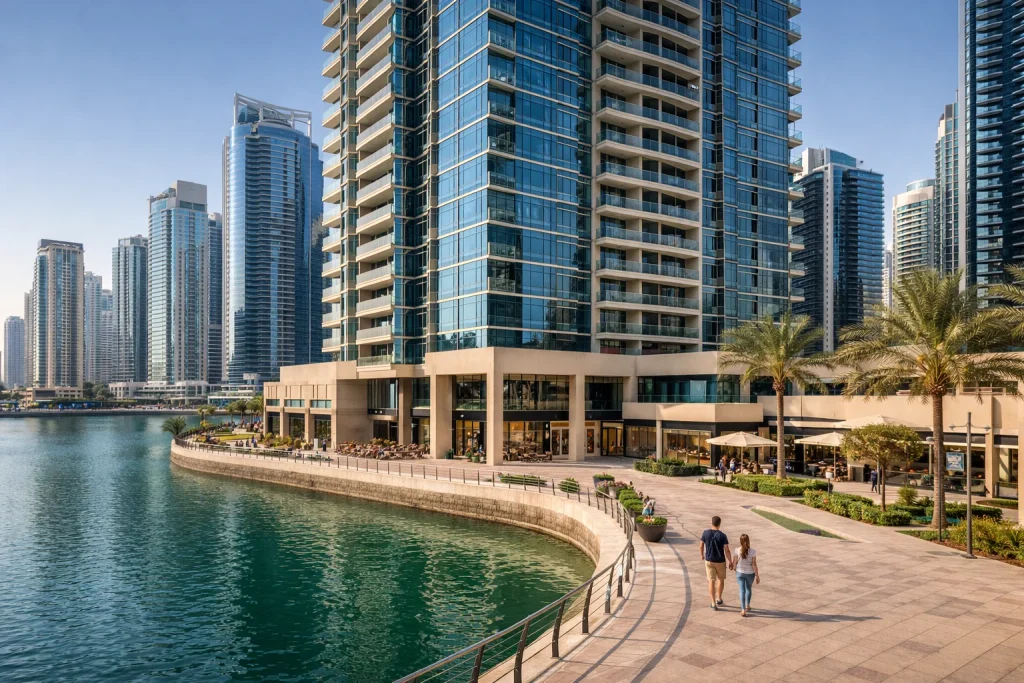
This section is critical. JLT is not a uniform market, and the differences between buildings and unit types have a direct impact on investment performance.
Studios
Studios represent the entry point to JLT ownership. They appeal to the most price-sensitive tenants—typically single professionals or recent arrivals to Dubai who want to live alone without committing to a one-bedroom rent.
Liquidity for studios can be reasonable when priced appropriately. The pool of buyers for studios is different from larger units; it includes first-time investors testing the market and those with limited capital.
Tenant profile for studios is generally younger, more transient, and more price-sensitive. Turnover can be higher than in larger units, which means more frequent tenant finding costs.
Entry price positioning makes studios accessible, but investors should be realistic about rental income relative to purchase price. The yield calculation needs to account for service charges and other holding costs.
One-Bedroom and Two-Bedroom Units
This is a strong investor segment in JLT. These units appeal to the widest cross-section of tenants—couples, sharers, professionals with slightly higher budgets—and also attract end-user buyers when they come to market.
The balance between purchase price and rental demand has historically been favourable here. One-bedroom units in particular have consistently demonstrated the ability to attract quality tenants and maintain occupancy.
End-user crossover demand matters for resale. When owners decide to sell, one-bedroom and two-bedroom units appeal not only to other investors but also to professionals who want to buy their own home. This dual demand supports liquidity.
Larger Units (Three-Bedroom+)
Three-bedroom apartments and larger units occupy a different position in the JLT market.
Liquidity tends to be lower. The pool of tenants seeking a three-bedroom apartment in JLT is smaller than for smaller units. Families who need three bedrooms often prefer villa communities, and high-earning professionals who could afford a larger apartment may look to Marina or the Palm.
Smaller tenant pool means vacancies can last longer when a larger unit becomes available. Investors in this segment need greater cash reserves to cover potential void periods.
Building quality differences across JLT are significant. Some towers were built to higher specifications than others. Some have been well-maintained; others show their age. Investors must physically inspect buildings or rely on detailed local knowledge rather than assuming all towers are equal.
Service charge variance between buildings can be material. Older towers with ageing infrastructure may have higher service charges, and some have faced special assessments for major repairs. These costs directly affect net yield and must be factored into any investment calculation.
Parking differences matter to tenants. Some JLT apartments come with one parking space; others with two; some with none. In a car-dependent city, adequate parking is a genuine differentiator.
Older versus upgraded buildings: JLT has been around long enough that some towers have undergone significant renovation while others remain in original condition. Units in upgraded buildings typically command rent premiums and attract higher-quality tenants.
Resale Liquidity Profile
Have questions about this?
A 10-minute call with Mirza often saves weeks of research. No obligation — ask anything about your situation.
Understanding how easily a JLT property can be sold is as important as understanding its rental potential.
Mortgage-friendly segment is one of JLT's strengths. Banks are generally comfortable lending on JLT properties because the area is established, has demonstrated price stability, and attracts reliable tenant profiles. This mortgage availability expands the buyer pool when it comes time to sell.
Wider buyer pool than luxury areas is a structural advantage. While a Palm villa might appeal to dozens of potential buyers globally, a JLT apartment appeals to hundreds of local buyers, including both investors and end-users.
Transaction cycles for well-priced JLT units can be relatively efficient. The market depth means that properties priced in line with recent transactions can often find buyers within a reasonable timeframe.
Price sensitivity during downturns is the counterpoint. Because JLT is a high-volume market with many comparable units, prices can adjust more quickly during market corrections than in ultra-prime segments where sellers hold rather than cut. Investors need to be comfortable with this dynamic.
Risks & Considerations
A balanced investment view requires acknowledging the factors that could affect performance.
Building quality inconsistency remains a real concern. Some JLT towers have experienced maintenance issues, lift breakdowns, or cladding concerns. These problems affect tenant satisfaction, rental demand, and resale values. Due diligence at building level is essential.
Service charge disputes in older towers have occurred when owners disagree about the necessity of major repairs or the management of building funds. These disputes can create uncertainty and affect investor confidence in specific buildings.
Competition from Marina and JVC creates alternatives for tenants and investors. Marina offers waterfront lifestyle at higher price points. JVC offers newer buildings at lower entry prices. JLT sits in the middle and must maintain its value proposition.
Oversupply risk in smaller unit segment is worth monitoring. The continued delivery of studio and one-bedroom units in new developments across Dubai could, over time, affect rental growth potential in JLT. Demand has absorbed supply well historically, but investors should be aware of the dynamic.
Investor crowding risk means that many units in JLT are owned by landlords seeking rental income. During market softness, this can lead to increased competition for tenants and pressure on rents. Buildings with a high proportion of investor-owned units may experience more rental volatility than those with more owner-occupiers.
Who JLT Is Not Suitable For
Clarity about who should not invest in JLT helps serious buyers self-select appropriately.
Ultra-prime buyers seeking trophy assets or waterfront mansions will not find what they are looking for here. JLT is solidly mid-to-upper market, not ultra-luxury.
Buyers seeking beachfront should look to the Palm, Marina, or JBR. JLT offers lake views, not sea access.
Investors expecting outsized returns may need to adjust expectations. JLT offers reliable, steady rental income in a high-occupancy market, but realistic expectations are important for any investment decision.
Buyers unwilling to review building-level details should reconsider. Investing in JLT without understanding which tower, which cluster, and which unit configuration works best is a recipe for suboptimal outcomes.
Practical Next Steps
If JLT aligns with your investment objectives, the path forward involves focused research.
Clarify your unit size preference based on budget and target tenant profile. Studios, one-bedroom, and two-bedroom units each have different characteristics.
Research clusters individually. Walk them if you are in Dubai. Study building histories, service charge trends, and recent transaction records.
Compare buildings within your target segment. Look at maintenance standards, lobby quality, lift performance, and tenant mix.
Run realistic rental projections based on achieved rents in specific buildings, not area averages. Factor in service charges, agency fees, and vacancy assumptions.
Consider your holding horizon. JLT rewards investors who hold through cycles and collect income along the way.
For broader context on how JLT fits within Dubai's investment landscape, the Dubai Real Estate Investment Guide provides comparative analysis across communities and property types.
If you would like to discuss building-level dynamics and current opportunities in more detail, real estate advisory services can provide targeted guidance based on your specific investment criteria.
For a preliminary discussion on current building-level dynamics and available opportunities, you can reach out via WhatsApp using the keyword JLT.
FAQ Section
Is JLT a good investment?
For investors seeking rental income in a high-occupancy location with strong professional tenant demand, JLT remains a solid consideration. The area offers good liquidity, mortgage availability, and a clear value proposition relative to neighbouring communities. Success depends on selecting the right building and unit type rather than assuming all JLT properties perform equally.
What is rental demand like in JLT?
Rental demand in JLT is driven by professionals working in DMCC, Media City, Internet City, and Marina. Studios and one-bedroom apartments see the strongest and most consistent demand. Two-bedroom units also perform well. Larger units have a smaller tenant pool and may take longer to lease.
Are studios in JLT a good investment?
Studios can work well for investors with limited capital seeking entry to the market. They appeal to single professionals and offer competitive rental yields relative to purchase price. However, tenant turnover tends to be higher than for larger units, and the buyer pool when reselling is more price-sensitive. Building quality and location within JLT matter significantly for studio performance.
How do service charges compare in JLT?
Service charges in JLT vary by tower, age, and facilities. Generally, they are competitive with comparable communities like Marina but can be higher in older buildings with greater maintenance requirements. Investors should always obtain the most recent service charge statement for any building under consideration, as these costs directly affect net yield.
Is JLT better than Dubai Marina for investors?
Better depends on your objectives. Marina offers waterfront lifestyle and potentially stronger capital appreciation in certain segments, but entry prices are higher. JLT offers more affordable entry points, strong rental demand from professionals, and good metro connectivity. For yield-focused investors, JLT often presents more favourable numbers. For lifestyle buyers or those seeking premium views, Marina may be more appropriate.
Does JLT property qualify for Golden Visa?
JLT properties may meet the minimum value threshold for the 10-year Golden Visa, provided the purchase price meets the current required amount and other conditions are satisfied. Mortgage status affects the calculation of net equity for visa purposes. Qualification is not automatic and is subject to application procedures and regulatory requirements that may change. Buyers should verify current regulations and seek specialist advice on eligibility.
Which clusters in JLT are strongest?
There is no single best cluster; it depends on what you are looking for. Clusters closer to the metro station offer superior transport links. Clusters with better lake views and well-maintained podiums tend to attract higher rents. Some clusters have a higher concentration of commercial space, which can mean more daytime activity. Investors should evaluate clusters based on proximity to amenities, building quality, and historical rental performance rather than relying on general rankings.
How long does it take to sell a JLT apartment?
Well-priced JLT units can find buyers within a reasonable timeframe because the market is deep and established. Banks lend readily on JLT property, which widens the buyer pool, and the area appeals to hundreds of local investors and end-users rather than a narrow global audience. The trade-off is price sensitivity: in a downturn, with many comparable units available, prices can adjust faster than in ultra-prime segments where sellers hold rather than cut.
What are the main risks of investing in JLT?
Building quality is inconsistent: some towers have had maintenance issues, lift breakdowns or cladding concerns, and service charge disputes have arisen in older buildings. JLT also competes with Marina and JVC for tenants and buyers. There is oversupply risk in the studio and one-bedroom segment as new units are delivered across Dubai. Investor crowding is the other risk: buildings full of landlords can see sharper rent pressure during softer markets. Building-level due diligence is essential.
JLT rewards buyers who look cluster by cluster rather than at the district as a whole. The finance calculator handles the affordability question. To narrow the clusters, run it past an advisor.
Sources and official references
For the property ownership, escrow, residency and Golden Visa points referenced on this page, consult the official UAE authorities below.
- Dubai Land Department (DLD) - official transaction records, ownership registration, RERA rules, escrow and service-charge oversight for JLT purchases
- UAE Government Portal - overview of foreign property ownership, residency and the Golden Visa referenced for JLT buyers
- Federal Authority for Identity & Citizenship (ICP) - eligibility and conditions for the 10-year Golden Visa via property investment
- GDRFA Dubai - Dubai residency visa procedures connected to property ownership in JLT
Not sure JLT is the right area for you?
Send us what you want to spend and what you want the property to do — rental income, a Golden Visa, somewhere to live. You get back a shortlist of the areas, buildings and unit types that fit, the approved service charge on each, and the ones we would avoid. Within one business day, free.
Get my property shortlistWe hold no listings and take no commission on a sale. That is why we can tell you when a deal does not stack up. When you are ready to transact, we introduce you to a RERA-licensed partner.
About the Author
Dubai-based independent advisor on UAE visa, immigration, and offshore structuring. Founder of Henry Club UAE with 90+ published guides. Advisory-first — clarity before commitment.