
I help founders understand their options clearly before they commit to any structure, provider, or direction.
Quick Summary: UAE Office Space Requirements
- Is it mandatory: Yes. Licensing authorities in both mainland and free zones generally require proof of physical premises to issue and renew a trade license.
- Proof required: Mainland companies show an Ejari certificate (the official tenancy registration system); free zone companies show a tenancy contract issued by the zone's property management.
- Visa quota: Sponsorship capacity is tied to office size and classification, so a flexi desk typically qualifies for a limited 1-2 visas while larger private offices qualify for higher allocations.
- Banking: UAE banks verify your registered address during due diligence, and the address on the trade license, Ejari or tenancy contract and corporate documents should match precisely.
- Virtual office: As of 2026 authorities commonly require access to physical workspace, so virtual offices may face limits on licensing, visa quota eligibility and account opening.
- Economic substance: A genuine physical office presence with operational expenditure can support demonstrations of economic substance when the FTA assesses corporate tax status or free zone qualification.
Quick answer: In the UAE your office is a regulatory requirement, not just a workplace – it determines licensing eligibility, your visa quota and banking-compliance assessment. The space type you pick (flexi-desk, serviced office or private unit) sets how many visas you can sponsor, and both mainland (DET) and free zones require proof of premises to issue or renew a license.
In the UAE, your office space represents more than a physical workplace. It is a regulatory requirement that influences your company's licensing eligibility, visa sponsorship capacity, and banking compliance assessment. The type of space you select—whether a flexi desk, serviced office, or private unit—affects your interactions with licensing authorities, immigration departments, and financial institutions.
This guide explains the practical and regulatory implications of office space selection in the UAE, helping business owners understand how their premises choice connects to compliance obligations, operational capacity, and banking relationships.
Why Office Space Matters for UAE Business Compliance
Your registered office address serves multiple regulatory functions across different UAE authorities. Understanding these connections helps in making informed workspace decisions.
Licensing Authority Requirements
The Department of Economy and Tourism (DET) in mainland Dubai, or your chosen free zone authority, typically requires proof of physical premises to issue and renew trade licenses. For mainland companies, this proof takes the form of an Ejari certificate (the official tenancy registration system). For free zone companies, it is a tenancy contract issued by the zone's property management.
Immigration and Visa Quota
Your company's visa sponsorship capacity, commonly referred to as "visa quota," is generally determined by the size and classification of your leased office space. Larger physical offices typically qualify for higher visa allocations, which affects your ability to sponsor employees and business partners.
Banking Due Diligence
During corporate account opening procedures, UAE banks commonly conduct address verification as part of their due diligence process. They assess whether your registered business address aligns with your stated business activities. The type and credibility of your office space can influence banking approval decisions and the documentation requirements you'll encounter.
Economic Substance Considerations
The Federal Tax Authority (FTA) considers economic substance when evaluating corporate tax status. A genuine physical office presence, with associated operational expenditure, can support demonstrations that your company conducts core income-generating activities within the UAE. This becomes relevant when claiming certain free zone tax qualifications.
Understanding the distinctions between UAE free zones can help you evaluate which jurisdiction best aligns with your office space needs and operational requirements.
Office Space Options: Definitions and Classifications
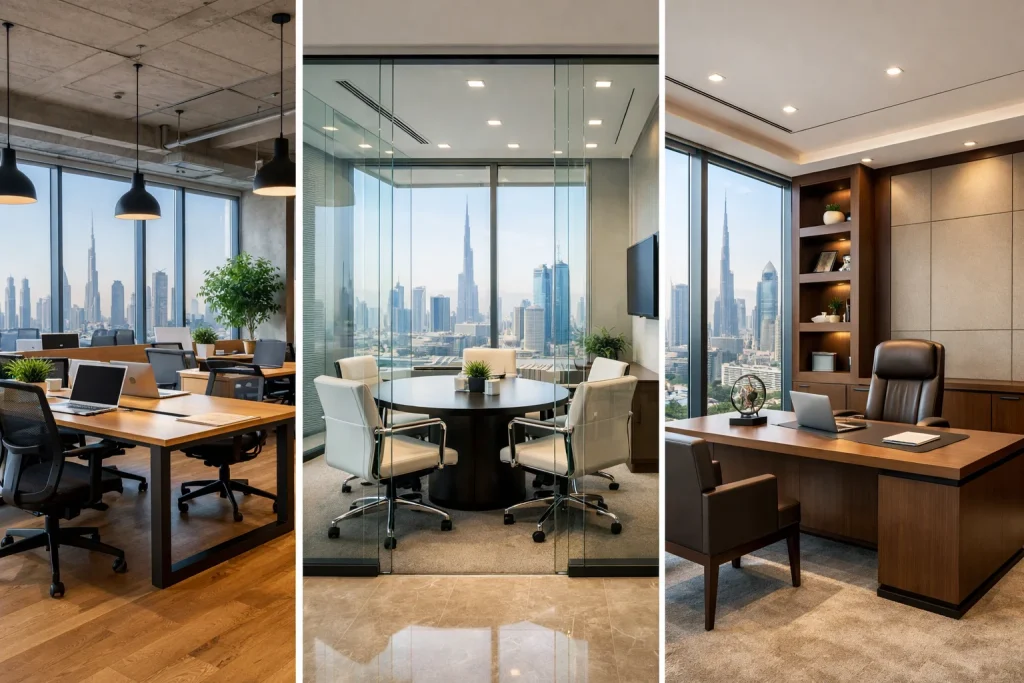
Understanding the regulatory classification and practical characteristics of each office type helps in selecting appropriate workspace for your business needs.
Flexi Desk / Hot Desk
A flexi desk is a shared workspace arrangement where you rent access to a desk within a larger open-plan office, typically during standard business hours. This option qualifies for trade license issuance and provides a limited visa quota, commonly 1-2 visas. It offers cost efficiency but does not provide dedicated private space or company branding at the location.
Co-working / Serviced Office
A serviced office provides a private, lockable room within a managed business centre. This arrangement typically includes a company nameplate, private meeting facilities, and a moderate visa quota based on the office size. It offers more privacy and professional presentation than a flexi desk while avoiding long-term fit-out commitments.
Private Office
A private office is a conventional leased unit within a commercial building. In mainland Dubai, this involves a direct lease agreement with a property owner and subsequent Ejari registration. In free zones, it is leased from the zone's property division or authorized partners. Private offices generally provide the highest visa quota, full branding control, and the strongest indication of operational presence to banks and authorities.
Virtual Office Considerations
A virtual office provides a business address and administrative services such as mail handling, but does not include physical workspace you can occupy. As of 2026, licensing authorities commonly require proof of access to physical workspace for most commercial activities. Virtual office arrangements may face limitations in licensing approval, visa sponsorship eligibility, and banking account opening procedures.
Understanding Ejari for Mainland Companies

Ejari is Dubai's official online system for registering tenancy contracts. For mainland companies, it serves as the regulatory link between your lease agreement and your licensing status.
Licensing Requirement: Mainland trade licenses typically require a valid Ejari certificate for the company's registered address at the time of issuance and renewal.
Immigration File Activation: Opening a company immigration file with the General Directorate of Residency and Foreigners Affairs (GDRFA) generally requires presenting the Ejari certificate as proof of your authorized business location.
Tenancy Documentation: Ejari provides a government-registered record of your lease, offering documentation clarity for both tenant and landlord in regulatory and commercial contexts.
For comprehensive details on premise requirements and documentation, refer to our guide on mainland company setup in the UAE.
Comparing Flexi Desk and Private Office Options
The choice between entry-level workspace and dedicated private offices involves trade-offs in cost, operational capacity, and regulatory perception. The following comparison outlines key considerations:
| Consideration | Flexi Desk / Hot Desk | Private / Serviced Office |
| Visa Quota | Limited allocation, typically 1-2 visas | Higher allocation based on office square footage, supporting team growth |
| Banking Assessment | May receive additional scrutiny depending on business activity profile | Often viewed as evidence of established operations |
| Physical Presence | Shared, non-dedicated space without company branding or private meeting areas | Dedicated branded space, supporting client meetings and operational visibility |
| Cost Structure | Lower entry cost with predictable monthly fees | Higher cost, typically including utilities and maintenance |
| Common Use Cases | Solo professionals, consultants, startups in early stages with minimal team requirements | Companies planning team expansion, client hosting, or requiring stronger operational substance |
Banking Due Diligence and Office Verification
Have questions about this?
A 10-minute call with Mirza often saves weeks of research. No obligation — ask anything about your situation.
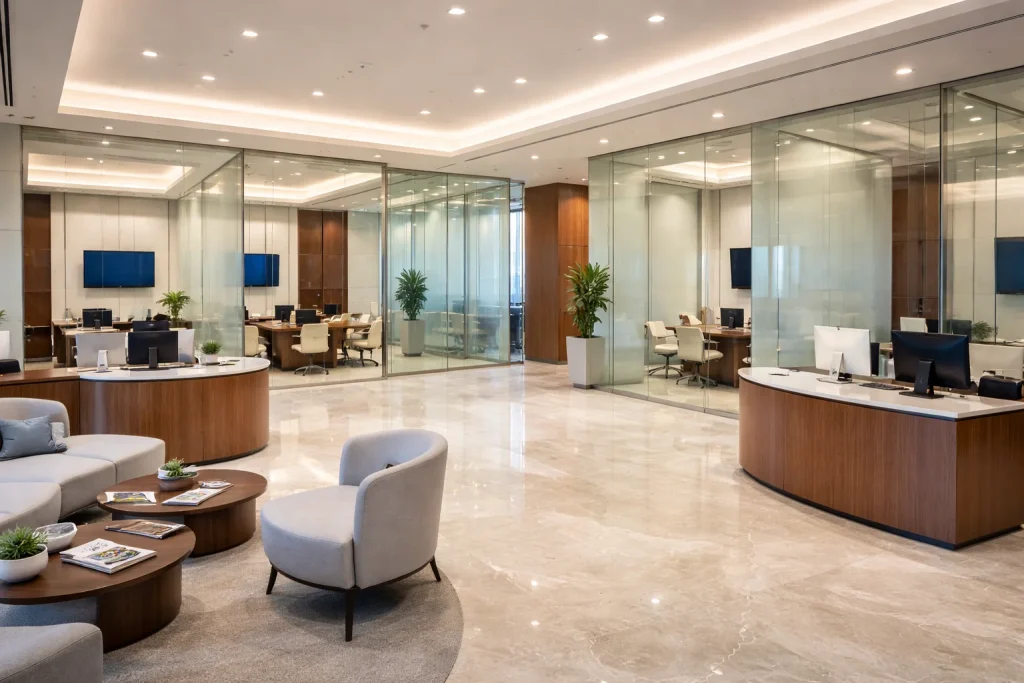
UAE banks conduct compliance reviews as part of corporate account opening procedures. Your office space commonly factors into these assessments in several ways.
Address Verification Procedures
Banks may conduct site visits or require verified tenancy documentation to confirm your business can reasonably operate from the stated address. The verification process assesses whether your registered location aligns with your described business activities.
Document Consistency Requirements
The address appearing on your trade license, Ejari certificate or tenancy contract, and corporate documents submitted to the bank should match precisely. Address discrepancies can trigger additional documentation requests or extended review procedures.
Signatory Residency Considerations
Many UAE banks prefer that at least one company signatory holds UAE residency (Emirates ID). Non-resident signatories, particularly when combined with limited office arrangements, may face additional documentation requirements or extended approval timelines.
Business Substance Assessment
For accounts expecting significant transaction volumes, banks may assess whether your operational scale appears consistent with your physical setup. Large international transaction volumes originating from minimal office arrangements can prompt additional compliance inquiries about business structure and substance.
Understanding UAE corporate bank account opening requirements helps you prepare appropriate documentation that aligns your office arrangement with banking expectations.
Mainland Versus Free Zone Office Requirements
While physical workspace is generally required across UAE jurisdictions, specific documentation and administrative procedures differ between mainland and free zone locations.
Lease Documentation Differences
In mainland Dubai, you secure a lease from a private property owner and register it through the Ejari system. In free zones, you lease directly from the free zone authority or its authorized property partners under a free zone tenancy contract, which serves as the official premises documentation.
Administrative Structure
Mainland licensing involves coordination between the DET (for business licensing) and the Ejari system (for tenancy registration). Free zones typically operate with unified authorities managing both licensing and property functions, which can streamline administrative procedures.
Compliance Verification
Mainland authorities may conduct business premise verifications as part of licensing or renewal procedures. Free zones generally have structured access protocols, with premise-related verifications often occurring during license renewal or visa application processes.
Our comprehensive overview of the UAE free zone system provides detailed comparisons of office requirements and administrative procedures across different jurisdictions.
Virtual Office Limitations and Considerations
While virtual office services exist in the UAE market, they involve certain regulatory and operational limitations that business owners should understand.
Banking Account Challenges
Many UAE banks are reluctant to open corporate accounts for companies using only virtual office addresses. Virtual addresses commonly face additional scrutiny during banking due diligence and may complicate account approval processes.
Licensing Authority Requirements
Licensing authorities generally require evidence of access to physical workspace for trade license issuance. Virtual office arrangements may not satisfy these requirements for most commercial activity categories, potentially affecting license approval or renewal.
Visa Sponsorship Limitations
Virtual office arrangements typically do not qualify for visa quota allocation, as sponsorship capacity is generally tied to physical office space measurements. This limits your ability to sponsor employees or business partners without supplementary workspace arrangements.
Compliance and Audit Considerations
If your company is selected for premise verification by licensing authorities or the FTA, the inability to demonstrate physical operational presence may result in compliance inquiries. This can affect license status, tax residency determinations, or economic substance assessments.
For detailed information on how office space affects employee sponsorship, consult our guide on UAE visa and immigration regulations.
Office Setup and Documentation Checklist
Use this checklist to plan your office setup and ensure proper documentation:
Lease Agreement and Registration
- Secure a signed lease agreement from your landlord (mainland) or free zone property authority
- For mainland: Register the tenancy contract on the Ejari portal promptly after signing
- For free zone: Confirm the tenancy contract is issued by the zone's official property department
Visa Quota Verification
- Confirm the specific visa allocation for your office size and type with your licensing authority before finalizing the lease
- Verify whether the quota meets your current and near-term employee sponsorship needs
- Understand any conditions or requirements for accessing the full visa allocation
Banking Documentation Preparation
- Ensure your office address appears consistently across all corporate documents
- Prepare Ejari certificate (mainland) or official tenancy contract (free zone) for banking submissions
- Verify that your physical setup can accommodate potential bank verification visits
Signatory Planning
- Consider processing the visa for your primary company signatory as a priority, as UAE residency can facilitate banking procedures and subsequent visa applications
Activity Alignment
- Select office space that reasonably supports your stated business activities
- Companies involved in trading, inventory management, or client-facing services may benefit from more substantial physical premises
Proper office setup connects to broader compliance obligations outlined in our accounting and tax compliance guide, particularly regarding economic substance requirements.
Selecting Appropriate Office Space
Office space selection represents one of the early foundational decisions in your UAE business establishment process. The choice involves balancing immediate budget considerations against near-term operational requirements.
For solo professionals or consultants with minimal team requirements and straightforward banking needs, a flexi desk arrangement may provide adequate compliance and functionality. For businesses planning employee growth, expecting significant banking facilities, or requiring stronger operational presence, a private office offers advantages in visa capacity, banking relationships, and regulatory credibility.
Base your decision on a realistic assessment of your visa sponsorship needs over the next 12-24 months, your banking transaction expectations, and your comfort with the level of operational presence your business activities suggest. Consider that changing office arrangements mid-term involves lease termination procedures, address updates across multiple government authorities, and potential banking documentation updates.
Your office choice establishes the regulatory foundation for your licensing, immigration capabilities, and financial institution relationships throughout your UAE business operations.
Frequently Asked Questions
1. Is office space mandatory for company formation in the UAE?
Yes. Licensing authorities in both mainland and free zones generally require proof of physical premises to issue and renew a trade license. This is typically demonstrated through Ejari registration (mainland) or a free zone tenancy contract.
2. How does office size affect visa quota in the UAE?
Visa allocation is commonly linked to the size and classification of your office. Larger physical offices usually qualify for higher visa quotas, allowing companies to sponsor more employees and partners.
3. Can I use a virtual office to get a UAE trade license?
Virtual office arrangements may face limitations. Many licensing authorities require access to physical workspace for most commercial activities, and virtual offices typically do not provide visa quota eligibility.
4. What is Ejari and why is it important?
Ejari is Dubai’s official tenancy registration system. For mainland companies, a valid Ejari certificate is generally required for trade license issuance, renewal, and immigration file activation.
5. Do banks verify office space during account opening?
Yes. UAE banks often verify your registered business address as part of due diligence. They may request tenancy documents or conduct site checks to ensure your office setup aligns with your stated business activity.
6. Does office type affect corporate tax or economic substance?
A genuine physical office presence, along with operational expenses, can support demonstrations of economic substance when authorities assess corporate tax status or free zone qualification criteria.
7. What is the difference between a flexi desk and a private office for licensing purposes?
A flexi desk is a shared workspace offering limited visa quota and lower cost, suitable for small teams. A private office provides dedicated space, higher visa capacity, and is often viewed more favorably for banking and substance purposes.
8. Can I change my office after company setup?
Yes, but it requires updating tenancy records, licensing authority records, immigration files, and banking documentation. Lease termination procedures and approvals may also apply.
Sources and official references
Have a question about this?
Leave your details and a UAE expert will get back to you within 1 business day — free, no obligation.
Ready to take action?
Whether you're ready to start or still comparing options — we'll give you a straight answer.
Chat on WhatsApp
Usually replies within 2h
Get a Free Quote
Personalised in 60 seconds
Call Directly
Open daily, 10am–6pm UAE
About the Author
Dubai-based independent advisor on UAE visa, immigration, and offshore structuring. Founder of Henry Club UAE with 90+ published guides. Advisory-first — clarity before commitment.