
I help founders understand their options clearly before they commit to any structure, provider, or direction.
Business setup in Sharjah is one of the UAE's most cost-effective routes to a license – free-zone packages start from as little as around AED 5,000, and a mainland company from about AED 15,000 – which is why the emirate suits pragmatic founders, traders, industrial businesses and family companies. Your first decision is the same as anywhere in the UAE: a Sharjah mainland company (licensed by the Sharjah Economic Development Department, SEDD) or a Sharjah free zone company (such as SPC Free Zone, SAIF Zone or Hamriyah) – and that choice sets your cost, your ownership and where you are allowed to trade.
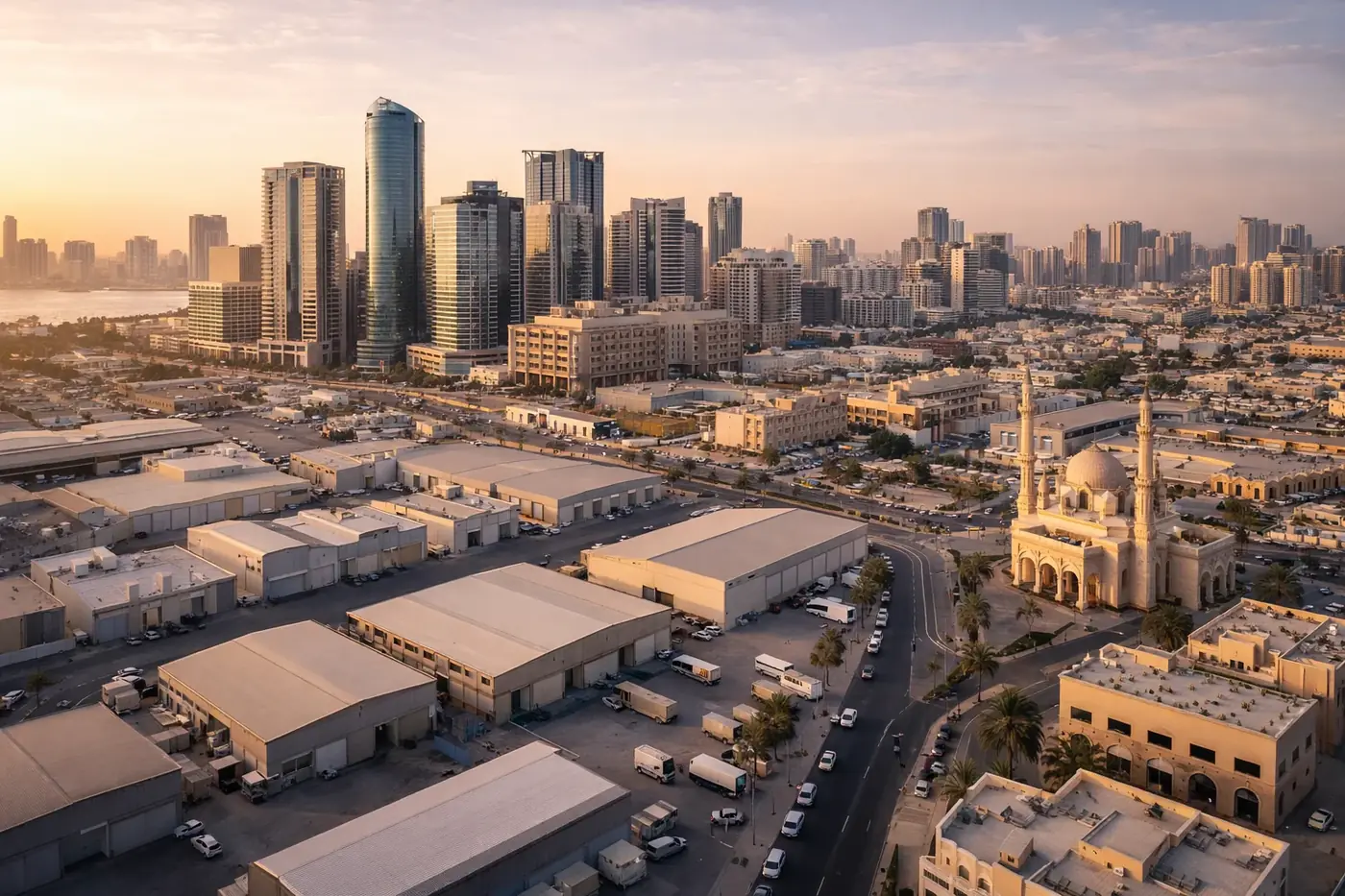
This guide walks through company formation in Sharjah in 2026 – mainland versus free zone, the real costs, the step-by-step process, visas and the mistakes to avoid – so you can set up in Sharjah with a clear, budgeted plan. Its position beside Dubai and the northern emirates, plus lower license and office costs, is what makes Sharjah a strong alternative for cost-sensitive and industrial businesses.
Quick Summary: Sharjah Business Setup in 2026
- Setup options: SEDD mainland license for UAE market access, or one of Sharjah's free zones (SAIF Zone, SPC, Hamriyah) for international trade and 100% ownership.
- Cost range: Mainland LLC typically AED 15,000–30,000 first year; free zone packages from AED 5,000 (SPC) to AED 25,000+ depending on office and visas.
- Why Sharjah: Strategic Sea/Air port access (Hamriyah, SAIF), strong industrial and manufacturing focus, and proximity to Dubai at lower operating cost.
- Mainland vs free zone: Mainland Sharjah allows UAE market trading; Sharjah free zones offer 0% tax on qualifying income but restrict UAE market access without a distributor.
- Timeline: 7–15 working days for mainland LLC; 3–10 days for free zone license with full documentation.
- Office requirement: Mandatory physical Ejari-registered office for mainland; flexi-desk/virtual office allowed in most Sharjah free zones.
Why Consider Sharjah for Your Business?
Sharjah's value proposition appeals to specific business models and operational priorities.
Cost efficiency: Operational costs, including office and industrial rents, are generally more competitive than in Dubai or Abu Dhabi, offering lower financial barriers to entry and potentially higher profit margins.
Industrial and logistics infrastructure: The emirate provides extensive manufacturing, warehousing, and distribution facilities serving regional markets.
Educational and cultural centre: Home to multiple universities and cultural institutions, attracting a stable residential population and graduate talent pool.
Strategic connectivity: Bordering Dubai and northern emirates, with access to multiple ports (Khor Fakkan, Khalid Port) and Sharjah International Airport.
Your Core Setup Options: Mainland vs. Free Zone
The primary structural decision involves choosing between operating in the local economy or within a dedicated free zone for international business.
Sharjah Mainland (SEDD)
A mainland license from the Sharjah Economic Development Department (SEDD) enables direct business operations within the UAE local market. This structure is appropriate for retail, contracting, and businesses serving the Sharjah and wider UAE community.
Key feature: Full market access and ability to operate physical customer-facing locations.
Ownership: 100% foreign ownership is permitted for many activities, though some professional licenses may require a Local Service Agent (a UAE national providing administrative assistance without equity stake).
Sharjah Free Zones
Sharjah hosts specialized zones offering 100% foreign ownership, tax advantages, and streamlined procedures.
Sharjah Airport International Free Zone (SAIF Zone): One of the region's established free zones, integrated with airport infrastructure. Suitable for trading, logistics, light manufacturing, and industrial projects.
Sharjah Media City (SHAMS): A growing zone for media, publishing, marketing, consulting, and technology services, known for efficient setup and flexible virtual office packages.
Hamriyah Free Zone Authority (HFZA): A major industrial and maritime free zone with deep-water port access, serving heavy industry, manufacturing, and energy sectors.
Comparing Sharjah's Mainland and Free Zone Pathways
| Feature | Sharjah Mainland (SEDD) | Sharjah Free Zone (e.g., SAIF Zone, SHAMS) |
|---|---|---|
| Market Access | Direct access to entire UAE market | Operations confined to free zone and international markets. Mainland access requires local distributor or separate mainland entity |
| Ownership | 100% foreign ownership for many activities. Some professional licenses require Local Service Agent | 100% foreign ownership guaranteed for all companies |
| Office/Facility Requirement | Physical commercial space or warehouse is mandatory | Flexible. SAIF Zone offers warehouses and offices; SHAMS specializes in virtual and flexi-desk packages |
| Ideal Business Types | Retail shops, restaurants, construction, local trading, healthcare facilities, general services | Import-export, logistics, light industry (SAIF Zone), media, digital services, consulting, freelancing (SHAMS) |
| Key Advantage | Direct consumer and B2B market reach within UAE | Cost-effective packages, full ownership, and streamlined setup for international-focused businesses |
For comprehensive cost comparison across budget-friendly options, review our guide to the most cost-effective free zones in the UAE.
Detailed Cost Breakdown for 2026
Sharjah is recognized for cost competitiveness, but comprehensive budgeting remains essential.
Sharjah Mainland (SEDD) Setup Costs

Costs are determined by license classification and commercial space requirements.
SEDD license fees: Vary by activity. Standard trading or professional licenses typically range from approximately AED 10,000 to AED 20,000 for initial issuance.
Mandatory commercial space: Physical office, shop, or warehouse lease is required. Sharjah commercial rents are competitive, with smaller offices potentially starting from AED 15,000 to AED 30,000 per year, depending on location and size.
Local Service Agent fees: If required for professional licenses, annual LSA fees typically range from AED 5,000 to AED 15,000.
Government and Chamber fees: Include trade name reservation, municipal approvals, and Sharjah Chamber of Commerce and Industry membership.
Sharjah Free Zone Setup Costs
SAIF Zone: Costs depend on activity and facility type. Basic trading licenses with flexi-desk arrangements can start around AED 12,000. Licenses with warehouse or office space typically begin from approximately AED 25,000 upwards, with warehouse rents charged per square foot.
SHAMS: Positioned as an affordable option. All-inclusive packages for media or consultancy licenses with virtual office can start from approximately AED 9,000 to AED 15,000 for the first year.
Visa processing: Across all options, budget an additional AED 3,000 to AED 5,000 per person for government residency visa fees, medical examinations, and Emirates ID.
Ongoing Annual Costs
All licenses require annual renewal. Budget for annual license renewal (often similar to first-year fees), office or warehouse rent renewal, and any recurring Local Service Agent fees. Free zones typically have annual package renewals.
For detailed cost modelling based on your specific requirements, use our business setup cost calculator to estimate comprehensive expenses.
The Step-by-Step Company Formation Process
Have questions about this?
A 10-minute call with Mirza often saves weeks of research. No obligation — ask anything about your situation.
The process in Sharjah follows systematic procedures with specific requirements from SEDD or your chosen free zone authority.
Planning and Initial Approval
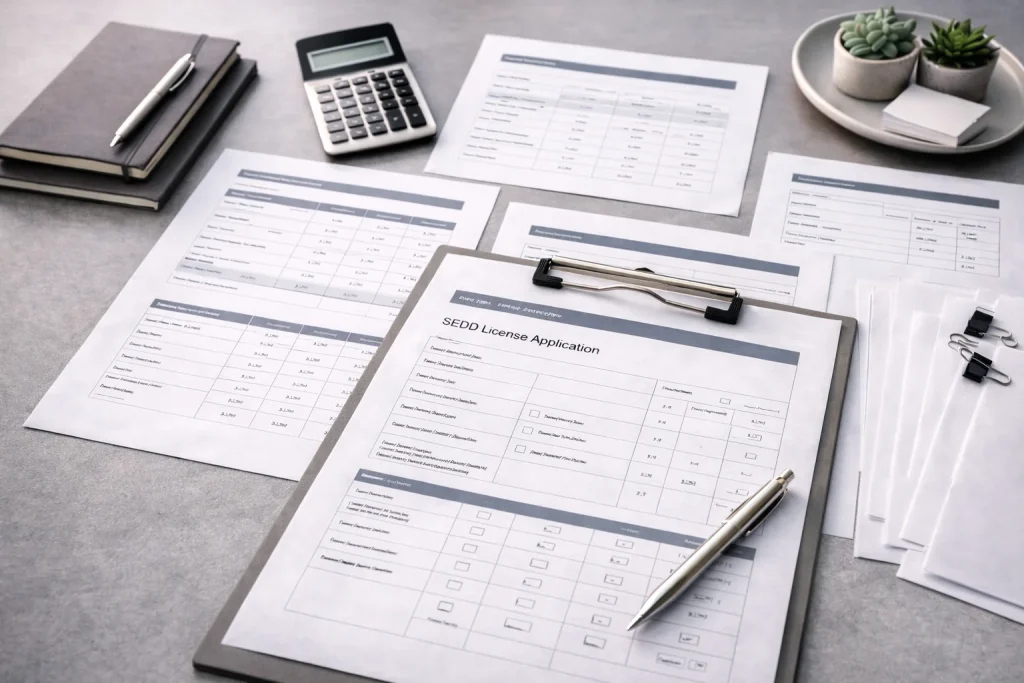
Define business activity: Determine your exact activity from official lists. This determines license type and jurisdiction suitability.
Select jurisdiction: Choose between SEDD mainland or a specific free zone (SAIF Zone, SHAMS) based on your market access requirements.
Reserve trade name: Submit your proposed company name to SEDD or free zone authority for approval.
Submit initial application: Provide initial documents (passport copies, proposed activity) for preliminary approval.
Documentation and Final License
Secure office or facility: Finalize office lease (for mainland) or select free zone facility package (virtual office, warehouse, etc.).
Obtain external approvals if applicable: Certain activities (food services, healthcare) require clearance from departments like Sharjah Municipality or Ministry of Health.
Sign agreements and pay fees: Execute lease agreement (for mainland) or free zone license agreement and settle all fees.
Receive trade license: The authority issues your official business license.
Post-License Formalities
Register with the Chamber: Mainland companies must register with Sharjah Chamber of Commerce and Industry.
Register for corporate tax: All entities must register with the Federal Tax Authority for corporate tax purposes.
Open corporate bank account: Open a business bank account by approaching UAE banks with your license and corporate documents for business banking relationships.
Apply for residency visas: Initiate visa sponsorship for investors and employees through SEDD's approved service centres or directly via free zone authority.
Advantages and Key Considerations of a Sharjah Setup
Strategic Advantages
Lower operational overhead: Potential savings on rent, utilities, and general business costs compared to Dubai and Abu Dhabi.
Industrial and logistics infrastructure: Extensive facilities for manufacturing, storage, and distribution operations.
Stable residential market: Access to an established local consumer base and growing population.
Established free zones: SAIF Zone and SHAMS are recognized authorities with systematic procedures.
Important Considerations
Cultural environment: As an emirate with strong cultural preservation priorities, business conduct and marketing should align with local cultural norms.
Traffic and commuting: Peak-hour traffic between Sharjah and Dubai can be substantial, a factor for employees or clients commuting across emirate boundaries.
Market perception: For certain premium or internationally focused service brands, a Sharjah address may carry different market positioning compared to Dubai or Abu Dhabi locations, though this is less relevant for industrial or digital businesses.
Common Mistakes to Avoid
Mistake: Assuming uniform UAE regulations. Applying Dubai's licensing frameworks to Sharjah's mainland processes, particularly regarding Local Service Agent requirements for professional activities.
Avoidance strategy: Conduct jurisdiction-specific research or consult with advisors experienced in Sharjah SEDD regulations.
Mistake: Selecting inappropriate free zone for business activity. Establishing a heavy machinery trading company in SHAMS or a digital media firm in SAIF Zone's industrial facilities.
Avoidance strategy: Match your core activity to zone specialization. SAIF Zone for trade, logistics, and industrial operations; SHAMS for media, consulting, and digital services.
Mistake: Underestimating visa processing procedures. For mainland companies, visa processing typically occurs through approved service centres rather than directly through SEDD, representing a different workflow than free zones.
Avoidance strategy: Clarify exact visa sponsorship and processing procedures with your setup advisor or service centre from the outset.
Mistake: Neglecting Sharjah Municipality approvals. Overlooking requirements for specific municipal permits for signage, certain commercial activities, or facility modifications.
Avoidance strategy: For mainland setups, factor in municipality interactions as a standard component of setup and ongoing compliance processes.
Who Might Consider Alternative Locations
A Sharjah business setup may not be optimal if:
- Your primary target market is luxury retail or high-net-worth clientele in Dubai or Abu Dhabi, where physical presence in those markets provides strategic advantages.
- Your business operates in financial services or banking sectors, which are concentrated in Dubai International Financial Centre (DIFC) or Abu Dhabi Global Market (ADGM).
- Your model relies on high international tourist footfall, which is lower in Sharjah compared to Dubai's tourism districts.
Practical Business Scenarios for Sharjah
The Light Manufacturing SME
Business: Company producing building materials or consumer goods for GCC distribution.
Structure: SAIF Zone or Hamriyah Free Zone. Cost-effective industrial space, integrated logistics, and 100% ownership create suitable production infrastructure.
The E-commerce Logistics Operator
Business: Managing warehousing and distribution for online platforms.
Structure: Sharjah mainland trading license with warehouse in industrial areas. Provides direct access to local delivery market and competitive storage costs.
The Digital Content Agency
Business: Startup offering video production, social media management, and digital content services to regional clients.
Structure: SHAMS. Low-cost virtual office package, efficient setup, and media-focused community offer cost-effective professional base.
The Local Retail Business
Business: Entrepreneur opening retail shop, cafe, or service establishment for Sharjah community.
Structure: Mainland company with SEDD. This is the required structure enabling direct retail activity and customer-facing operations.
Next Steps for Your Sharjah Business Setup
Begin by documenting your business plan with clear identification of your customer location. If your customers are UAE-based, mainland licensing is likely necessary. If your business focuses on import-export or digital services for international clients, a free zone provides appropriate structure.
Gather core documentation: passport copies, professional background information, and any existing company certificates if establishing a branch. Then approach the relevant authority directly or through established local consultants:
- For mainland inquiries, contact the Sharjah Economic Development Department (SEDD).
- For free zones, visit SAIF Zone or Sharjah Media City (SHAMS) websites to explore specific packages.
Sharjah offers a practical, cost-conscious environment for business operations. By aligning your operational model with the emirate's infrastructure and market characteristics, you can establish an efficient foundation for your UAE venture throughout 2026.
Sources & Official References
The information in this guide reflects current UAE federal and emirate-level regulations. For the most up-to-date figures and procedures, consult the official sources below:
- Sharjah Economic Development Department (SEDD) — Official Sharjah mainland licensing authority.
- SAIF Zone — Sharjah Airport International Free Zone — Sharjah free zone for trading and industrial businesses.
- UAE Government Portal — Starting a Business — Federal guidance on UAE business setup.
Frequently Asked Questions — Business Setup in Sharjah
Is Sharjah cheaper than Dubai for business setup?
In many cases, yes. License fees, office rents, and industrial facilities in Sharjah are often more cost-efficient than comparable options in Dubai or Abu Dhabi. This makes Sharjah attractive for manufacturing, logistics, trading, and cost-sensitive startups.
Can a foreign investor own 100% of a company in Sharjah?
Yes. Most commercial and industrial activities allow full foreign ownership. Some professional licenses on the mainland may still require a Local Service Agent, but this does not involve equity ownership.
What is the difference between Sharjah mainland and Sharjah free zone companies?
Mainland companies licensed by SEDD can trade directly across the UAE and operate customer-facing businesses. Free zone companies such as those in SAIF Zone or SHAMS are primarily structured for international business and may need a distributor or separate mainland entity to sell directly in the UAE market.
Which free zone is best in Sharjah?
It depends on your activity. SAIF Zone suits trading, logistics, and light industry. Hamriyah Free Zone supports large industrial and maritime projects. SHAMS is designed for media, consulting, digital services, and flexible startup packages.
Do Sharjah companies get UAE residency visas?
Yes. Both mainland and free zone companies can sponsor investor and employee residency visas, subject to visa quotas linked to office space or package type.
Is physical office space required in Sharjah?
Mainland companies must lease physical commercial premises. Free zones offer more flexibility, including flexi-desk and virtual office packages, depending on the zone and activity type.
Can a Sharjah company operate in Dubai?
A mainland company can operate across the UAE, including Dubai. Free zone companies may require a local distributor or separate mainland license to conduct direct mainland business.
Is Sharjah suitable for industrial and manufacturing businesses?
Yes. Sharjah is recognized for industrial infrastructure, warehousing, and logistics connectivity, making it well-suited for manufacturing, storage, and regional distribution operations.
Are business setup procedures in Sharjah complicated?
The process is structured and systematic through SEDD or the relevant free zone authority. While documentation and approvals are required, the procedures are generally straightforward when planned correctly.
Who might consider another emirate instead of Sharjah?
Businesses targeting luxury retail, financial services, or sectors heavily centered in Dubai or Abu Dhabi may prefer those locations. Companies relying on high tourist footfall may also benefit from being based in Dubai.
Have a question about this?
Leave your details and a UAE expert will get back to you within 1 business day — free, no obligation.
Ready to take action?
Whether you're ready to start or still comparing options — we'll give you a straight answer.
Chat on WhatsApp
Usually replies within 2h
Get a Free Quote
Personalised in 60 seconds
Call Directly
Open daily, 10am–6pm UAE
About the Author
Dubai-based independent advisor on UAE visa, immigration, and offshore structuring. Founder of Henry Club UAE with 90+ published guides. Advisory-first — clarity before commitment.