
I help founders understand their options clearly before they commit to any structure, provider, or direction.
Type “gaming license Dubai” into a search engine and you get two different industries mixed into one answer. Since 2023 the UAE has had a federal regulator for commercial gaming – lotteries, wagering, casino-style operations. At the same time, Dubai is spending a decade building a video-gaming economy of studios, esports teams and gaming venues. The licenses have nothing to do with each other, and most guides quietly confuse them. This one separates the two, then walks the real routes: which authority, which activity codes, what it costs, and the approvals each business model actually needs.
First: which “gaming” do you mean?
Commercial gaming – lottery, internet gaming for money, sports wagering and land-based gaming facilities – sits exclusively with the General Commercial Gaming Regulatory Authority (GCGRA). The federal body was established in September 2023 and is headquartered in Abu Dhabi. Nothing in that category operates without a GCGRA licence; the authority granted its first, for the UAE lottery, to The Game LLC in July 2024. These are institutional licences for operators of scale, not a company-formation product.
The legal ground is shifting on schedule, too. The new Civil Transactions Law – Federal Decree-Law No. 25 of 2025, in force from 1 June 2026 – removes the old civil-code chapter that treated gaming and betting contracts as void. That completes the move from blanket civil prohibition to a licensed GCGRA regime. What it does not do is legalise anything unlicensed: gambling outside a GCGRA licence remains illegal.
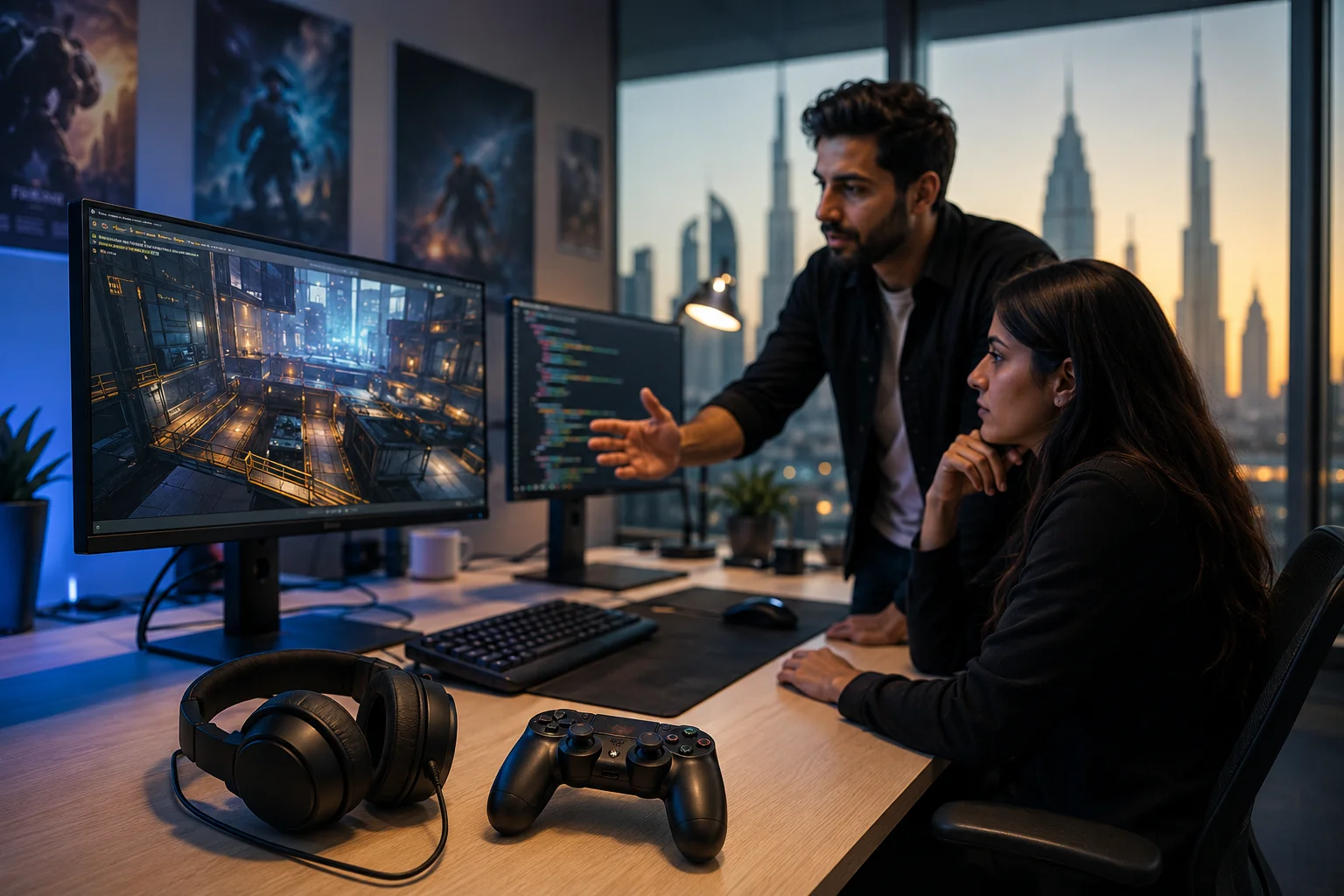
Video gaming is a normal economic activity. A game studio, an esports organisation, a gaming café or a distribution business licenses like any other company, through a free zone or Dubai's Department of Economy and Tourism. It needs no GCGRA involvement at all. That is the economy this guide covers, and the one Dubai is actively recruiting for.
Quick summary: starting a gaming business in Dubai
- No GCGRA licence needed: studios, esports and gaming venues use ordinary trade licenses. GCGRA regulates money gaming only – lottery, wagering, internet gaming, casino facilities.
- The tailwind: the Dubai Programme for Gaming 2033 targets a top-10 global gaming city, around 30,000 new jobs and roughly US$1 billion added to GDP by 2033.
- Free zone routes: DMCC's dedicated Gaming Centre (150+ gaming companies), Dubai South Business Hub from AED 12,500 a year, plus the budget zones if cost leads.
- Real activity codes exist: gaming content production (5911.13), computer programming (6201.00), e-games equipment trading (4649.23), tournament organising (9311.91).
- Venues need more than a license: a gaming café adds premises approvals; public esports events need separate event permits.
- Taxes: corporate tax at 9% above AED 375,000 profit with Small Business Relief electable to end-2026; VAT registration from AED 375,000 turnover.
Why Dubai is recruiting your studio
The Dubai Programme for Gaming 2033, launched in November 2023 under the Dubai Future Foundation, is explicit about the target: place Dubai among the world's top ten gaming cities, create around 30,000 gaming jobs, and add on the order of US$1 billion to GDP by 2033. The programme is built on talent, content and technology. The infrastructure came first – DMCC opened its dedicated Gaming Centre at the Dubai Esports Festival in late 2022. It has since grown past 150 gaming companies – 165 at DMCC's latest count – from developers and publishers to esports organisations.
Pick your model; the license follows
| Business model | Typical activities on the license | Watch for |
|---|---|---|
| Game development studio | Computer programming (6201.00); gaming content production (5911.13) | IP ownership sits with the entity – matters for publishing deals |
| Esports team / events | Tournament and rally organising (9311.91); event promotion | Each public event needs its own permit on top of the license |
| Gaming café / lounge | Electronic-games venue activities on a mainland license | Premises, civil defence and municipality approvals before opening |
| Distribution / hardware | Trading of e-games and entertainment-hall equipment (4649.23) | Import code and product conformity for hardware |
The codes above are live examples from Dubai South's published gaming activity set; free zones map the same work to their own activity lists. The naming shifts slightly by authority while the substance stays the same.
The free zone routes
DMCC Gaming Centre is the ecosystem play: a dedicated district for developers, publishers, AR/VR and esports companies inside the DMCC free zone. The draw is the accelerator programmes, investor network and event calendar that come from sitting among 150+ gaming firms. You pay DMCC-tier pricing for it – this is a premium zone, and for a funded studio the network is usually worth the difference.
Dubai South Business Hub publishes gaming and esports licenses from AED 12,500 a year against the activity codes listed above – a serious mid-range option with published pricing rather than quote-on-request.
The budget zones work when cost leads and the ecosystem does not matter yet. A one-person studio writing code needs a programming activity and a flexi-desk, which is exactly the profile our cheapest free zone comparison prices from roughly AED 7,500–12,500 in year one. Abu Dhabi runs its own gaming push through AD Gaming, worth a look if the capital fits your plans. For the software side generally, the zone options for the software side are mapped in our technology license guide.
When the mainland wins
Have questions about this?
A 10-minute call with Mirza often saves weeks of research. No obligation — ask anything about your situation.
A gaming café or esports lounge serves walk-in customers on physical premises, and that is mainland territory: a license from the Department of Economy and Tourism with venue activities. The premises layer comes next – Ejari on the space, civil defence clearance, municipality fit-out approval – before the doors open. Retail of consoles and accessories follows the same logic. The trade-offs against a free zone – market access versus cost, and what each means for visas – are the standard ones covered in mainland vs free zone.
Costs, honestly
Budget free zones start around AED 7,500–12,500 for a first-year license with a flexi-desk; Dubai South's published gaming licenses start at AED 12,500; DMCC sits materially above that tier, priced by package. A mainland venue adds premises costs – rent, Ejari, fit-out and its approvals – on top of the license itself. Run your own activity set through the business setup cost calculator for a number built on your inputs rather than a brochure's.
One number to refuse: a “GCGRA licence fee” in a studio budget. Several setup guides quote five- and six-figure GCGRA costs alongside free zone packages as if every gaming company needs both. A video-game business does not hold, and cannot usefully apply for, a commercial-gaming licence – that regime exists for money-gaming operators. If a proposal prices one into your setup, walk away.
Taxes and the ongoing calendar
Gaming companies follow the standard rails: corporate tax at 0% to AED 375,000 of taxable income and 9% above it. Small Business Relief is electable in the return where revenue is AED 3 million or less, for periods ending on or before 31 December 2026 – the mechanics live in our corporate tax filing guide. VAT registration triggers at AED 375,000 of taxable turnover, which app revenue and in-app purchases count toward. And the license itself renews annually – the year-two number is where cheap zones stop being cheap, a trap the free zone comparison prices out.
Six steps from idea to licensed studio
- Fix the model first. Studio, esports organisation, venue or distribution – the license path, approvals and sensible jurisdiction all follow from this one choice.
- Choose mainland or free zone. Walk-in customers point mainland; a digital studio or team points to a free zone, with DMCC's Gaming Centre as the ecosystem option.
- Match the activities. Programming and content production for a studio; tournament organising for esports; equipment trading for hardware. Get every revenue stream onto the license.
- License and incorporate. Name, entity, license issue; visas under it for founders and hires.
- Add the venue or event layer if you have one. Premises approvals for a café; per-event permits for public tournaments.
- Diarise the boring parts. License renewal, corporate tax registration and the nine-month filing clock, VAT monitoring against the AED 375,000 line.
Where founders get this wrong
- Budgeting a GCGRA licence for a studio. The most expensive misunderstanding in the niche – that regime is for money gaming, not video games.
- Licensing one activity for three revenue streams. A studio that also runs paid tournaments and sells merch needs each stream reflected in its activity set.
- Opening a café on a license alone. The venue approvals – premises, civil defence, municipality – are a second project with their own timeline.
- Ignoring year-two renewal. Promotional year-one pricing is not the running cost. Compare zones on 24 months, not 12.
- Missing the ecosystem question. The cheapest desk and the right room are different purchases – for a funded team, DMCC's 150-company floor can out-earn the saving.
Frequently Asked Questions
Is it legal to start a gaming business in Dubai?
Yes. Video-game businesses – development studios, esports organisations, gaming cafés, distribution – license like any other company through a free zone or the Department of Economy and Tourism. Only commercial money gaming (lottery, wagering, internet gaming, casino facilities) requires a GCGRA licence, and unlicensed gambling remains illegal.
Do I need a GCGRA licence for a game development studio?
No. The GCGRA regulates commercial gaming for money. A studio, publisher, esports team or gaming venue is an ordinary licensed business; guides that price a GCGRA fee into a studio setup are confusing two different industries.
How much does it cost to start a gaming company in Dubai?
A lean single-founder studio starts around AED 7,500–12,500 in year one at the budget free zones with a flexi-desk. Dubai South publishes gaming licenses from AED 12,500 a year, and DMCC's Gaming Centre sits above that as the premium ecosystem. A physical gaming café adds premises rent, fit-out and approvals on top of a mainland license.
What license does a gaming café or esports lounge need?
A mainland license carrying electronic-games venue activities, then the premises layer: Ejari on the space, civil defence clearance and municipality fit-out approval before opening. Public esports events also need their own event permits, separate from the trade license.
What is the Dubai Programme for Gaming 2033?
Dubai's ten-year push, launched in November 2023 under the Dubai Future Foundation, to become a top-10 global gaming city. It targets around 30,000 new jobs and roughly US$1 billion added to GDP by 2033, focused on talent, content and technology.
Can I open a casino or betting business in the UAE?
Only under a GCGRA licence, and those are institutional: the federal authority licenses lottery, internet gaming, sports wagering and land-based gaming facilities case by case. The first went to the UAE lottery operator in 2024. It is not a standard company-formation route, and operating any money-gaming activity without a GCGRA licence is illegal.
Sources and official references
- General Commercial Gaming Regulatory Authority (GCGRA) – the federal regulator of commercial gaming (verified September 2026)
- Dubai Media Office – launch of the Dubai Programme for Gaming 2033 (top-10 target, 30,000 jobs, ~US$1 billion GDP)
- Dubai Program for Gaming portal (programme home)
- DMCC – launch of the DMCC Gaming Centre (December 2022, Dubai Esports Festival) and its Gamescom 2026 growth release (165 member companies)
- Dubai South Business Hub – gaming and esports activity codes and pricing (5911.13, 6201.00, 4649.23, 9311.91; from AED 12,500)
- Federal Decree-Law No. 25 of 2025 (new Civil Transactions Law, in force 1 June 2026) – removal of the civil-code gaming and betting chapter, cited by name; commentary via international legal publishers
Have a question about this?
Leave your details and a UAE expert will get back to you within 1 business day — free, no obligation.
Ready to take action?
Whether you're ready to start or still comparing options — we'll give you a straight answer.
Chat on WhatsApp
Usually replies within 2h
Get a Free Quote
Personalised in 60 seconds
Call Directly
Open daily, 10am–6pm UAE
About the Author
Dubai-based independent advisor on UAE visa, immigration, and offshore structuring. Founder of Henry Club UAE with 90+ published guides. Advisory-first — clarity before commitment.